LIQ Sweep Hunter – NinjaTrader Liquidity indicator for confirmed sweeps
LIQ Sweep Hunter is a liquidity sweep indicator designed to detect and validate buy-side and sell-side liquidity sweeps after they are completed — not while the market is still hunting stops.
The indicator focuses on how liquidity is activated around swing highs and swing lows, volatility-based trailing stops, areas where stop losses and breakout orders cluster
Instead of predicting direction, LIQ Sweep Hunter tracks a structured liquidity process:
- Liquidity activation
- Liquidity Sweep event
- Control shift
- Validated continuation or reversal
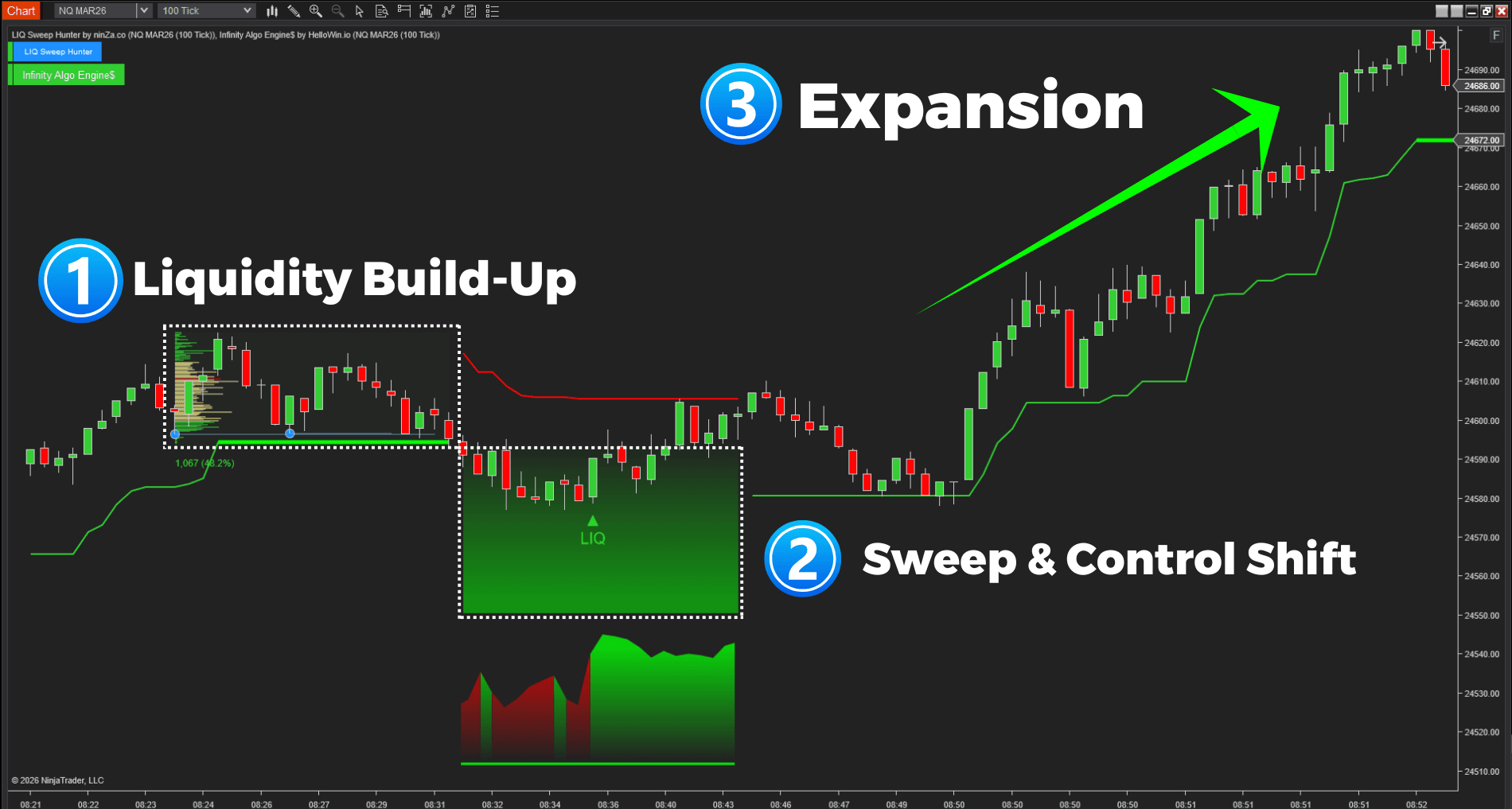
The logic behind Liquidity sweeps
Markets require liquidity to execute large positions. Institutional order flow cannot be filled without opposing orders.
Market orders require limit orders. Large participants must move price toward areas where liquidity pools exist.
One of the most predictable liquidity sources is stop loss clustering.
Stop losses function as pending market orders. Although invisible on the chart, their placement is structurally predictable.
Liquidity tends to cluster around swing highs and swing lows. These levels typically concentrate:
- New entry orders
- Breakout participation
- Existing stop losses
- Hedge or reversal positioning
When price trades beyond these levels, the move is often not a simple breakout.
It is frequently a liquidity grab or stop hunt, designed to trigger clustered orders and generate the necessary opposing liquidity for larger execution.
LIQ Sweep Hunter acts as a structured liquidity sweep indicator that monitors these events and confirms whether the sweep results in continuation or reversal.
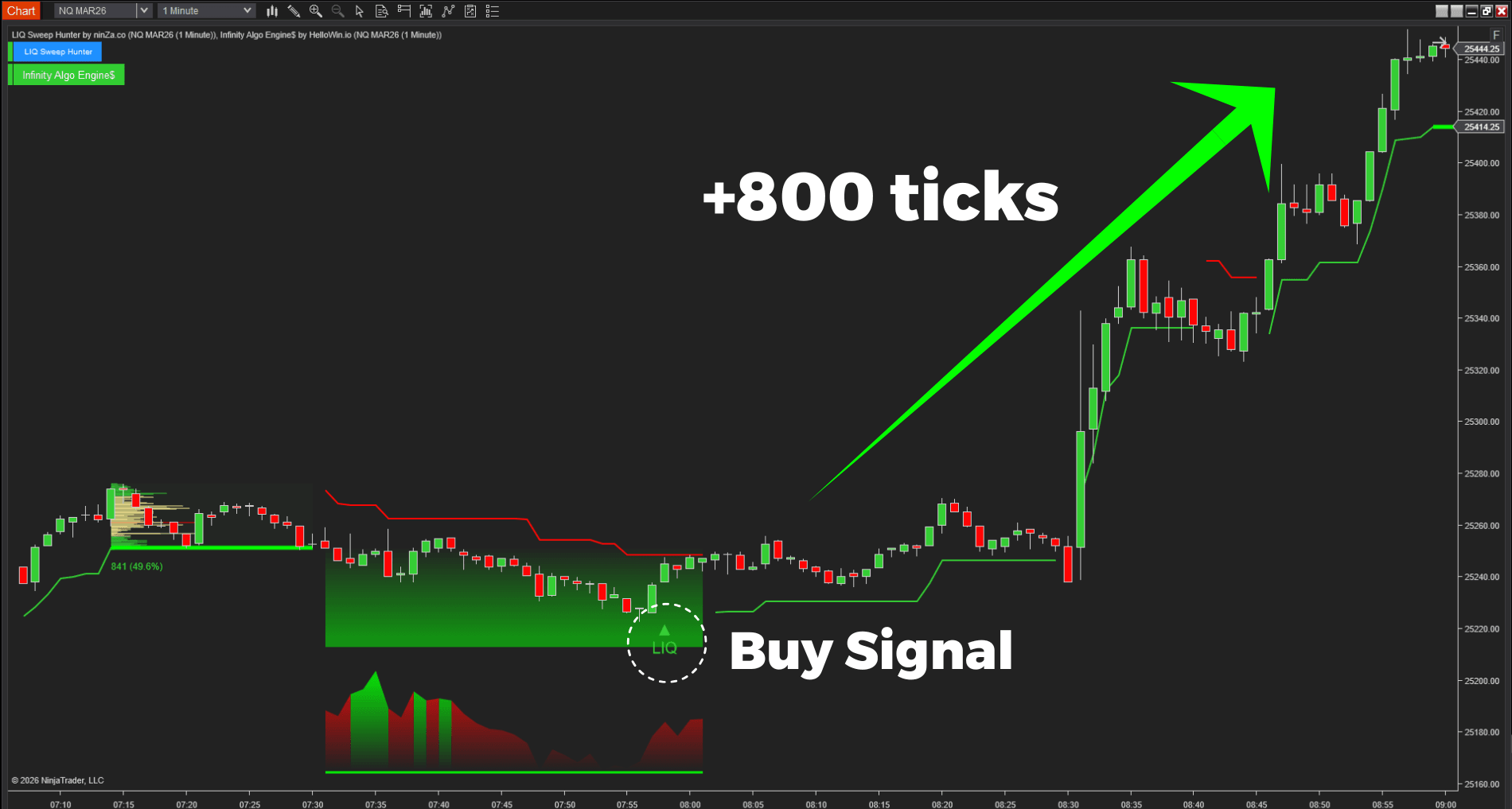
Key components of the NinjaTrader 8 Liquidity Sweep indicator
1. Volatility-based Trailing Stop (Hidden liquidity approximation)
Markets do not always form clear structural highs or lows where clustered stop losses can be easily identified. However, liquidity continues to accumulate as traders:
- Trail stops
- Adjust dynamic profit targets
- Protect open positions
This liquidity sweep indicator applies a volatility-based trailing stop model to estimate where hidden stop clusters are likely concentrated.
Instead of treating trailing stops as trade management tools, the indicator interprets them as liquidity footprints.
This allows detection of internal liquidity sweeps even when obvious pivot highs or pivot lows are absent.
2. Liquidity Zone (Activity & pressure detection)
The Liquidity Zone visualizes areas where trading activity is most heavily concentrated, helping you understand which side of the market is currently more active.
It helps identify:
- Price areas attracting significant trading volume
- Buy-side vs sell-side pressure
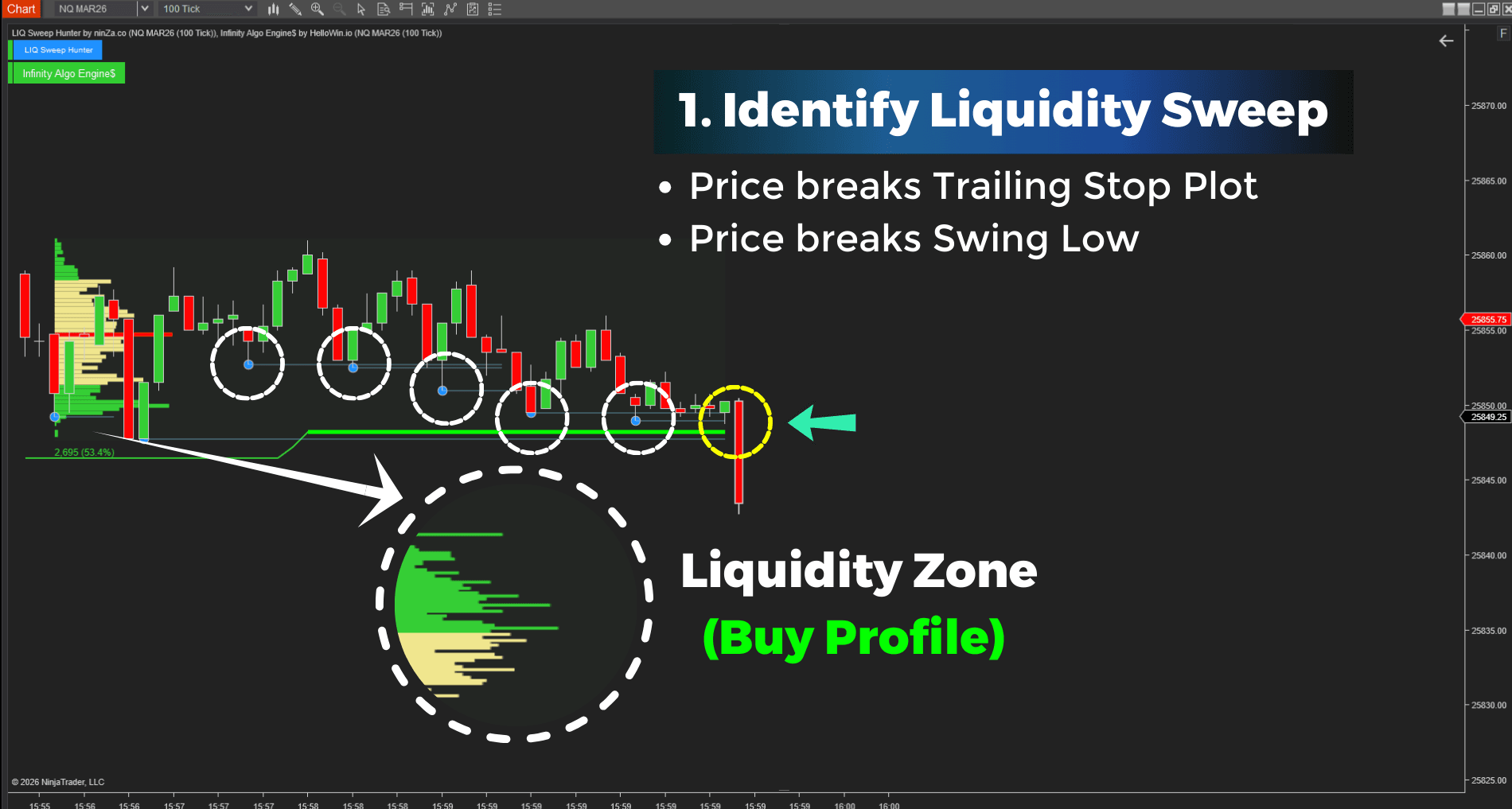
3. Liquidity Pool (Sweep activation area)
Liquidity Pool is the core of the indicator. It represents the price area where larger participants are most likely to push price beyond key levels in order to activate opposing liquidity.
Within the Liquidity Pool:
- Clustered stop losses and breakout orders are triggered
- Aggressive market orders appear
- The necessary opposing liquidity for larger positions is filled
This is where a buy-side liquidity sweep or sell-side liquidity sweep becomes structurally meaningful. The pool also defines the invalidation boundary for confirmed sweep setups.
4. Money Flow Chart (Order flow confirmation)
The integrated Money Flow Chart monitors how capital behaves during liquidity events, especially within the Liquidity Pool.
It helps confirm:
- Whether order flow is entering or exiting the market
- Whether Buy or Sell pressure is being absorbed or rejected
- Whether control shifts between participants
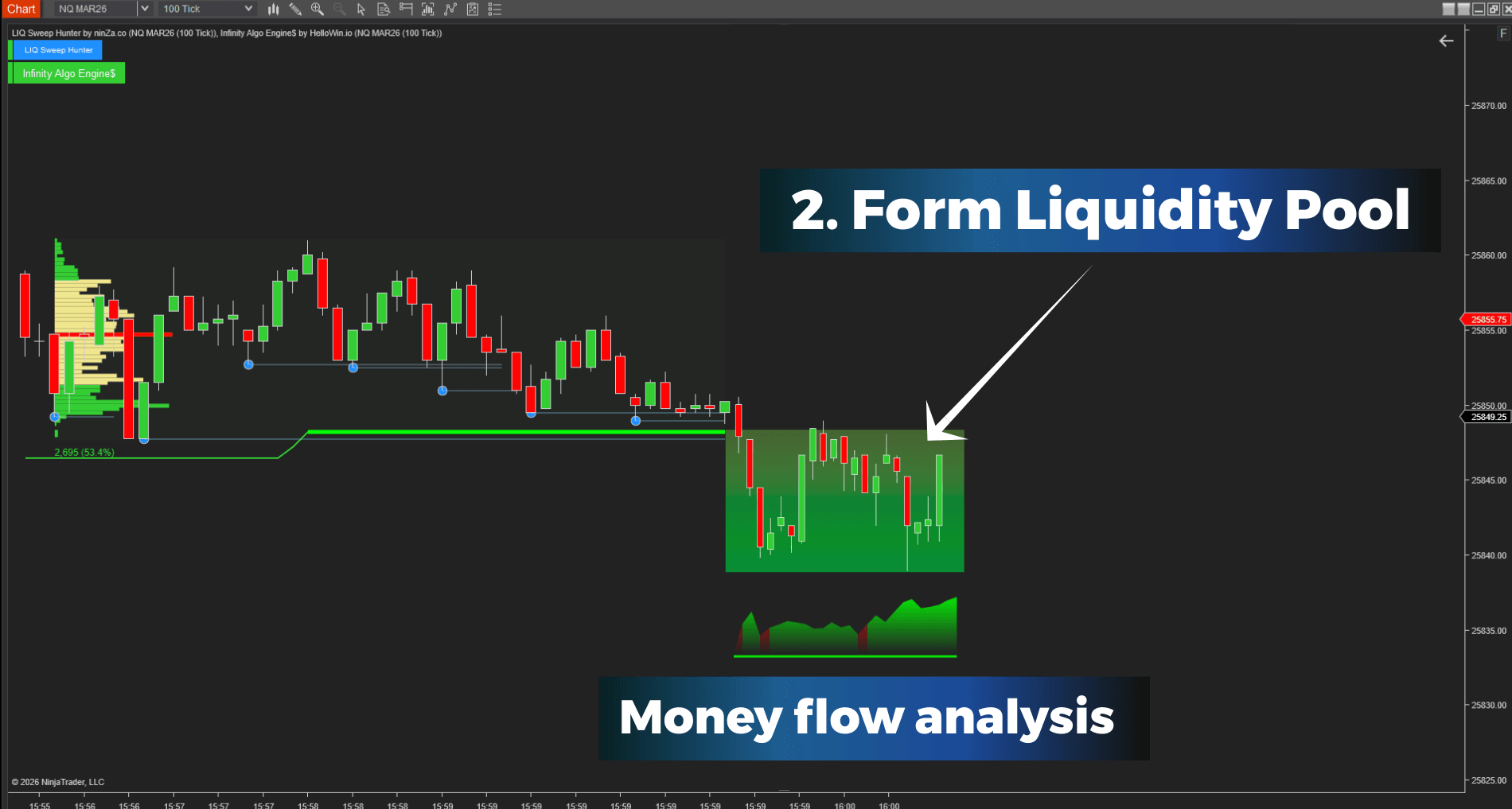
2 Execution Modes within One liquidity framework
Mode 1: Follow Direction (Continuation after internal sweep)
Designed for scalpers and intraday traders who trade continuation within active trends.
How it works
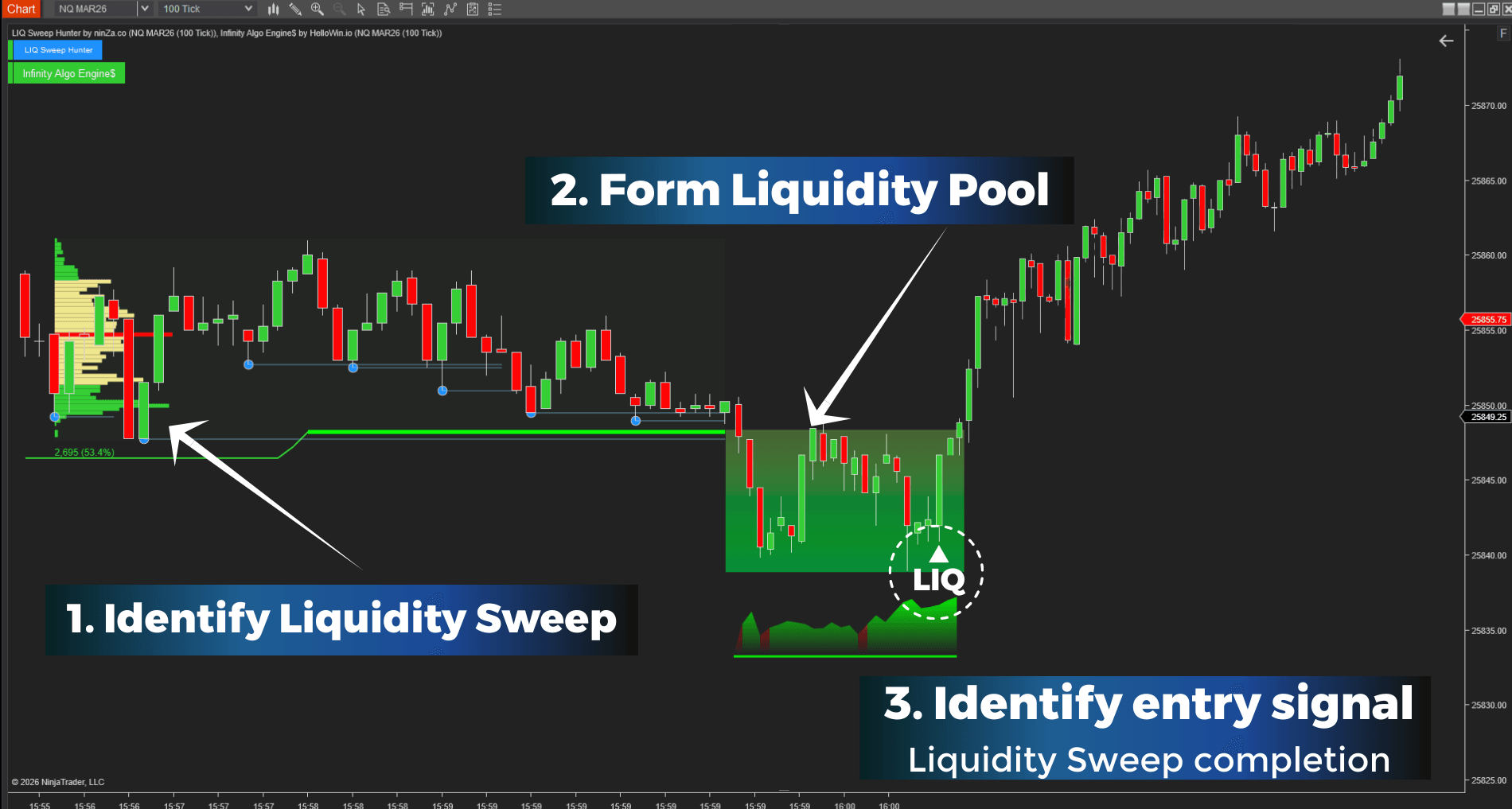
Step 1 – Internal Liquidity Sweep
Price trades beyond short-term swing highs/lows and breaches the trailing stop line, triggering internal stop clusters.
Step 2 – Liquidity Pool formation
A Liquidity Pool is defined. This pool establishes the structural boundary of the sweep and the invalidation level.
Step 3 – Continuation confirmation
The liquidity sweep indicator monitors price behavior inside the Liquidity Pool. A signal appears only if the sweep stabilizes and order flow confirms trend resumption.
This avoids entering during a stop hunt and instead trades after the liquidity sweep is validated.
Mode 2: Counter Direction (Structural reversal after major sweep)
Designed for swing traders positioning around major market structure shifts.
How it works
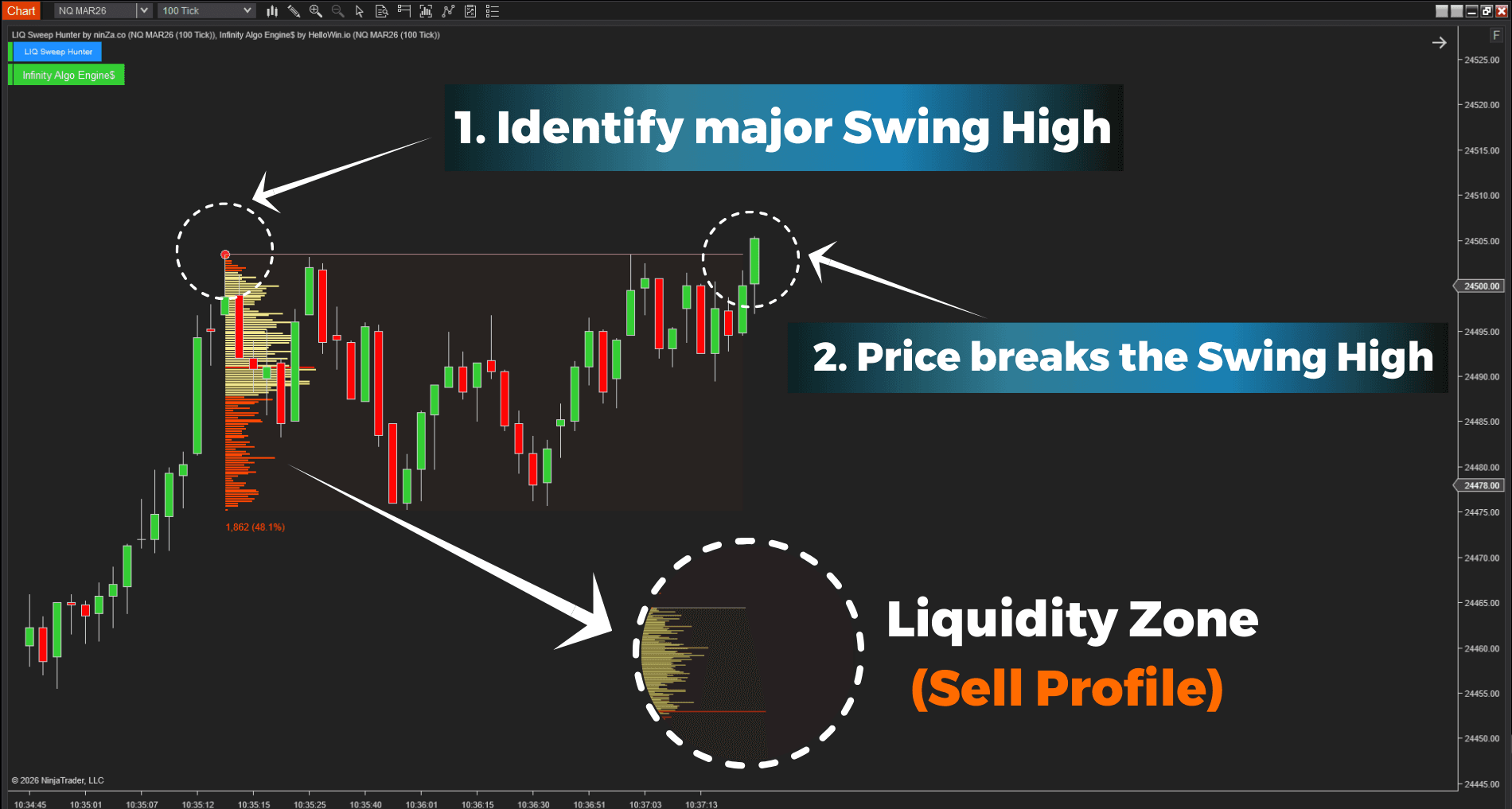
Step 1 – Major pivot projection
The indicator identifies significant historical swing highs and lows and projects them forward as active liquidity levels.
Step 2 – Structural break
Price trades beyond the projected level, triggering clustered stops and breakout participation. Delta at the moment of the break is recorded.
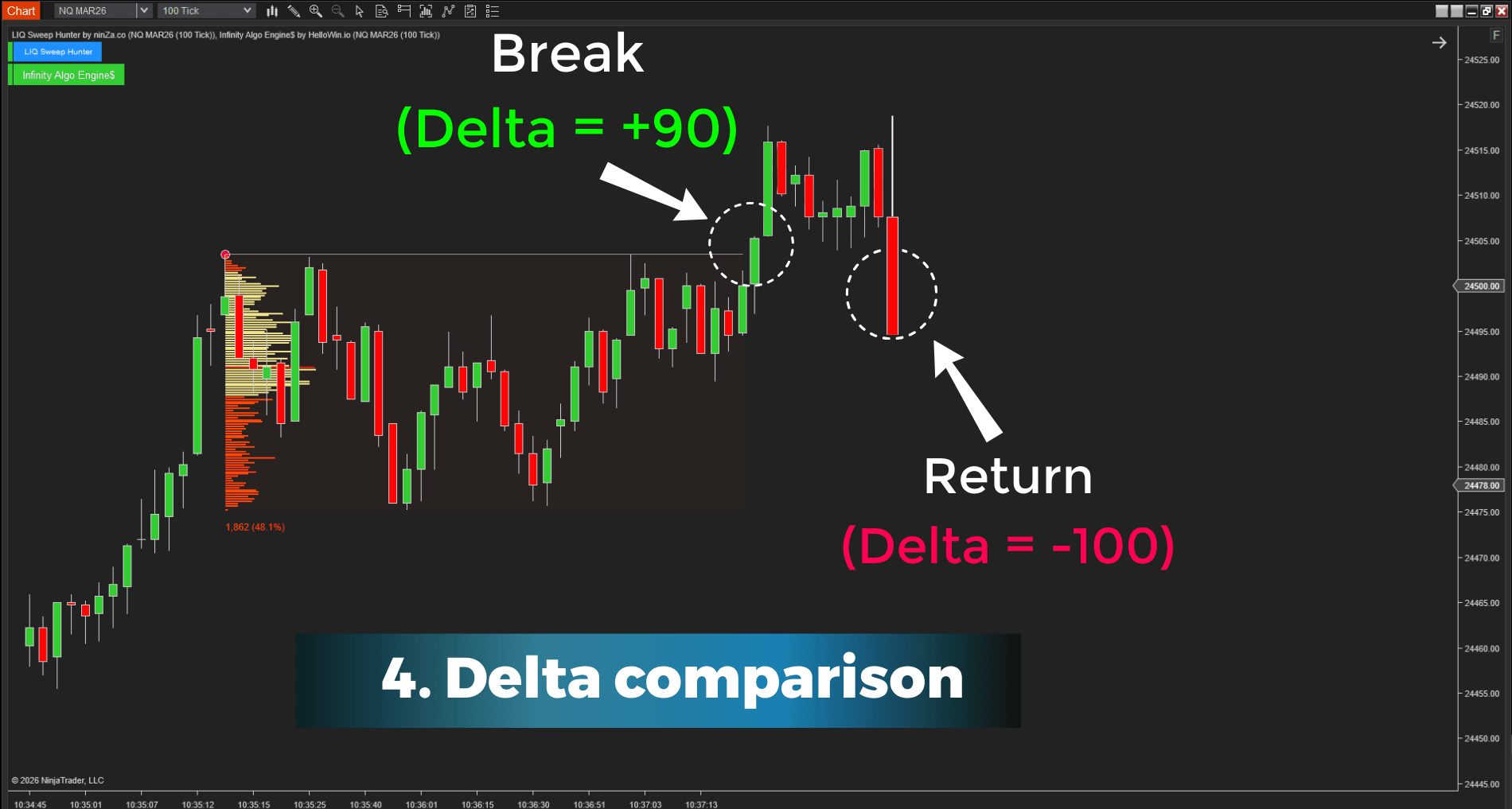
Step 3 – Return to the broken level
Within a defined number of bars, price must return to the breakout S/R zone.
Step 4 – Delta confirmation
Delta at the return is compared with Delta at the breakout. If the return Delta opposes the breakout Delta, the move is more likely a liquidity-driven break rather than true continuation.
A signal appears only when this reversal logic is structurally confirmed.
Benefits of trading confirmed Liquidity Sweeps
Because the liquidity sweep indicator defines a Liquidity Pool and validates sweep completion before signaling, trade entries are aligned with confirmed structure rather than emotional breakout participation.
1. Enter after the sweep — not during the Stop Hunt
Signals appear only once the liquidity sweep is complete, helping you avoid becoming part of the stop hunt and instead trade after the market reveals real direction.
2. Structural stop placement using Liquidity Pool
Liquidity Pool defines the structural boundary of a valid sweep. Stops are placed based on clear invalidation logic rather than crowded swing highs or lows.
3. Institutional Order Flow context
The integrated Money Flow chart helps you see whether liquidity is being swept or distributed before the next move unfolds.
4. Position early in expansion phases
Entries are designed to occur at the beginning of a new impulse, allowing participation in immediate moves instead of chasing extended price action.
Our bestsellers page collects the futures trading indicators with the strongest reviews. Check it when you get a chance.



_1787026707358.svg)