

NINZA Columbus Day Sale 2026 – Bundle Builder
The larger the bundle, the better the value
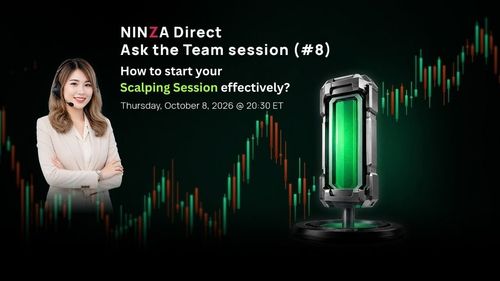
NINZA Direct: Ask the Team session (#8)
How to start your Scalping Session effectively?
_1791367956213.jpg)
FLAMINGO
One trading framework. Two ways to trade.
![[New flagship Renko system] Poseidon Trident —E](https://forestcms.nyc3.digitaloceanspaces.com/media/small_Poseidon Trident —E banner_1789461376412.jpg)
[New flagship Renko system] Poseidon Trident —E
Catch the Sniper Entry. Ride the Strongest Waves.

We hit the limits. So we built ZillaTrader.
A new research & trading platform, built on 12+ years of experience.
Coming November 2026.
From Beginner to Pro: Decoding Ticks in Futures Trading
If you’re new to futures trading – or even if you’ve been trading for a while – understanding ticks is essential.
Ticks represent the smallest price movement in the markets and are a critical element in calculating profit, loss, risk, and execution strategies in futures trading.
If you’re wondering what a tick is in futures trading, this post will provide the knowledge you need to grasp this key concept effectively. Let’s break it down in a way that both beginners and pro traders can use.
What is a Tick in futures trading?
In futures trading, a tick is the smallest possible increment by which a market price can change. It’s the minimum price movement, either up or down, that the exchange allows for a given futures contract.
Think of a tick as a single step on the price ladder – you cannot move by smaller increments than one tick on that contract.
How Ticks work in futures markets
Every futures contract has specific contract specifications, and one of those specs is the tick size, which is set by the exchange. This value varies by instrument (actual values may vary by exchange and version):
- E-Mini S&P 500 (/ES) – tick size: 0.25 index points
- Crude Oil (/CL) – tick size: $0.01 per barrel
- Gold (/GC) – tick size: $0.10 per ounce
What does this mean in practice?
If the tick size for /ES is 0.25, the market price can move like this:
- 4000.00 → 4000.25 → 4000.50 → 4000.75 → …
You cannot trade at prices between these ticks.
What’s the difference between Tick Size and Tick Value?
These 2 terms are closely related but not the same:
- Tick Size: The minimum price movement allowed on the exchange for a futures contract.
- Tick Value: The monetary value of a single tick movement for that contract – how much money you gain or lose when the price moves by one tick.
Simple formula: Tick Value = Tick Size × Contract Size
For example:
- Crude Oil (/CL): tick size $0.01 × 1,000 barrels = $10 per tick
- E-Mini S&P 500 (/ES): tick size 0.25 × $50 per point = $12.50 per tick
Why Tick Size and Tick Value matter to traders
Understanding the fundamentals of ticks unlocks several essential aspects of trading:
1. Measuring Risk Tolerance
Each tick movement has a specific dollar value. Knowing the tick value helps you calculate:
- Potential profit & loss
- Stop loss & take profit distances
- Position sizing logic
Without this information, risk metrics become guesswork.
2. Precision Execution
Tick size determines the granularity of price movement. Contracts with smaller tick sizes allow for tighter entry/exit pricing, which is useful for scalpers or high-frequency strategies.
3. Strategy Impact
The speed at which a tick is formed affects the choice of trading strategy. For example:
- A faster tick formation allows effective scalping.
- Slower tick formations are better suited for day trading and swing trading.
Professional traders always reference contract tick specifications before placing orders.
Common Trader FAQs
1. "How much is 1 tick in trading?"
There is no universal value for a tick – it depends on the futures contract.
For example:
- A 0.25 tick on the E-Mini S&P 500 equals $12.50 per contract
- A $0.01 tick on Crude Oil equals $10 per contract
Always check the contract specifications before trading.
2. "What does "tick" mean in futures?"
A tick is the smallest allowable price movement for a futures contract – the basic unit by which prices can move up or down.
Pro Tip for Traders
- Always know the tick size and tick value before trading a new futures product.
- Use tick values when calculating your risk per contract, especially when scaling positions.
- Tick awareness can prevent costly mistakes, such as mispriced targets or underestimated risk.
Download ~ 40 FREE indicators & reach more useful resources !!!
LIVE Intraday Trading | Stop chasing Early Entries. Let Timing guide your entry →

ninZa.co Indicators
0 online
_1787026707358.svg)
NINZA is an official member of NinjaTrader Ecosystem together with 600+ industry-leading professionals that provide traders with quality trading products & services.




even more payment methods
Quick Links
Instructions
Support
Resources & Information
© Copyright 2026 All Rights Reserved



Because software products may be copied and stored easily, we will NOT issue refunds of any kind. ALL SALES ARE FINAL & NON-REFUNDABLE!
Futures, foreign currency, and options trading contains substantial risk and is not for every investor. An investor could potentially lose all or more than the initial investment. Risk capital is money that can be lost without jeopardizing one's financial security or lifestyle. Only risk capital should be used for trading and only those with sufficient risk capital should consider trading. Past performance is not necessarily indicative of future results.
Hypothetical performance results have many inherent limitations, some of which are described below. No representation is being made that any account will or is likely to achieve profits or losses similar to those shown; in fact, there are frequently sharp differences between hypothetical performance results and the actual results subsequently achieved by any particular trading program. One of the limitations of hypothetical performance results is that they are generally prepared with the benefit of hindsight. In addition, hypothetical trading does not involve financial risk, and no hypothetical trading record can completely account for the impact of financial risk of actual trading. For example, the ability to withstand losses or to adhere to a particular trading program in spite of trading losses are material points which can also adversely affect actual trading results. There are numerous other factors related to the markets in general or to the implementation of any specific trading program which cannot be fully accounted for in the preparation of hypothetical performance results and all which can adversely affect trading results.
NinjaTrader® is a registered trademark of NinjaTrader Group, LLC. No NinjaTrader company has any affiliation with the owner, developer, or provider of the products or services described herein, or any interest, ownership or otherwise, in any such product or service, or endorses, recommends or approves any such product or service.