
Oracle Matrix
A note from the team who built it
Why we built Oracle Matrix
We experienced firsthand how difficult it can be to develop an automated trading system. That challenge led us to build an internal system that made our research faster and easier.
Behind this system were advanced calculations and complex relationships between indicators. It took 5 months to bring the system to completion.
For a typical trader, independently building such sophisticated research software would be extremely difficult, even with AI-assisted coding. A project of this scale goes beyond what current AI can reliably build on its own.
That's why we decided to give retail traders access to these research capabilities through Oracle Matrix.
Oracle Matrix is professional-grade research software that helps retail traders research the market and find trading edge using a methodology closer to that of quantitative traders and professional funds.

Confidence
Build proven trading strategies with Context Intelligence
Research how a Signal performs across thousands of Contexts, validate the market conditions where it consistently outperforms, and deploy only what has proven its edge.
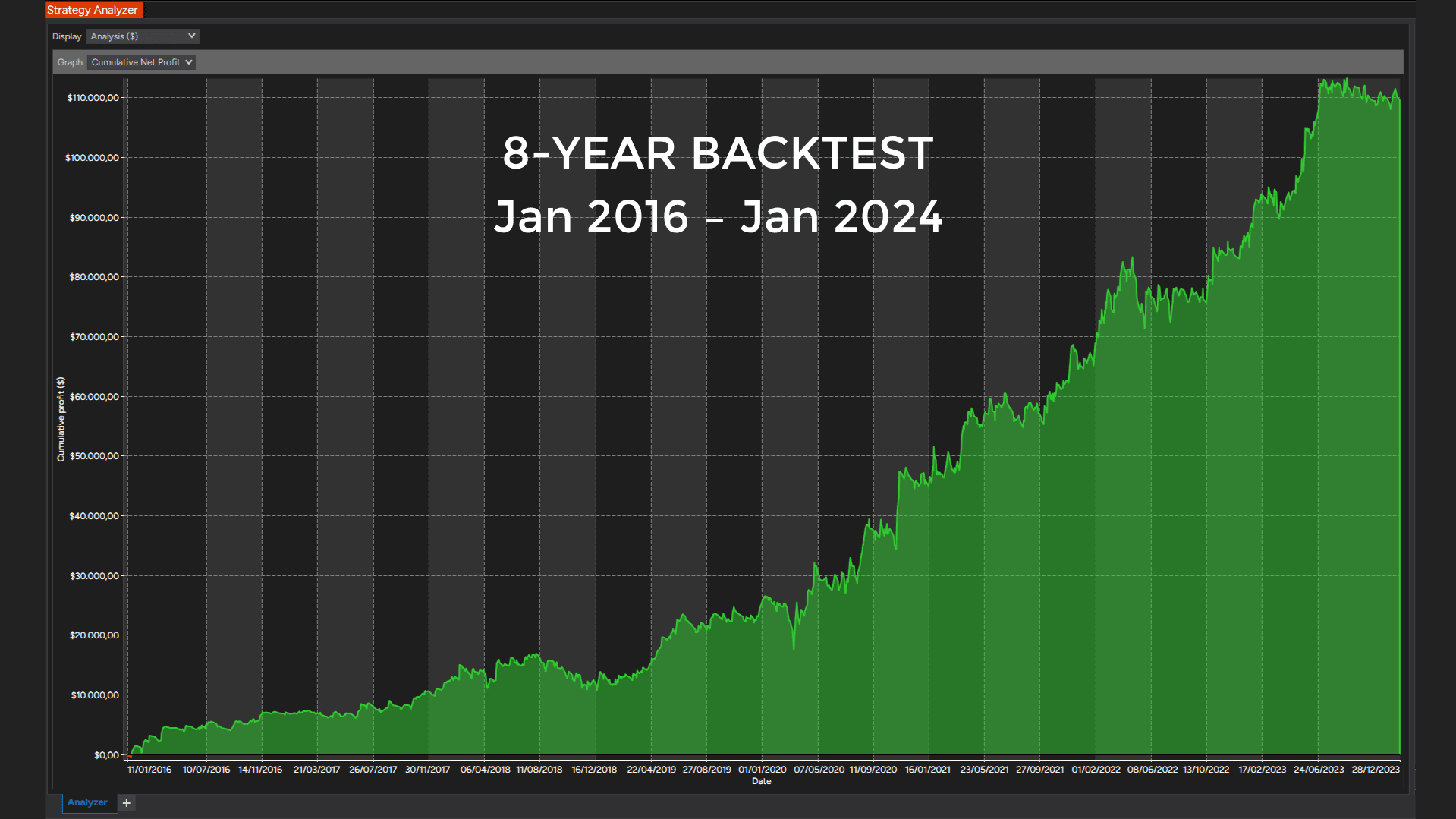
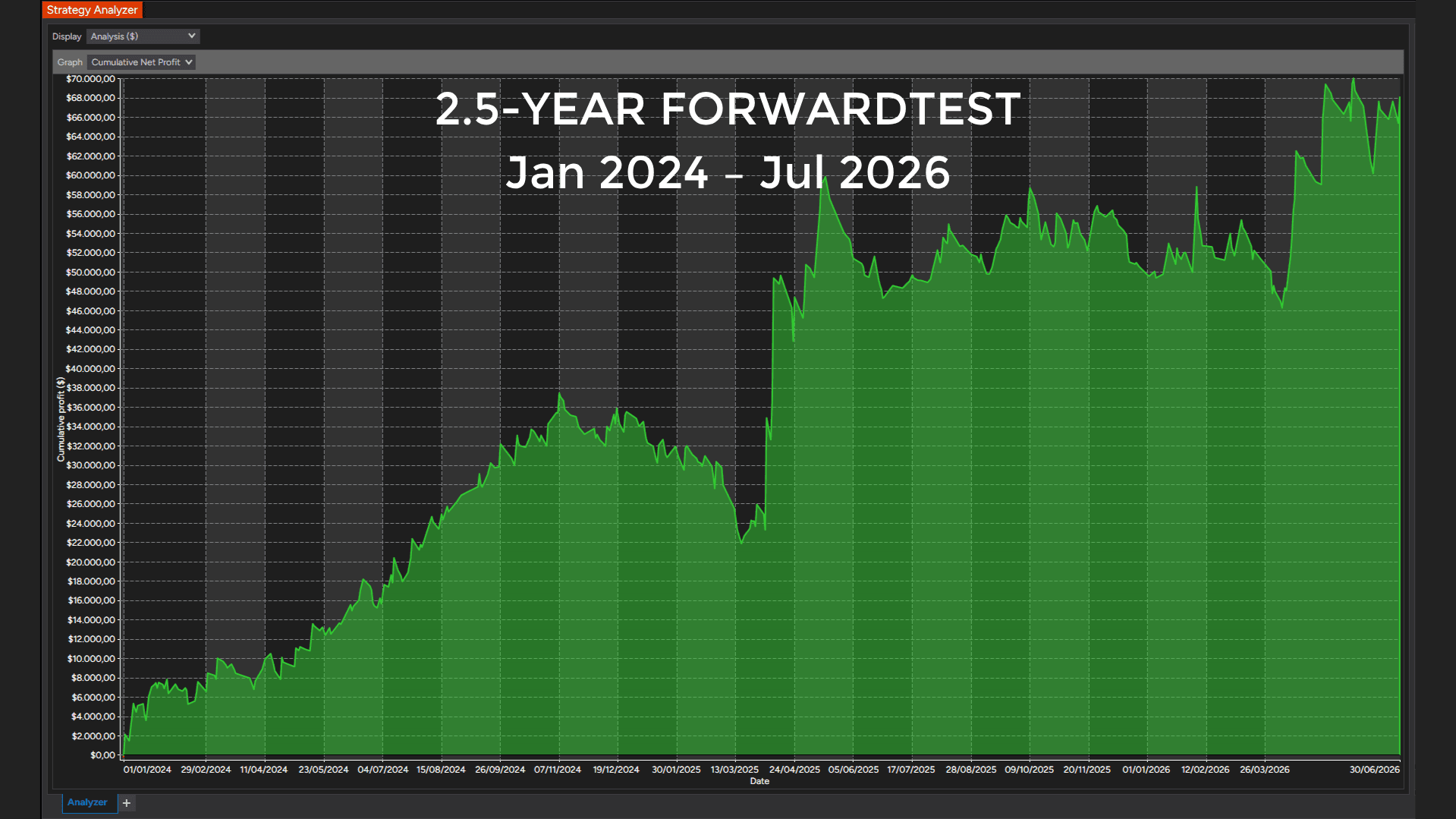
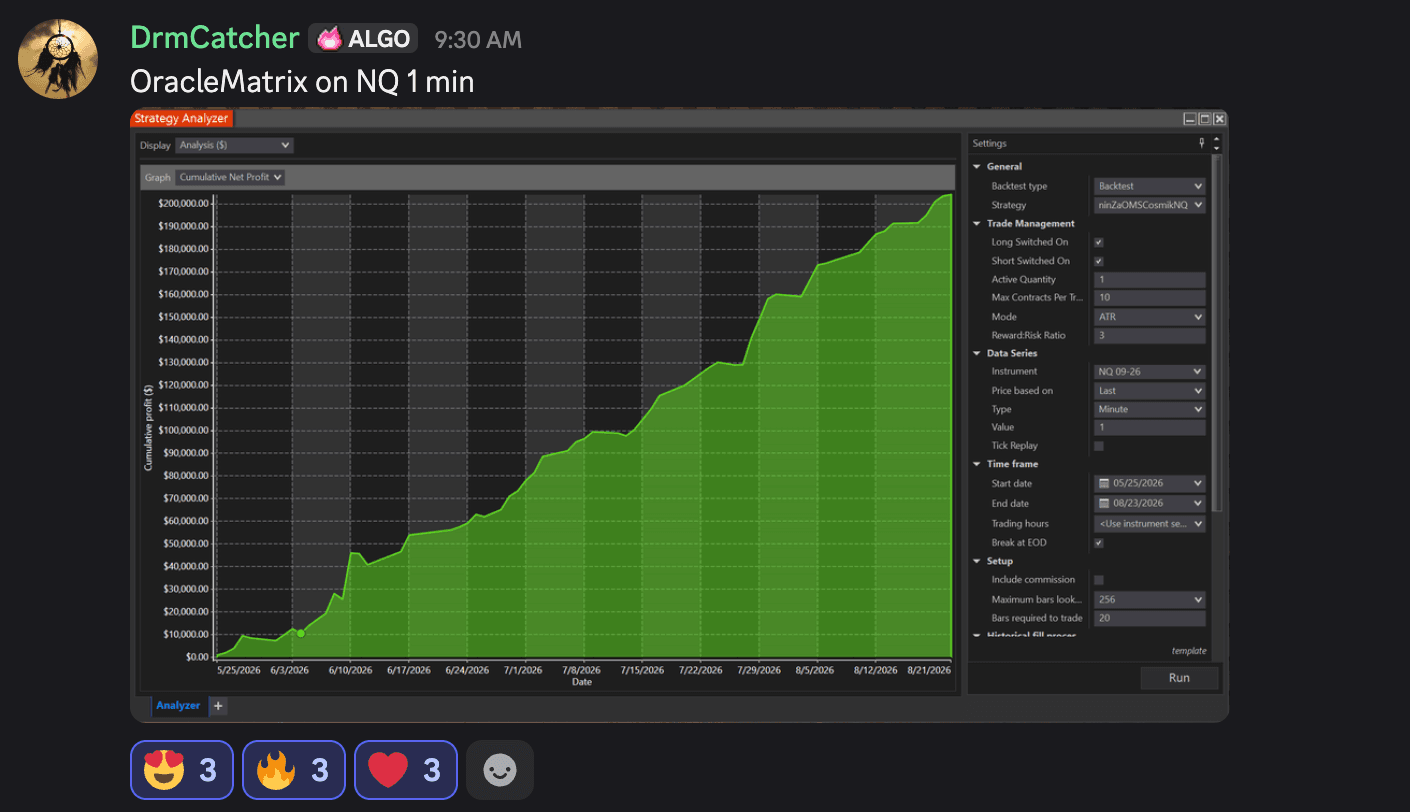
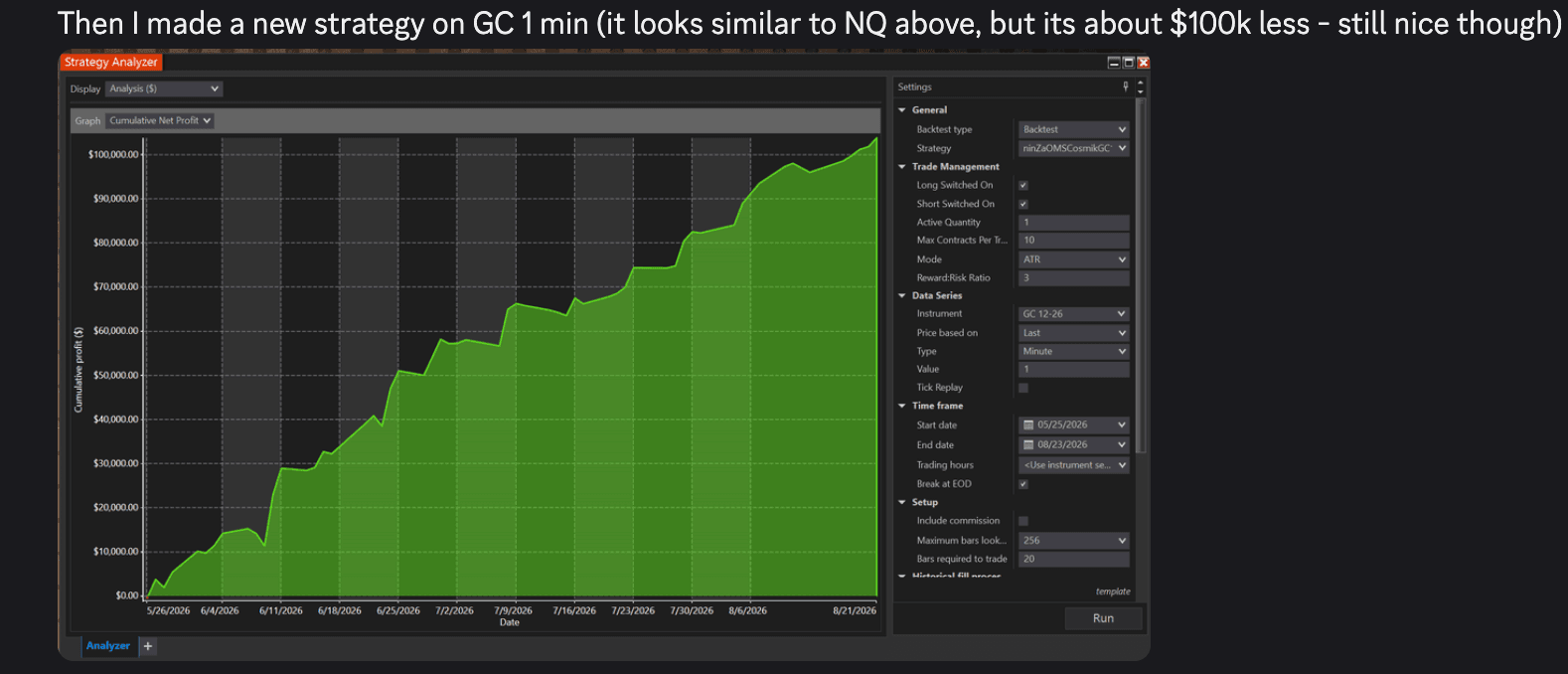
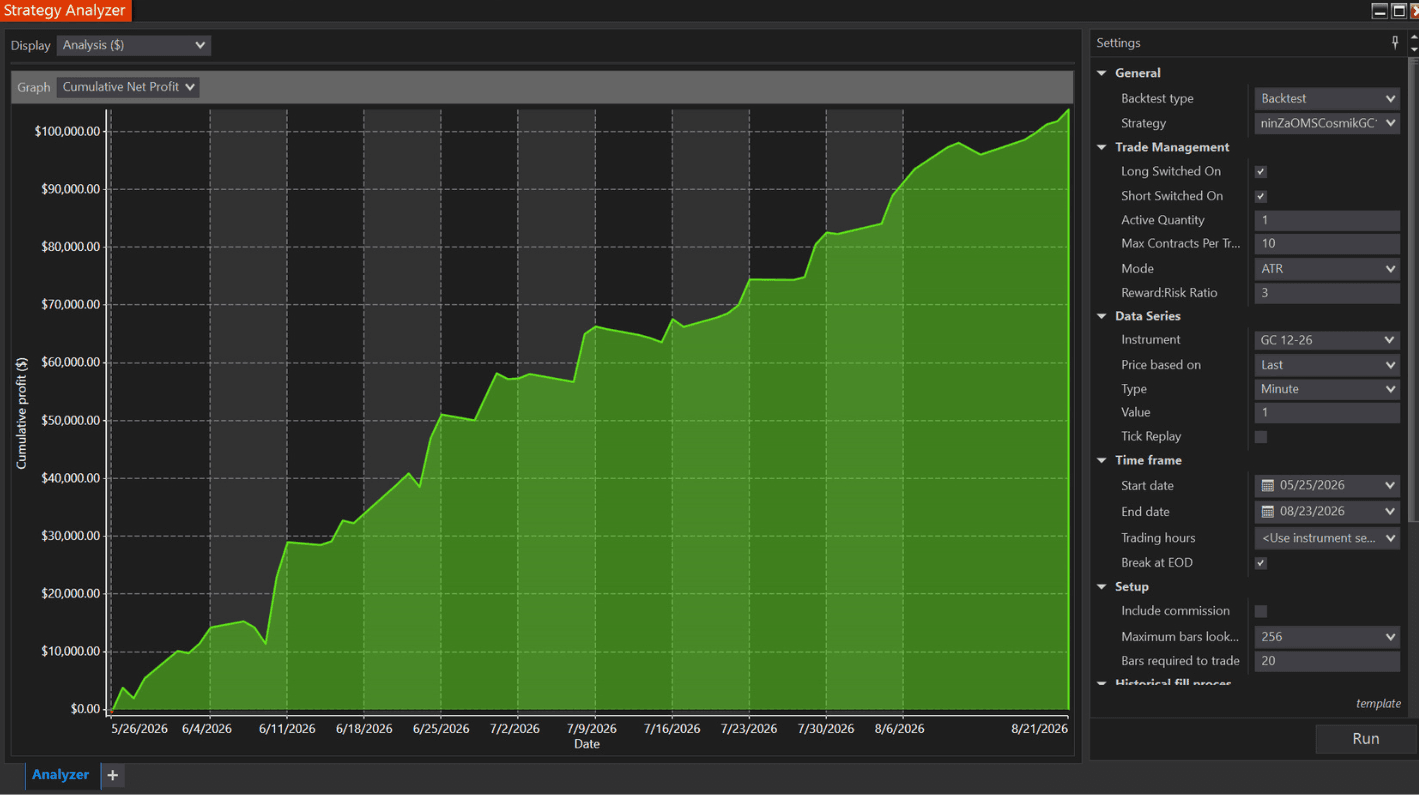
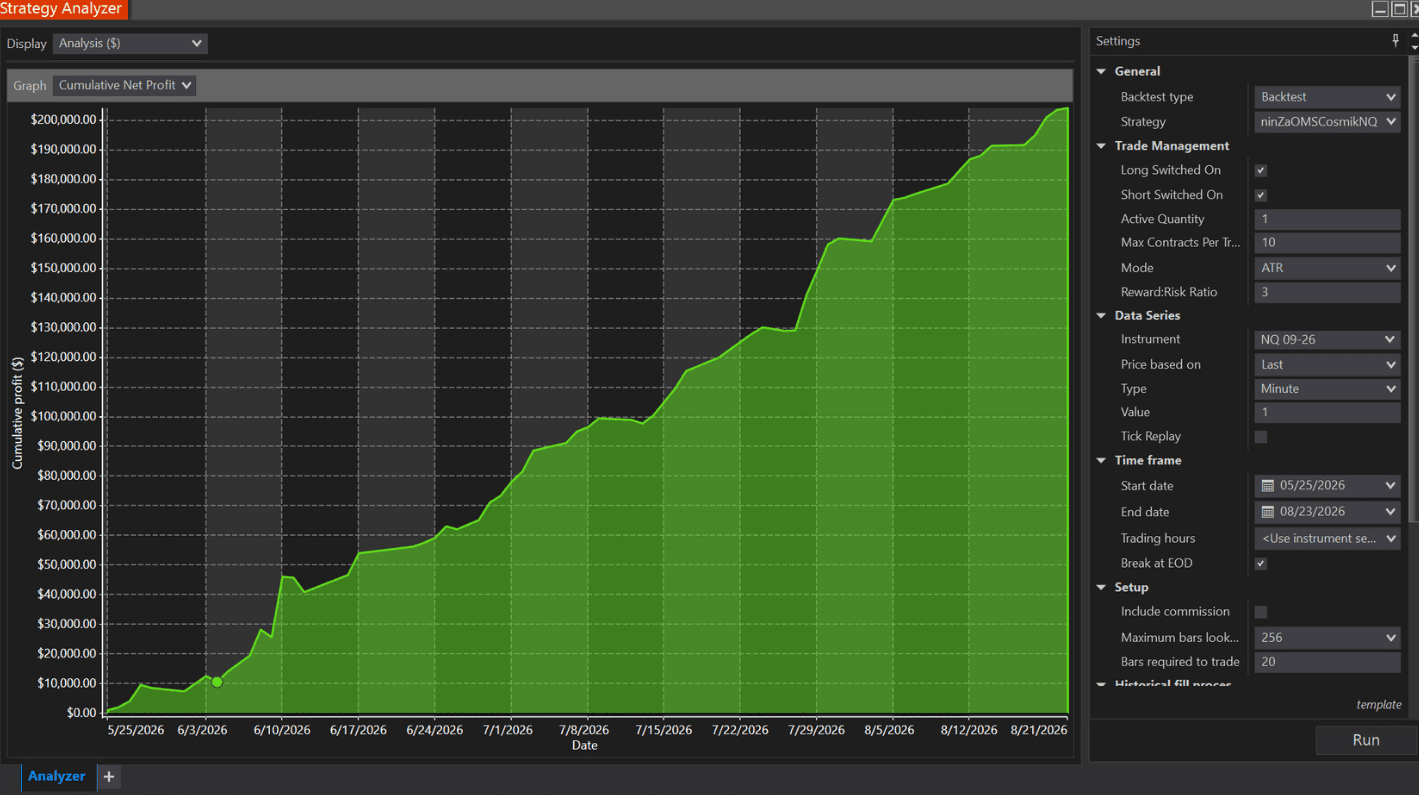
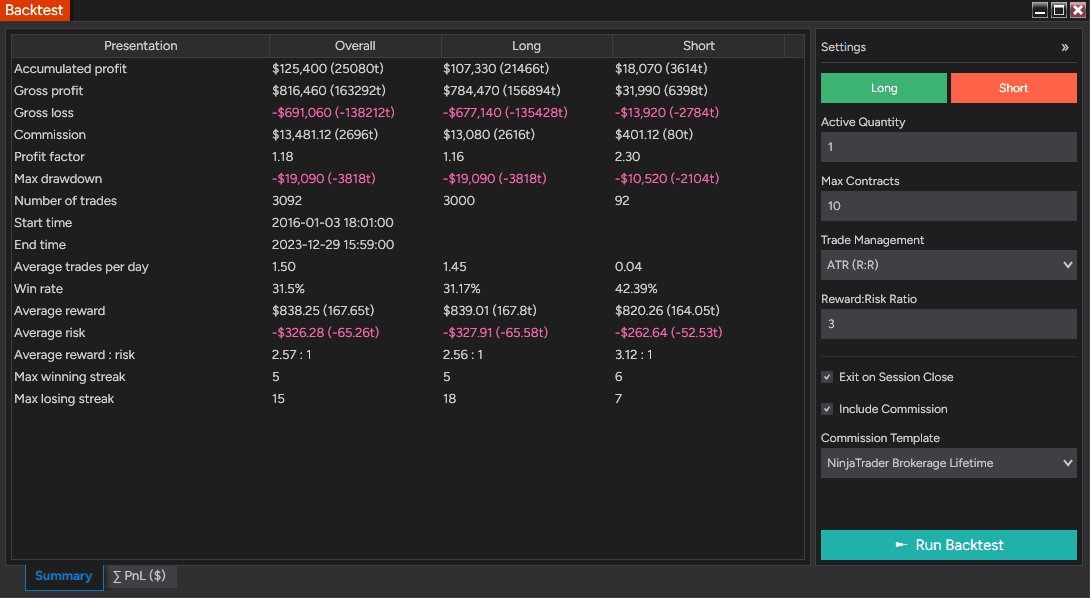
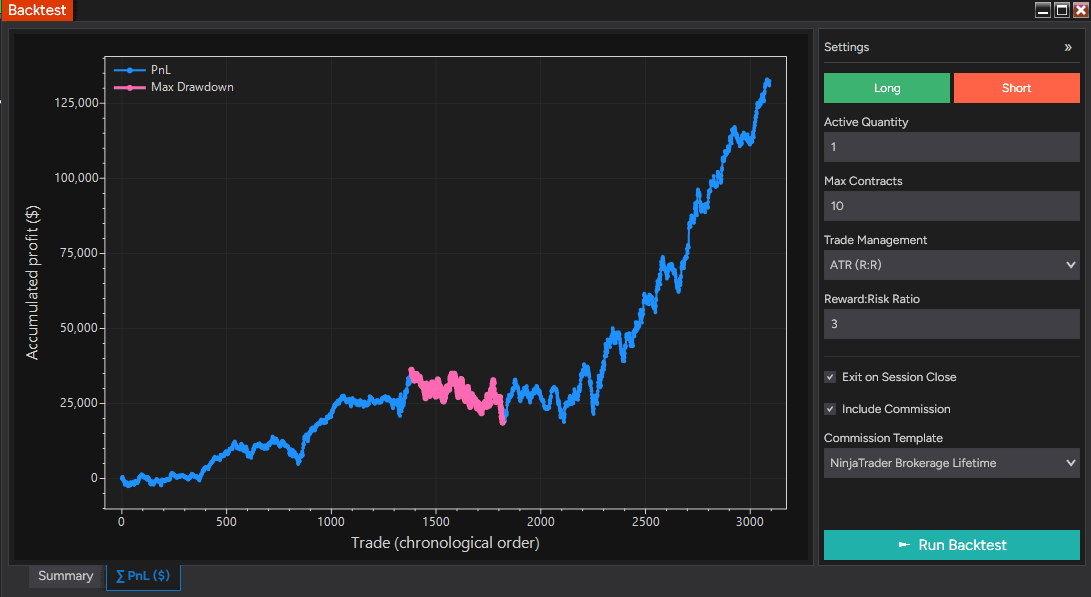
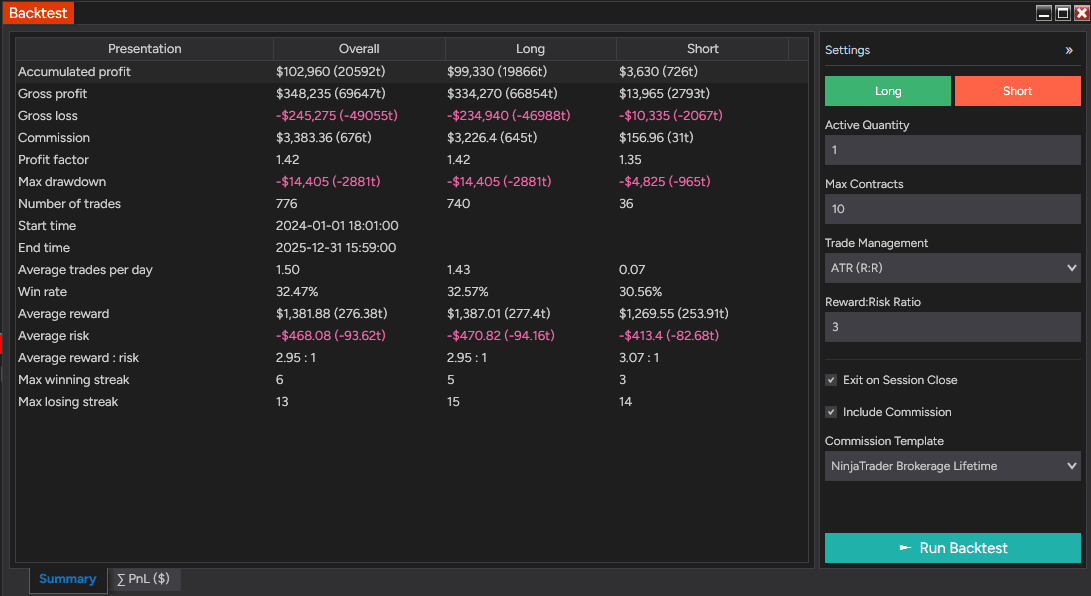
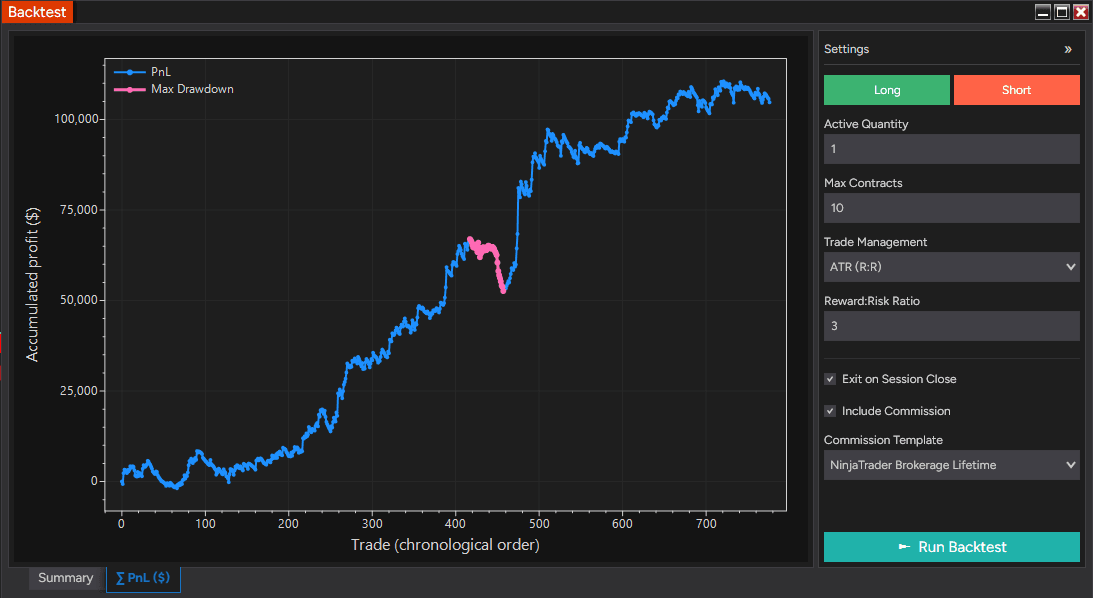
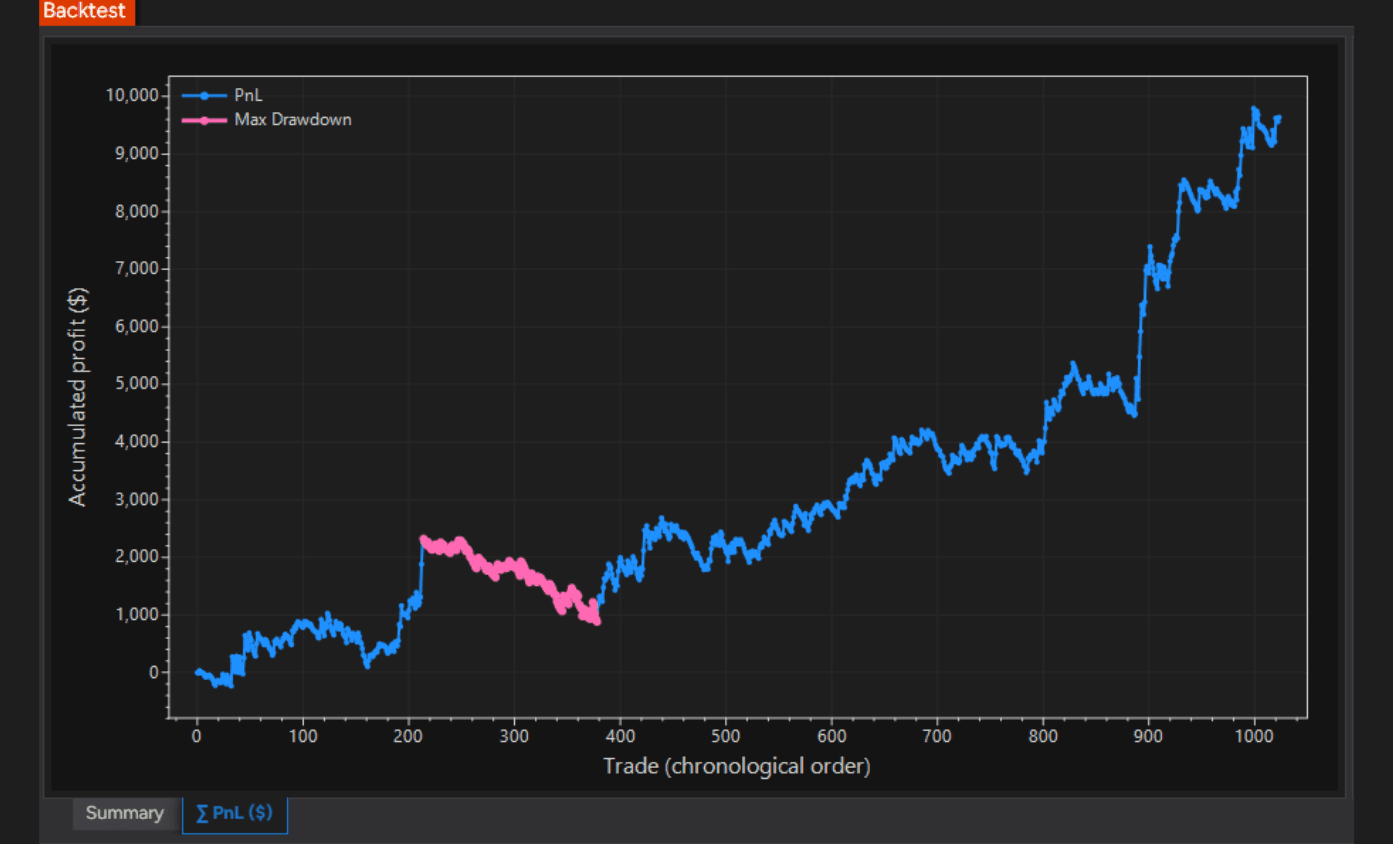
The performance of a strategy developed with Oracle Matrix, validated over 8 years of historical data and 2.5 years of forward testing.
Access to this proven strategy gives traders a head start.
The ability to build the next one creates a lasting advantage.
That's what Oracle Matrix is built for.
Signal never exists alone. It always exists inside a market context.
A trading signal does not determine the outcome by itself. The same signal can produce completely different results depending on the market conditions surrounding it.
What shapes a signal
Trend, momentum, volatility, price location, liquidity, volume, and other market states can transform the quality of a signal.
When these conditions combine, a single signal can appear across hundreds or even thousands of different market contexts.
Why manual research breaks down
Analyzing every possible combination manually is nearly impossible to do with the consistency, objectivity, and precision required to identify where a signal truly has an edge.
That is why traders need a systematic way to capture, classify, and measure signal performance across different contexts.

Transform trading hypothesis into Measurable Contexts
A Context is a unique combination of a trading Signal and one or more market conditions surrounding it.
Oracle Matrix creates each Context by combining a Signal with market conditions from its built-in models or any custom indicators & trading systems.
Traders can test their own ideas using the built-in Signal and 8 Market Conditions, or create Contexts from their existing NinjaScript indicators and trading systems.
Context Matrix — live Scanning
Hundreds of possible Contexts
A trader may believe a Signal performs better during trends, lower volatility, or when indicators such as MACD and RSI meet specific conditions.
As these conditions combine, they create hundreds or even thousands of possible Contexts.
A research process, not a Signal generator
Oracle Matrix automatically measures how the same Signal performs across every Context, revealing where trading edge exists and which market conditions strengthen or weaken a strategy.
Instead of building strategies around Signals alone, Oracle Matrix transforms strategy development into a research process that helps traders understand:
▫️ Why a strategy works
▫️ Where it works best
▫️ Which conditions to keep, refine, or remove

Start trading with ready-to-use strategies
Oracle Matrix comes with 6 ready-to-use strategies, allowing traders to start trading immediately without building a strategy from scratch.
Built-in strategy
Built entirely with Oracle Matrix's built-in Signal and Market Conditions. No additional indicators are required, so you can start trading immediately.
Premium
Extended strategy
Integrates Oracle Matrix with Easy Trend, Klinger Volume Oscillator Pro, and Breakout Hunter to create a fully automated trading system.
Premium
Statistical strategy
Integrates Oracle Matrix with QuantZone, Easy Trend, and Breakout Hunter to combine statistical probability, trend, and breakout conditions into a fully automated trading system.
Premium
High R/R Trend Strategy
Integrates Oracle Matrix with Super JumpBoo$t, Easy Trend, SMMA Pro, and Solar Wave to combine high reward-to-risk setups with multi-layer trend direction, strength, and momentum confirmation in a fully automated trading system.
Premium
High R/R Strategy
Integrates Oracle Matrix with Super JumpBoo$t to turn support/resistance, price compression, and momentum-based signals into a structured high reward-to-risk trading strategy.
Premium
Order Flow Context Strategy
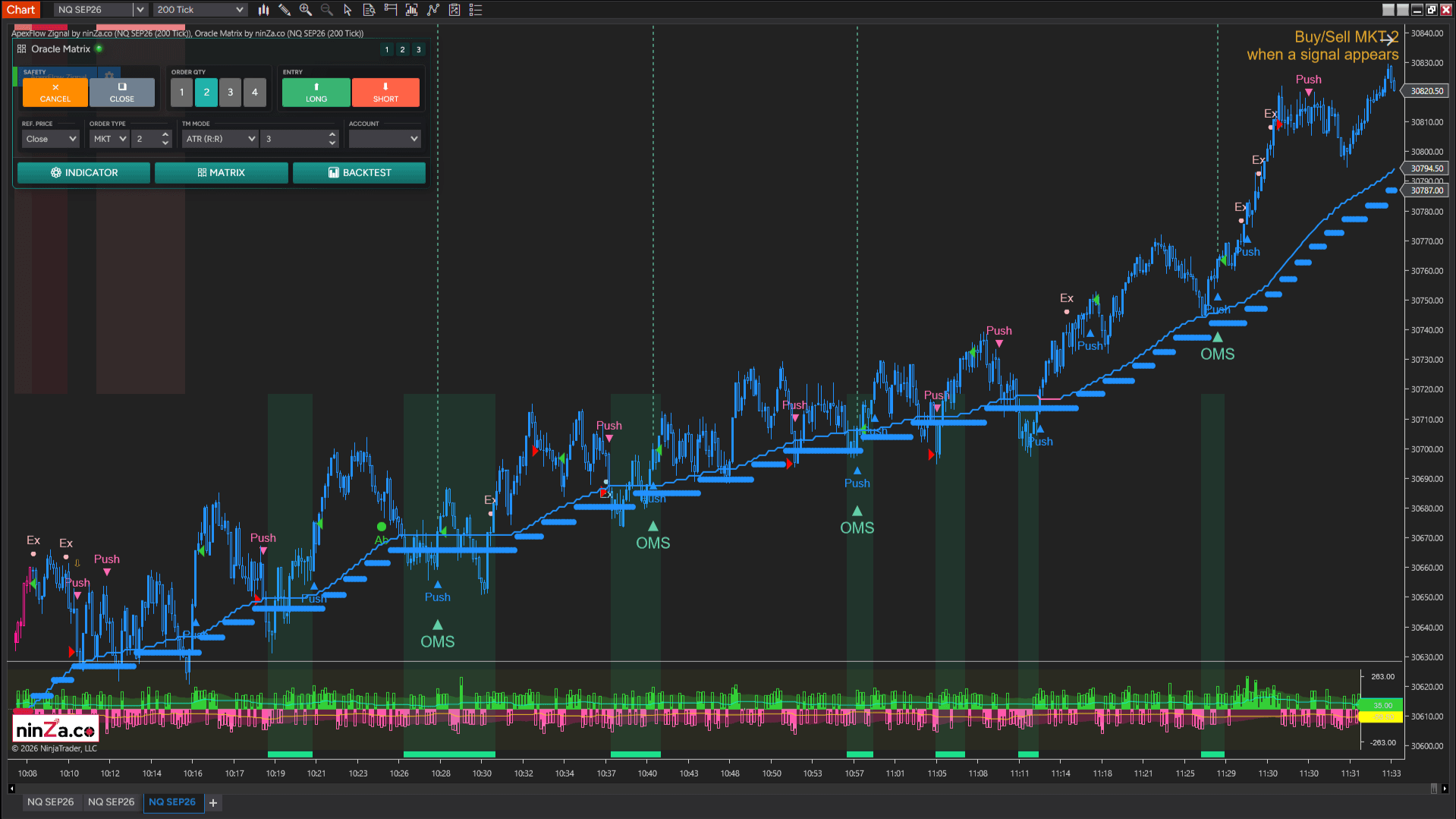
Integrates Oracle Matrix with ApexFlow Zignal, SMMA Pro, and Easy Trend to evaluate order-flow signals within broader trend conditions and turn validated setups into a fully automated trading strategy.
The research process behind every trading edge
Oracle Matrix transforms every trading hypothesis into a validated strategy through a structured research workflow.
Capture historical signals and market conditions
Record historical Signals together with the market conditions surrounding each occurrence.
Build Market State Matrix
Organize every market state and condition present when each Signal appeared, creating the foundation for Context analysis.
Simulate trade outcomes
Recreate how each Signal would have performed under its surrounding market conditions, forming the basis for Context-level analysis.
Analyze signal performance by context
Group Signals based on shared market conditions and measure how each Context influences performance.
Discover and refine trading edge
Identify the market conditions where Signals perform best, then refine the setup by adding or removing conditions to improve its quality.
Validate across market periods
Test selected Signals and Contexts across different market environments to verify consistency and reliability.
Deploy for live trading
Turn proven research into live execution through Semi-Automated Trading or Fully Automated Strategies.
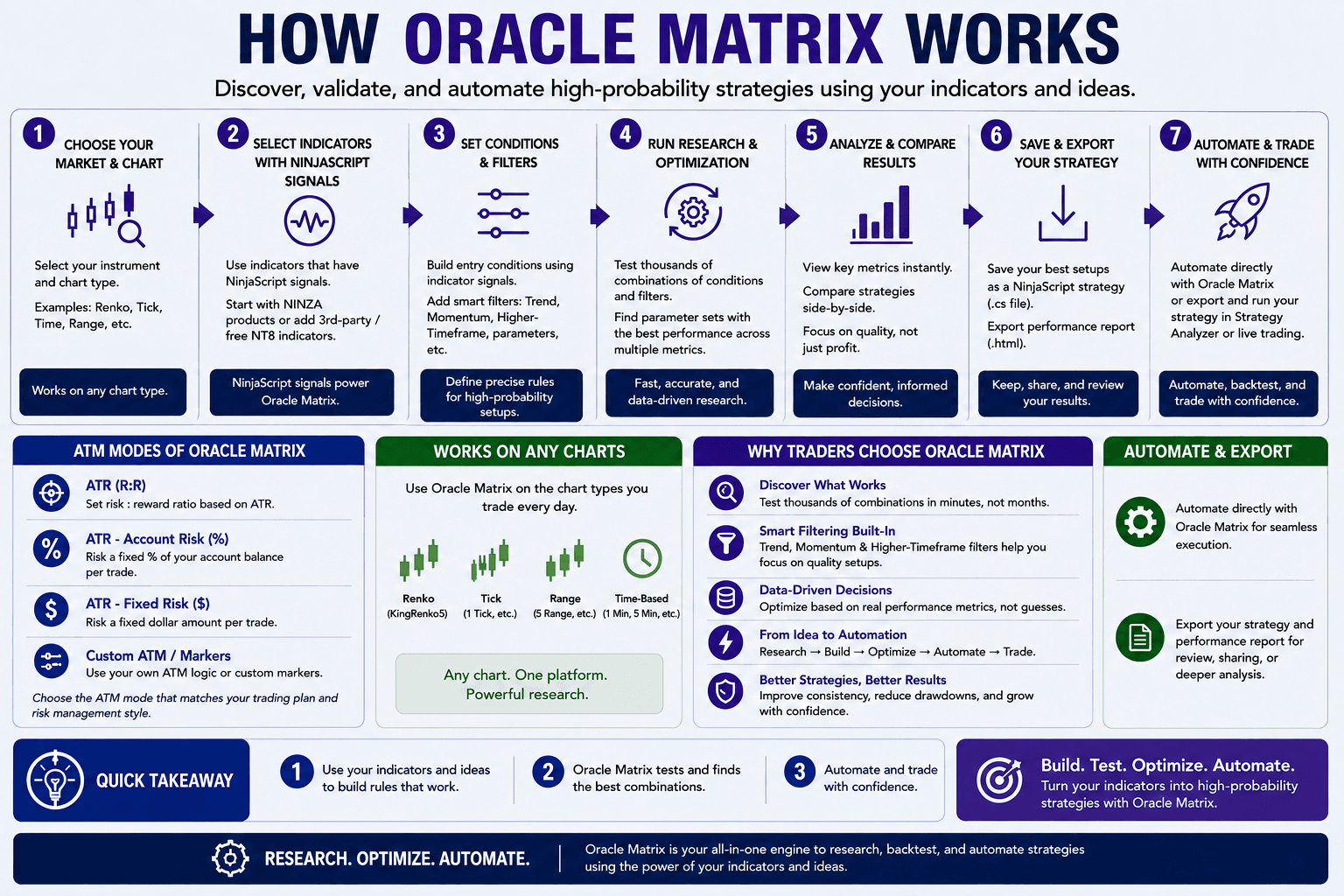
Discover where signals perform best
Oracle Matrix identifies promising Contexts through a two-step process: Context Matrix Analysis for discovery and Backtesting & Forward Testing for validation.
Step 01
Context Matrix Analysis — Identify promising contexts
- Build the context foundation: Analyze historical Signals across the research dataset, group them by Context, and measure the performance of each Context.
- Reveal performance differences: Reveal how the same Signal performs across different market conditions instead of relying on individual trade outcomes.
- Refine the setup: Refine promising Contexts by adding new conditions or analyzing deeper Context levels to improve setup reliability.
Step 02
Backtest & Forward Test — Validate promising contexts
- Test across different market periods: Backtest and forward test selected Contexts across different market environments to measure consistency and reliability.
- Simulate real trading outcomes: Recreate historical performance using the Trade Management Model.
- Reveal deployment-ready Contexts: Surface the Contexts that maintain consistent performance across changing market conditions and are ready for deployment.
Deploy validated Contexts into executable trading systems
Once promising Contexts have been identified, Oracle Matrix transforms them into executable trading systems. Traders can choose Semi-Automated Trading to maintain control over key decisions, or Fully Automated Strategies to automate execution from entry to exit.
Model 01
Semi-Automated Trading
Execute with human control.
- Monitor Signals and Contexts in real time, triggering trades only when validated conditions appear.
- Keep control over key trading decisions, including trade direction, timing, position size, and risk parameters.
- Decide when to activate or stop the system while maintaining full control over execution.
Model 02
Fully Automated Strategy
Turn research into automation.
- Convert validated Signals, Contexts, and trade management rules into a complete automated strategy.
- Backtest and forward test the strategy through NinjaTrader 8 Strategy Analyzer.
- Optimize configurations and deploy the strategy for automated execution.
The foundation for proven trading strategies
Oracle Matrix provides a complete research infrastructure that helps traders create Contexts, analyze market conditions, validate strategies, and deploy trading strategies within one unified workflow.
Build flexible Contexts
- 1 built-in signal
- 8 built-in market conditions
- Add ninZa.co indicators and systems
- Add third-party NinjaScript signals
Analyze market Contexts
- Context Observation model: Observe Signals and surrounding market conditions
- Two-level Context Analysis: Analyze Contexts at deeper levels to refine strategy quality
- Trade Management Model with 4 methods
Validate trading performance
- Performance summary
- Cumulative PnL chart
- Win Rate / Trade statistics
- Exit on Session Close
- Automatic Broker Commission
Deploy with risk control
- Position Sizing
- Risk Limits
- Capital Management
- Configuration & Runtime Error Detection
Execution reliability
- Exit on session close
- Automatic broker commission
- Configuration and runtime error detection
Reuse and scale research
- Store validated Contexts as reusable research templates
- Save reusable configurations for indicators and trading systems
See Oracle Matrix in action
Webinar replay
Filter signals for Higher Win Rate & Profit Factor
In this video, James breaks down why the same trading signal can perform differently across market conditions and how to identify the context where it has the strongest edge.
He also walks through how different condition combinations can be tested and compared to make signal selection more systematic.
In this webinar, James shows how Oracle Matrix combines an indicator’s signal with market context to filter for setups that better match the current environment.
See how it can help traders avoid taking every signal, focus on more selective opportunities, and automate entries using customizable risk and reward settings.
NINZA Direct
How Oracle Matrix turns market context into smarter strategies
See how Oracle Matrix and Zephyrus Force can be applied together on NinjaTrader charts to build more structured trading setups.
In this live product session, we’ll walk through practical chart setups using both systems and explore how their different approaches can complement each other.
See how Oracle Matrix analyzes signals across different market Contexts, validates stronger combinations, and turns them into more systematic trading strategies.
Build & validate trading strategies with Oracle Matrix
The video walks through the setup and shows Oracle Matrix placing trades under live market conditions. Before putting any strategy into live trading, backtest it and review its performance to decide whether it fits your goals and risk plan.
See how Oracle Matrix uses market context to filter indicator signals, reduce unnecessary trades, and make signal selection more selective and systematic.
In this video, we break down how different market Contexts are analyzed to see where a Signal tends to perform more effectively. You’ll also see how a promising Context is narrowed down and then validated through backtesting.
See how Oracle Matrix combines multiple indicators, tests different market conditions, and evaluates performance across years of historical and forward data – helping you identify more consistent strategy setups with less manual testing.
In this video, we explore why trading signals perform differently across market conditions, how to identify stronger contexts, and how to evaluate whether context filtering improves strategy performance using key metrics and backtest results.
Oracle Matrix + ApexFlow Zignal + SMMA Pro + Easy Trend
Research the Context. Read the flow. See the trend more clearly.
A 4-tool bundle for strategy research, order-flow signals, and trend analysis — helping you study market conditions, filter signals, and make more informed trading decisions.
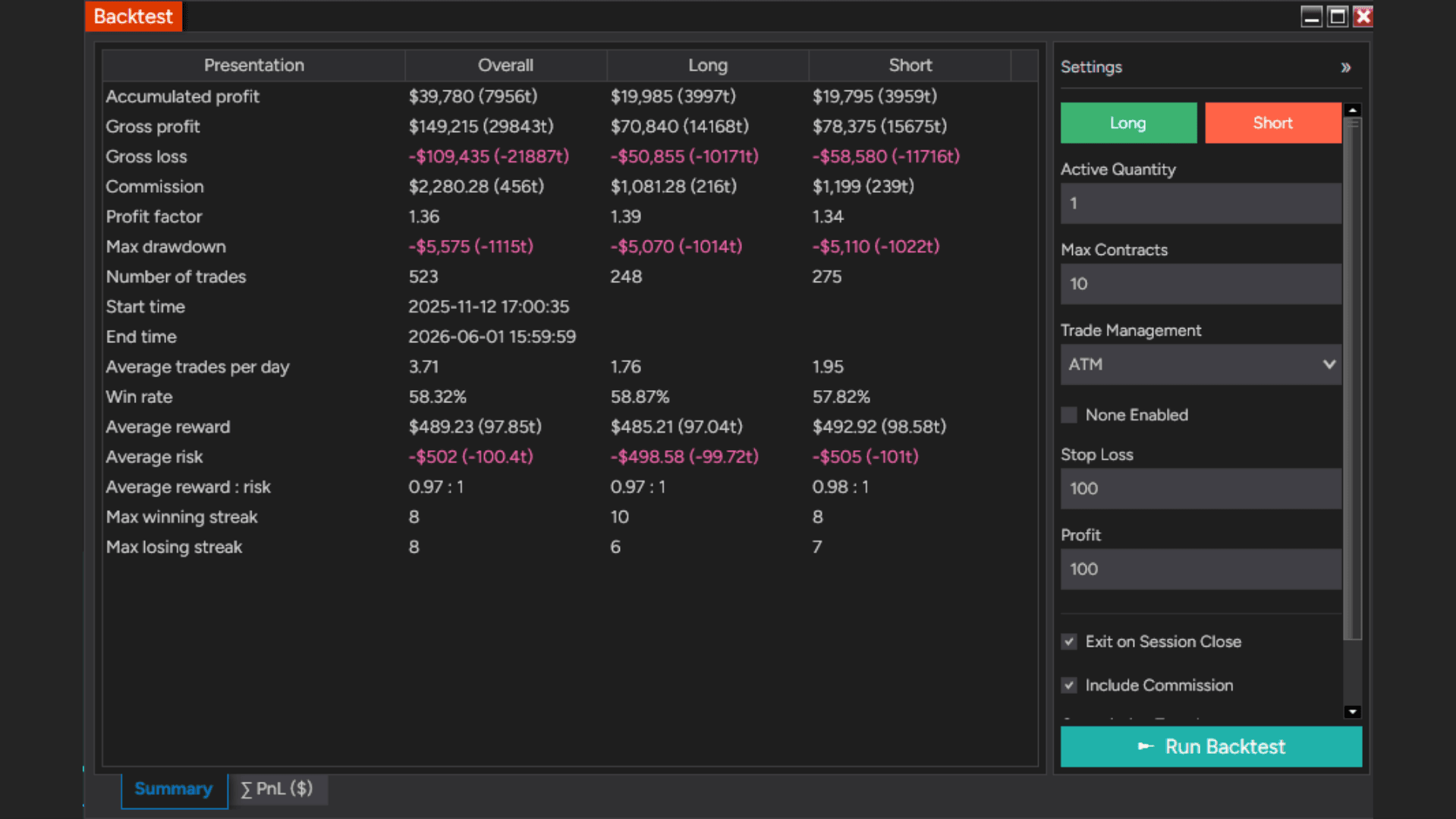
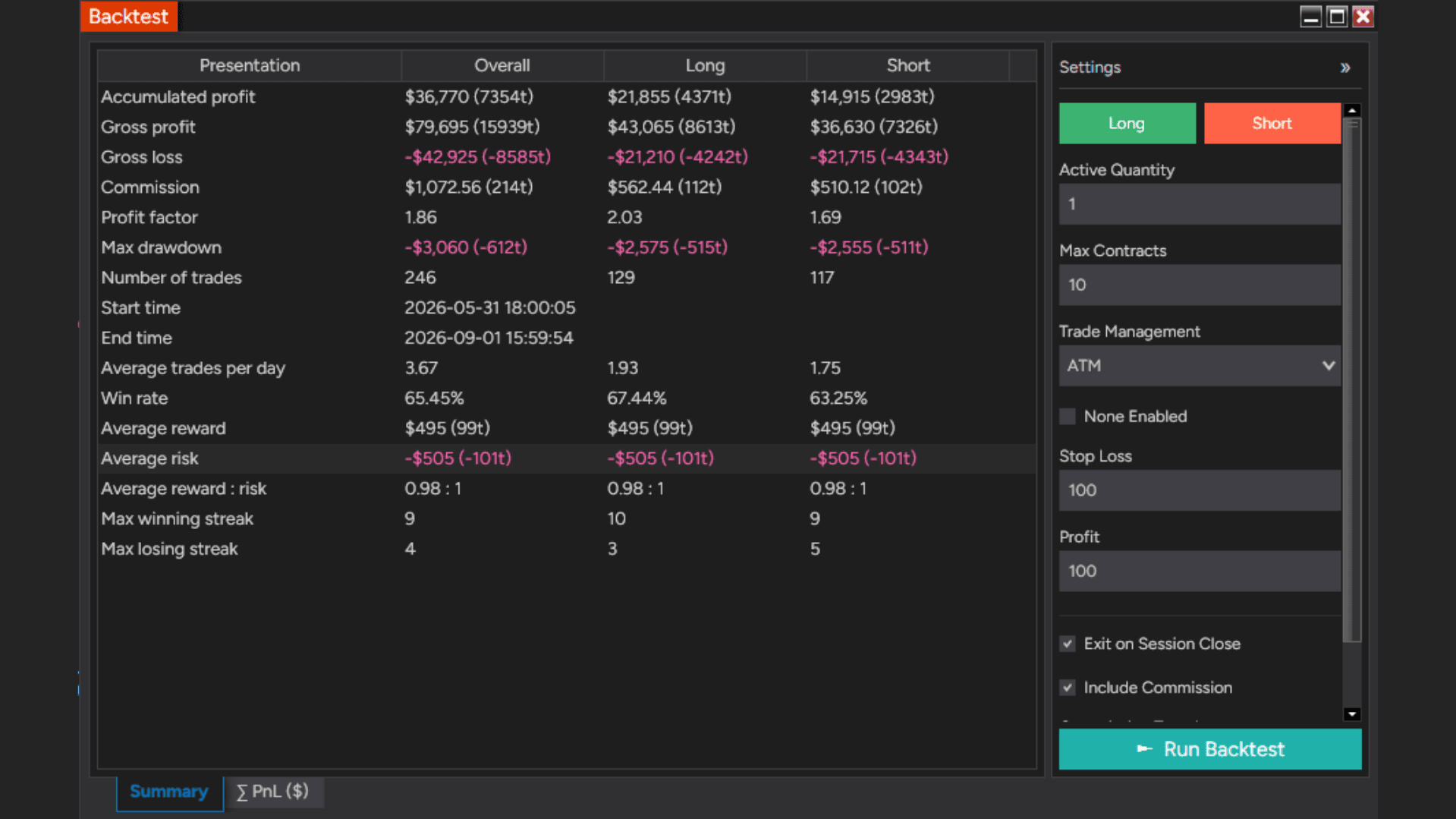
200-bay backtest
200 days of historical performance on the NQ 200-Tick Chart
November 2025 – June 2026
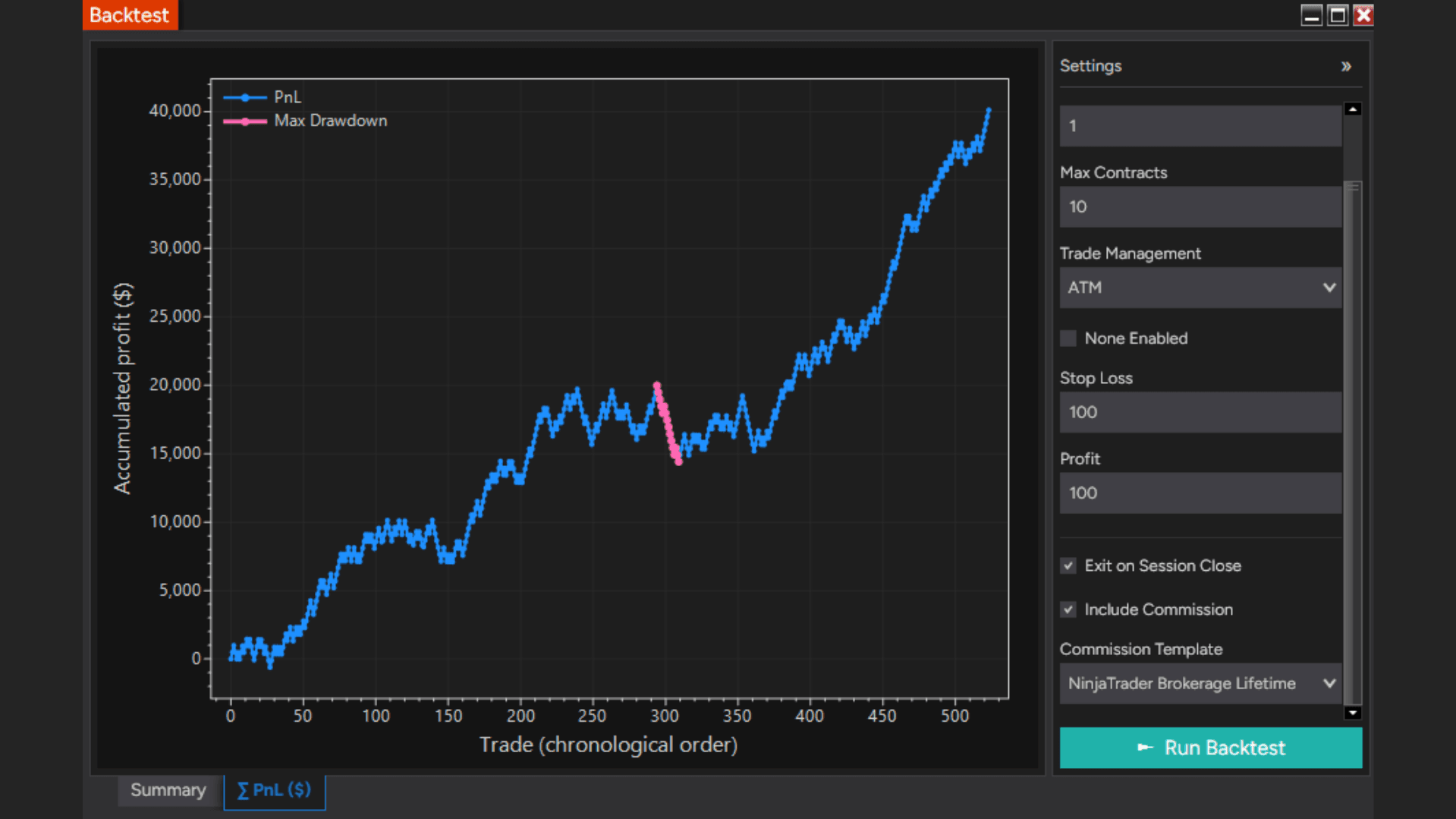
View backtest results
3-month forward test
3 months of forward-tested performance across a new market period
June 2026 – September 2026
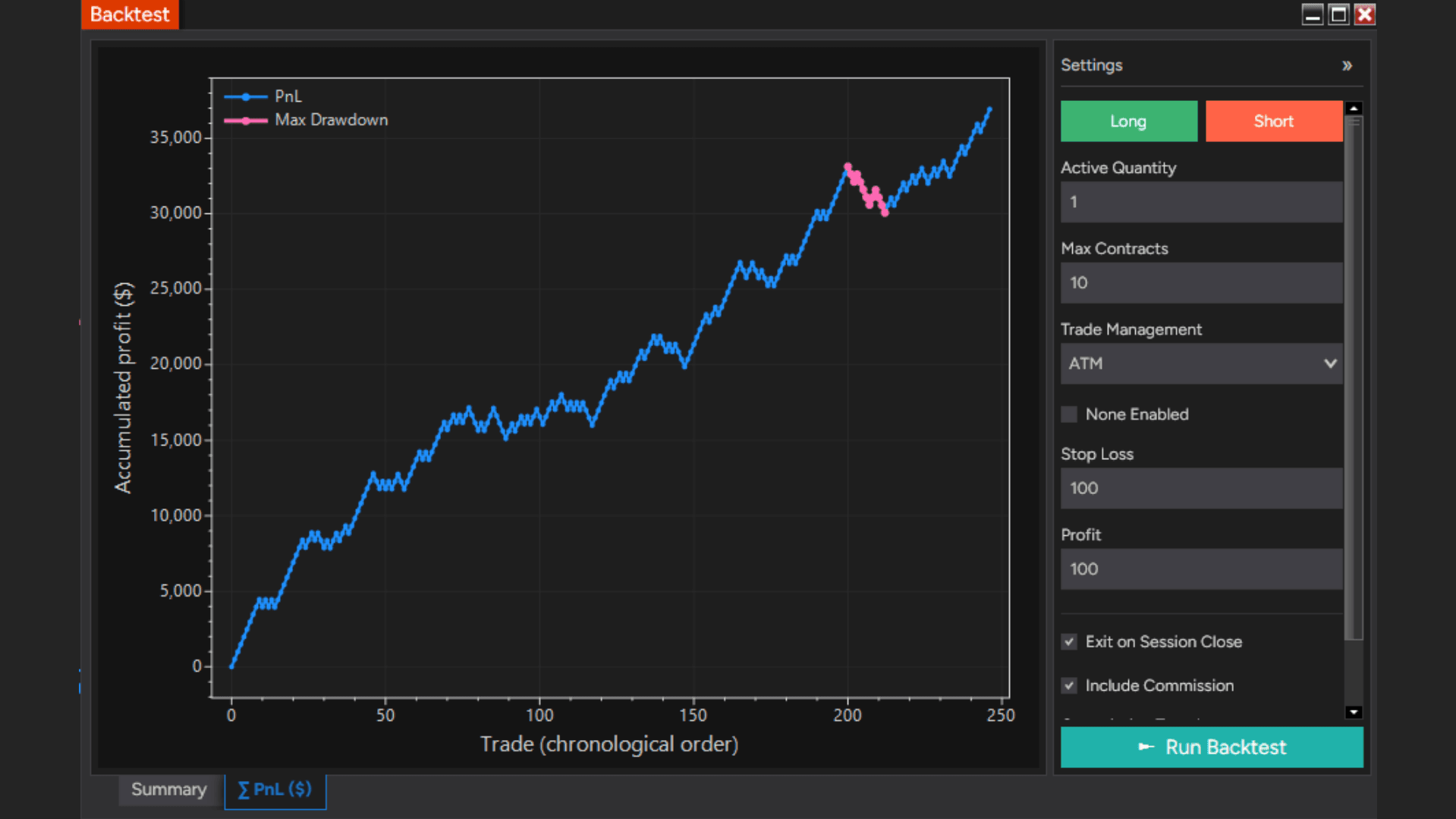
View forward test results
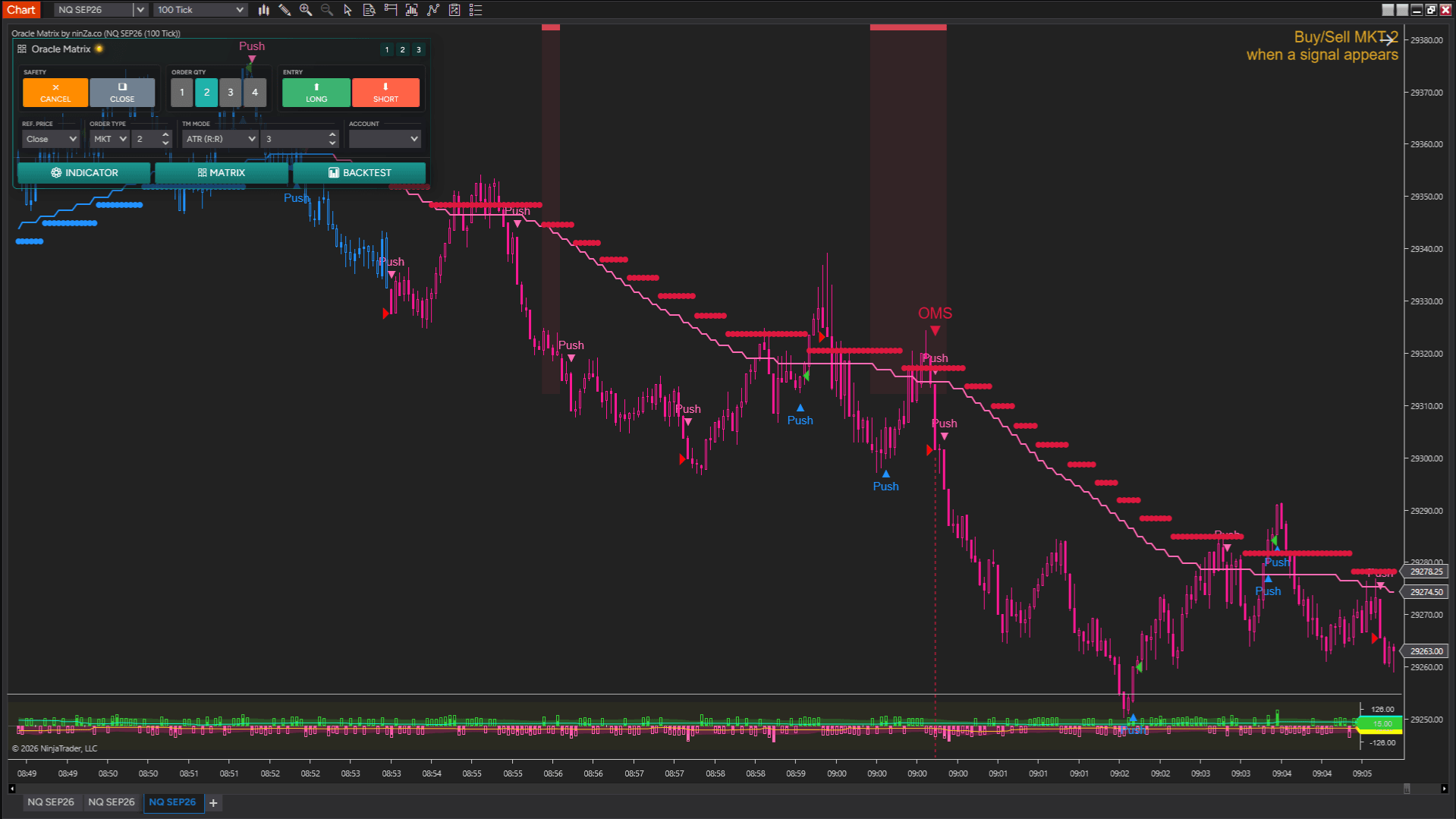
See the strategy in action
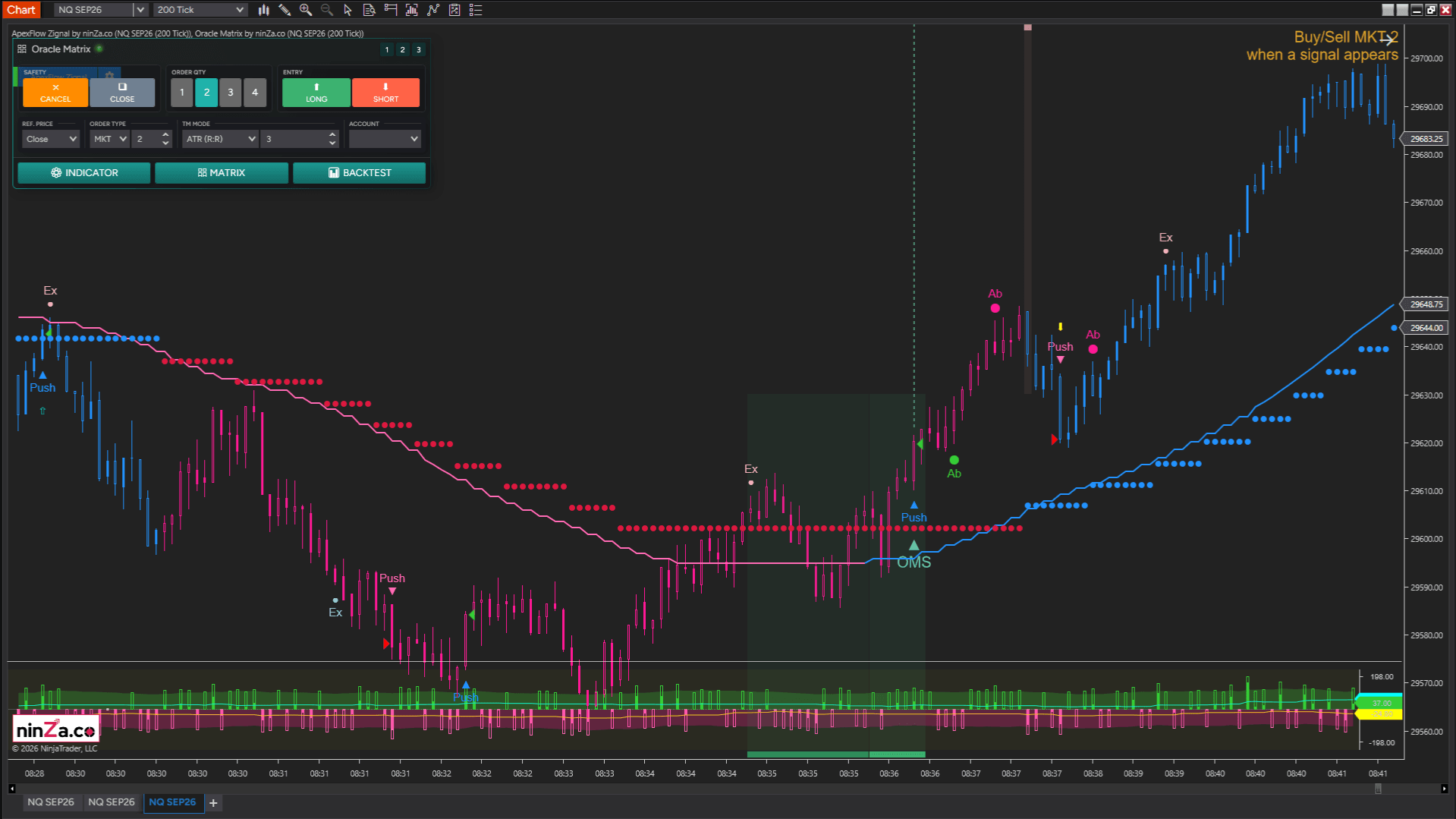
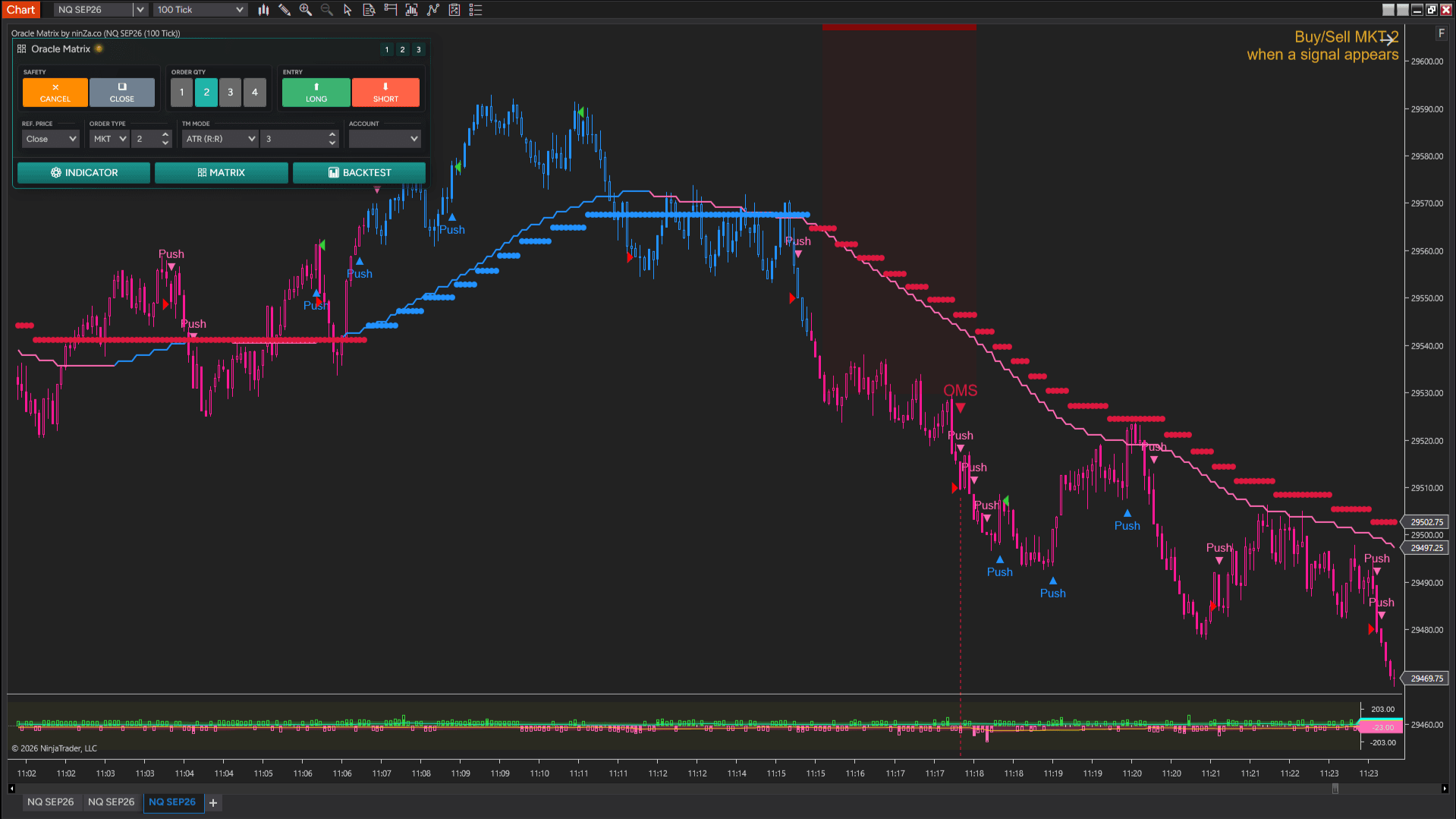
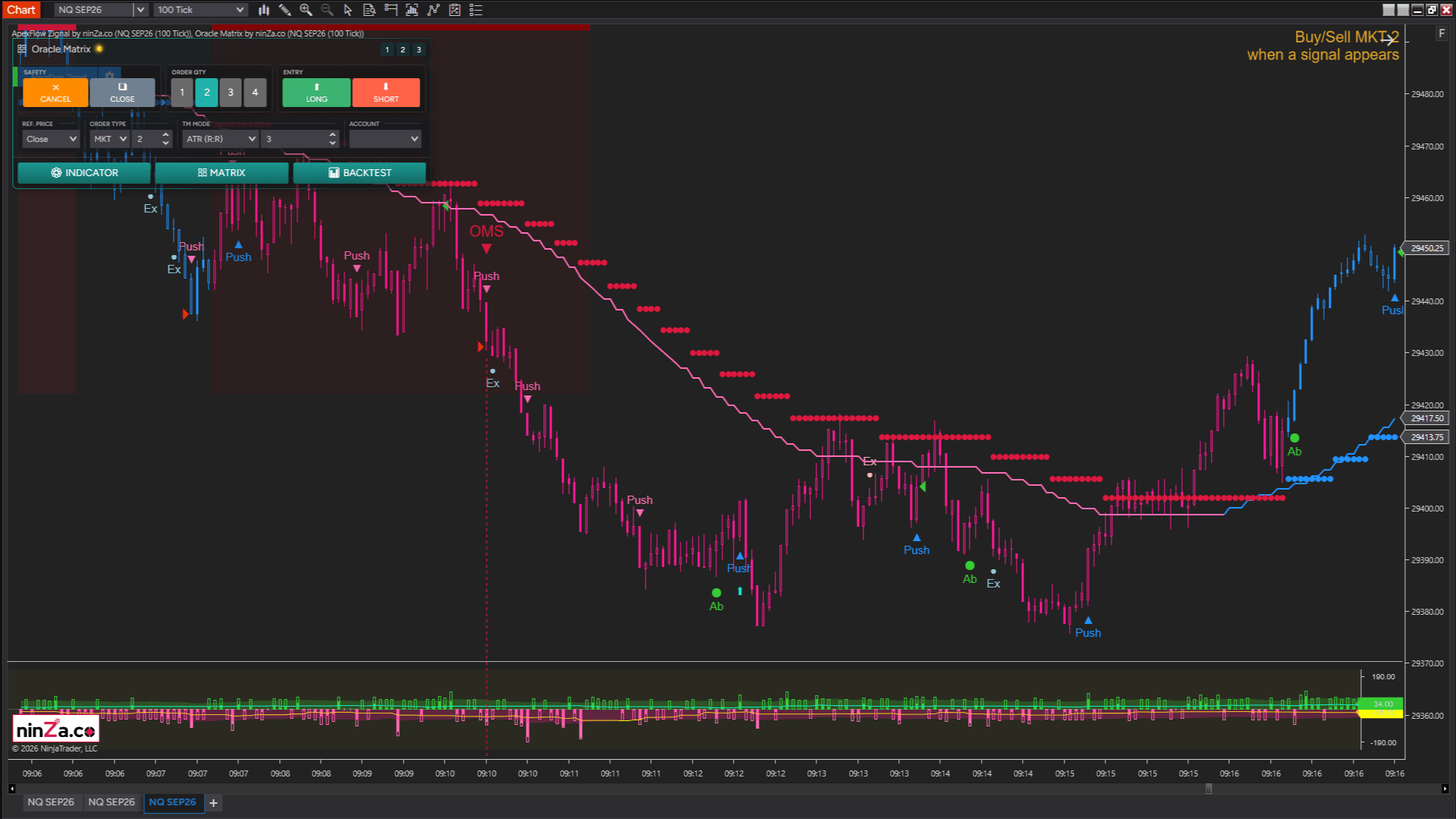
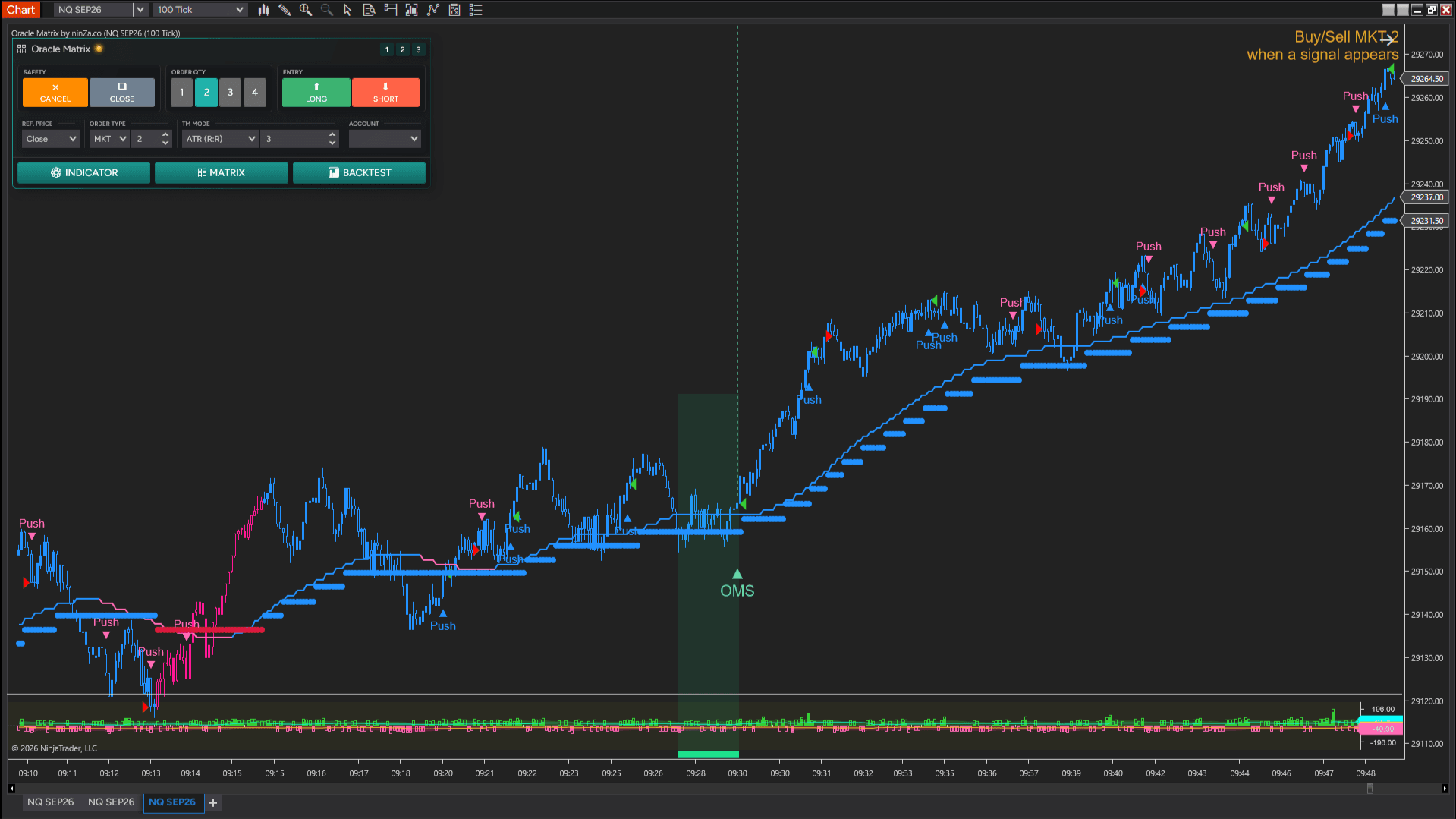
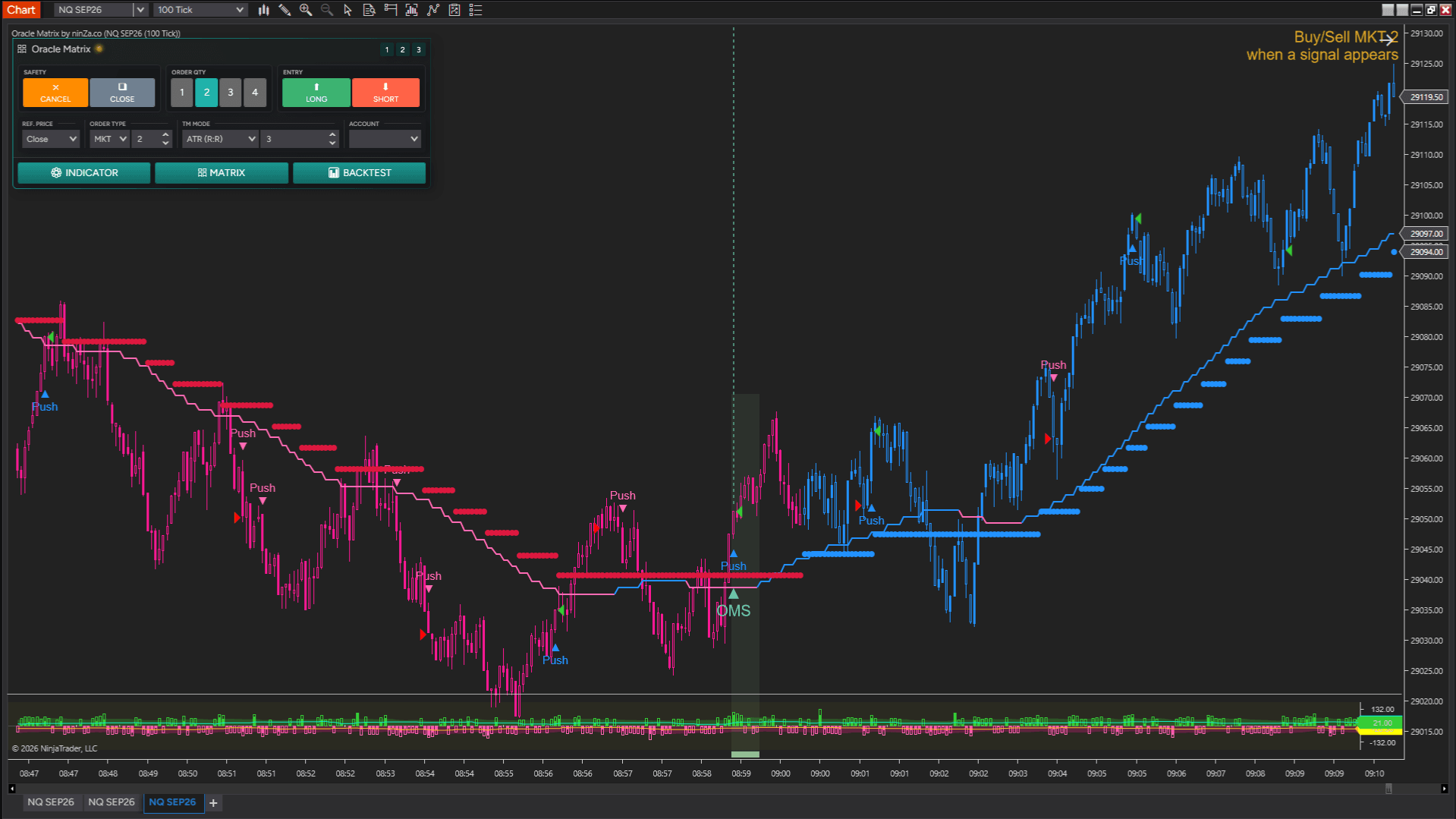
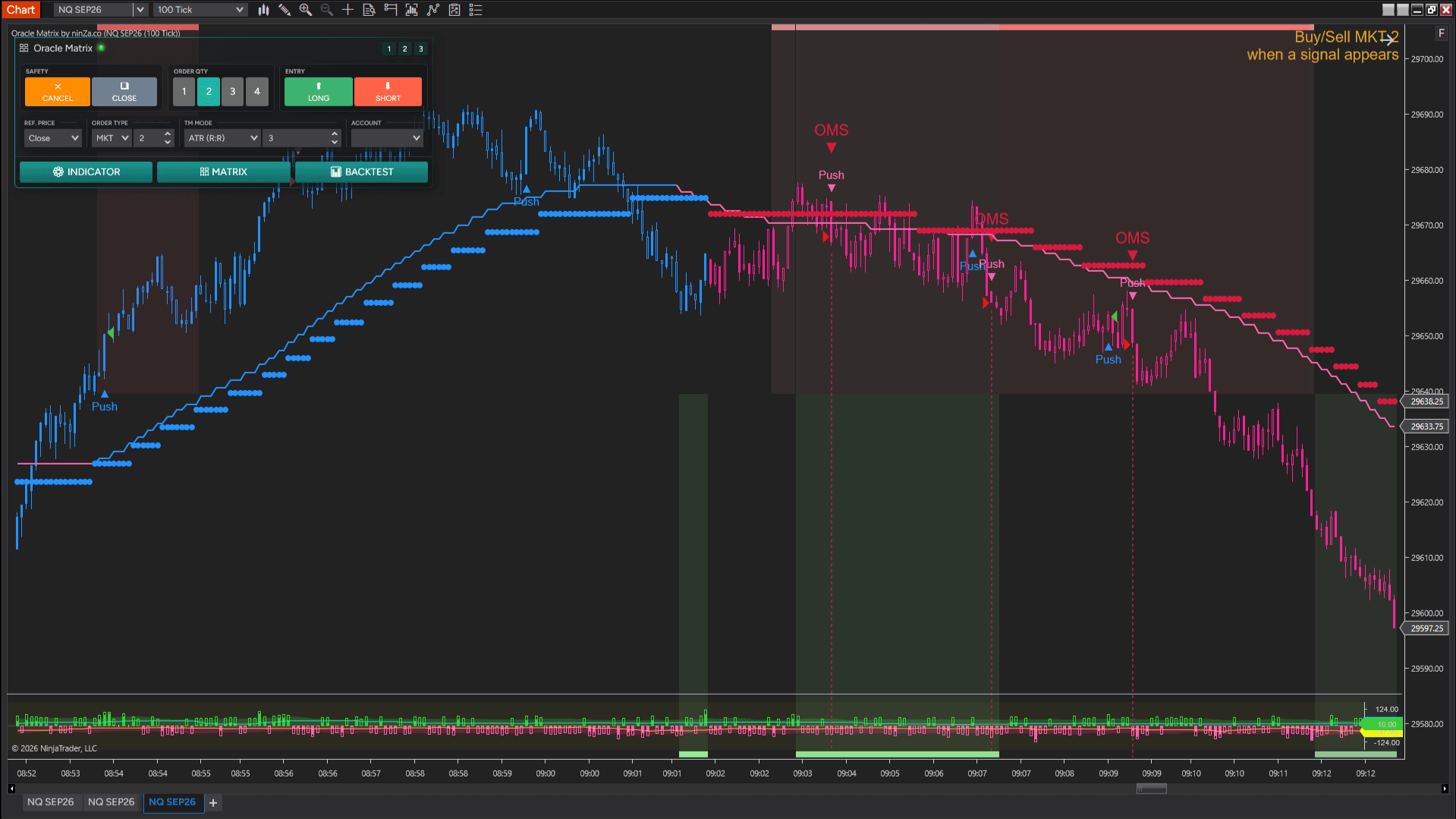
See how signals and market context appear directly on the NQ 100-Tick Chart.
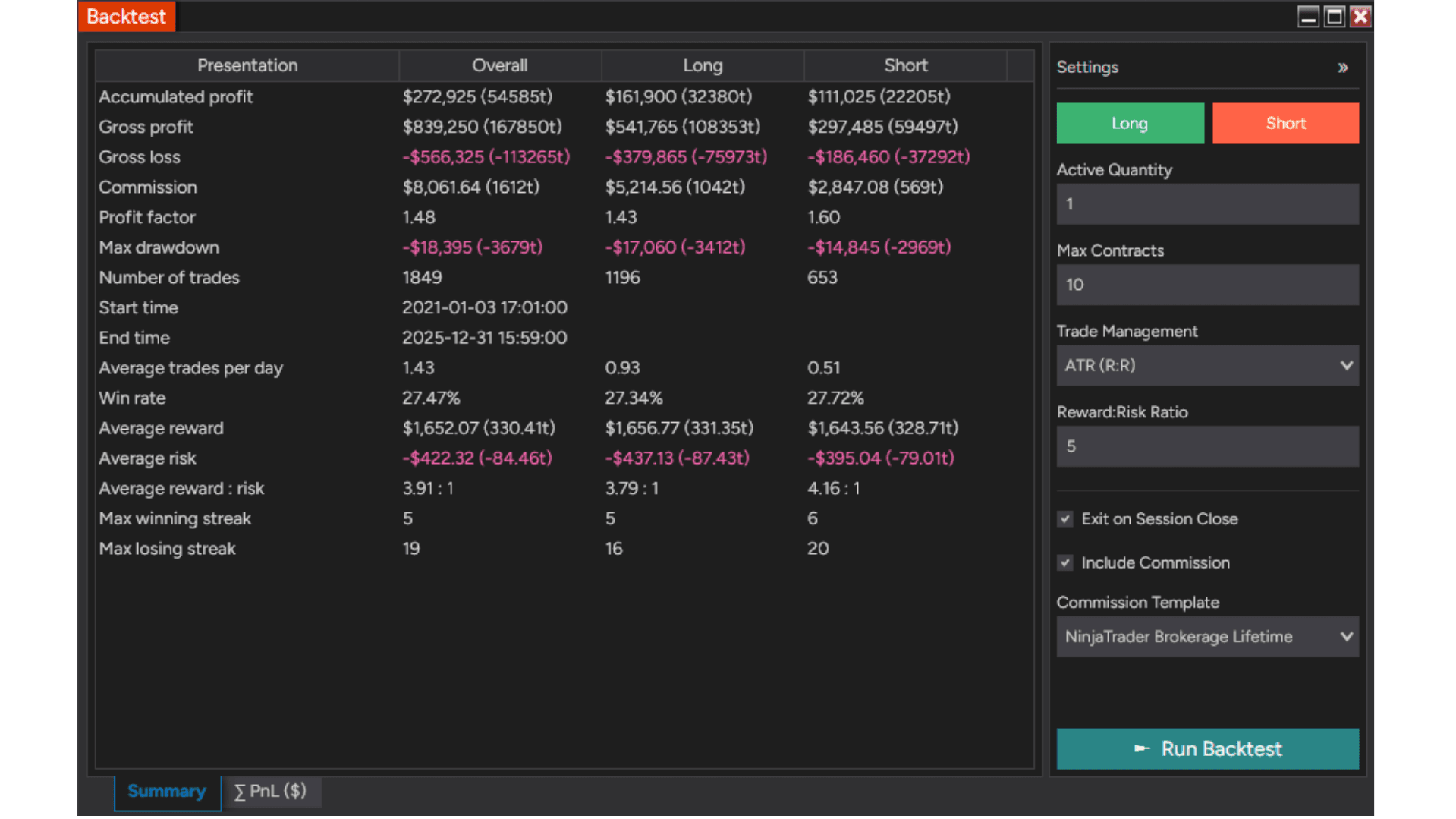
5-Year Strategy Backtest
Oracle Matrix + Super JumpBoo$t – 5-year backtest
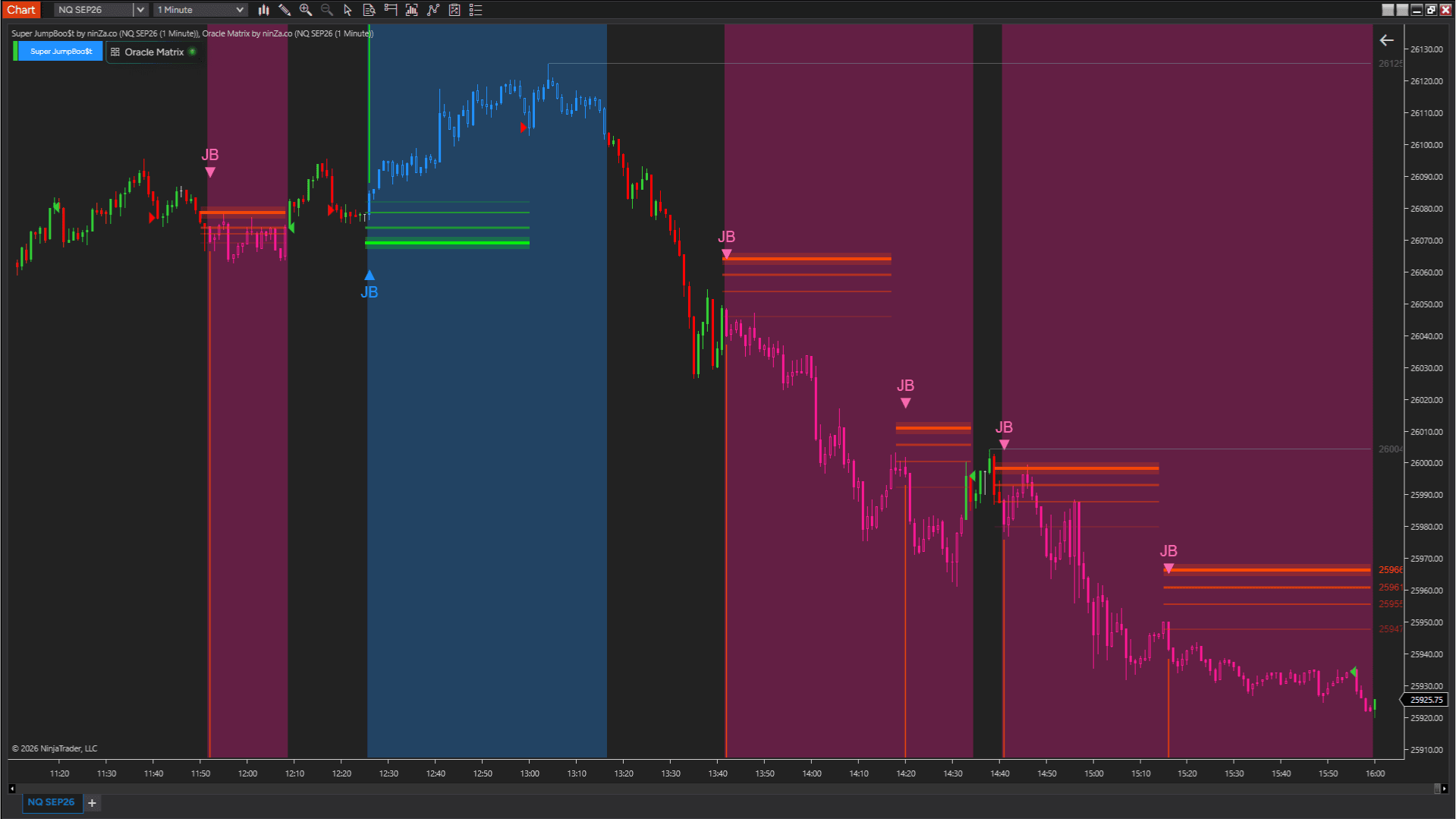
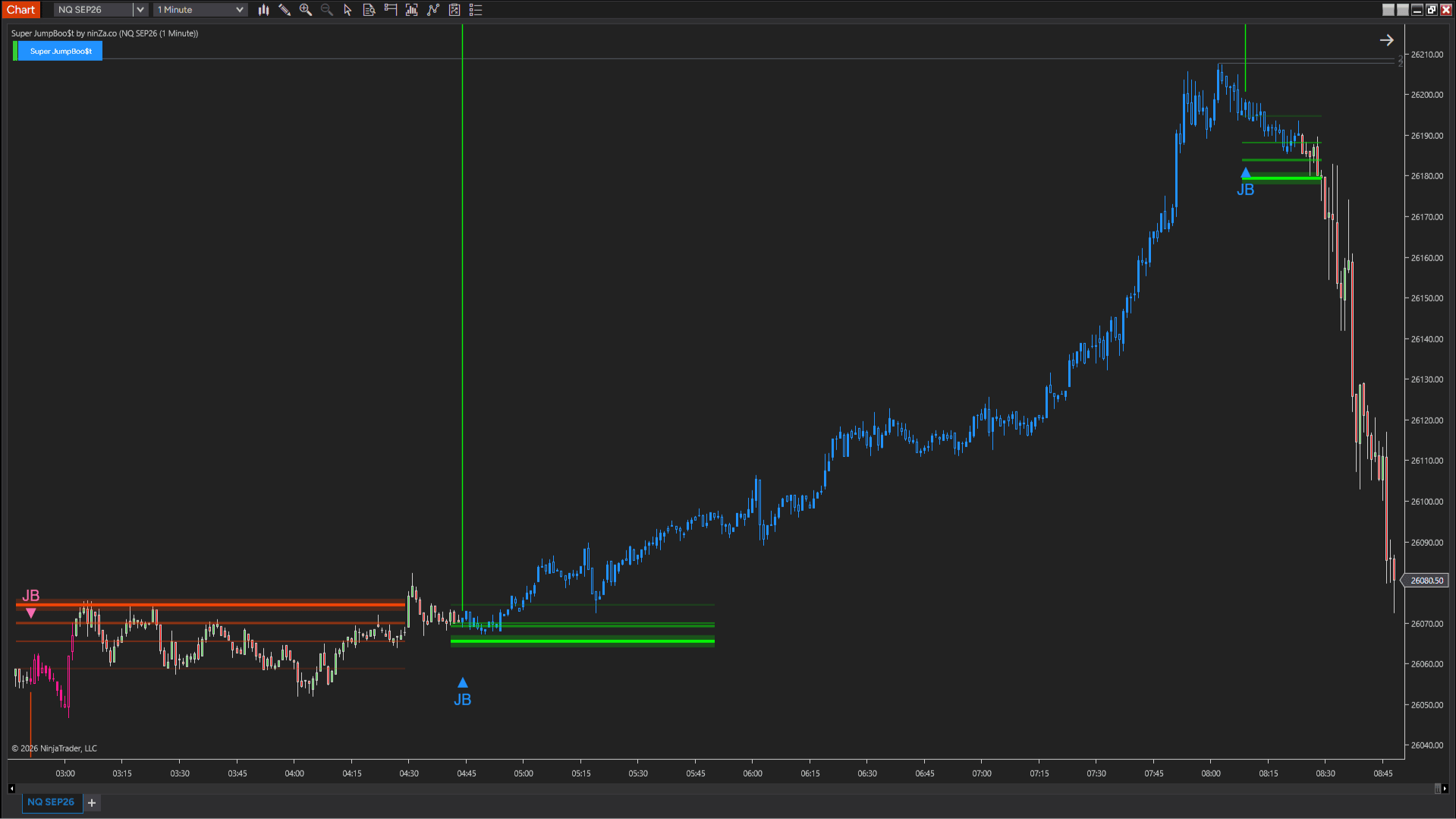
From Every Signal to Context-Filtered Entries
See how Oracle Matrix filters Super JumpBoo$t signals by trend and momentum context — helping traders skip weaker setups and focus on the conditions where the signal has historically shown a stronger edge.
Validate the Strategy Across 5 Years
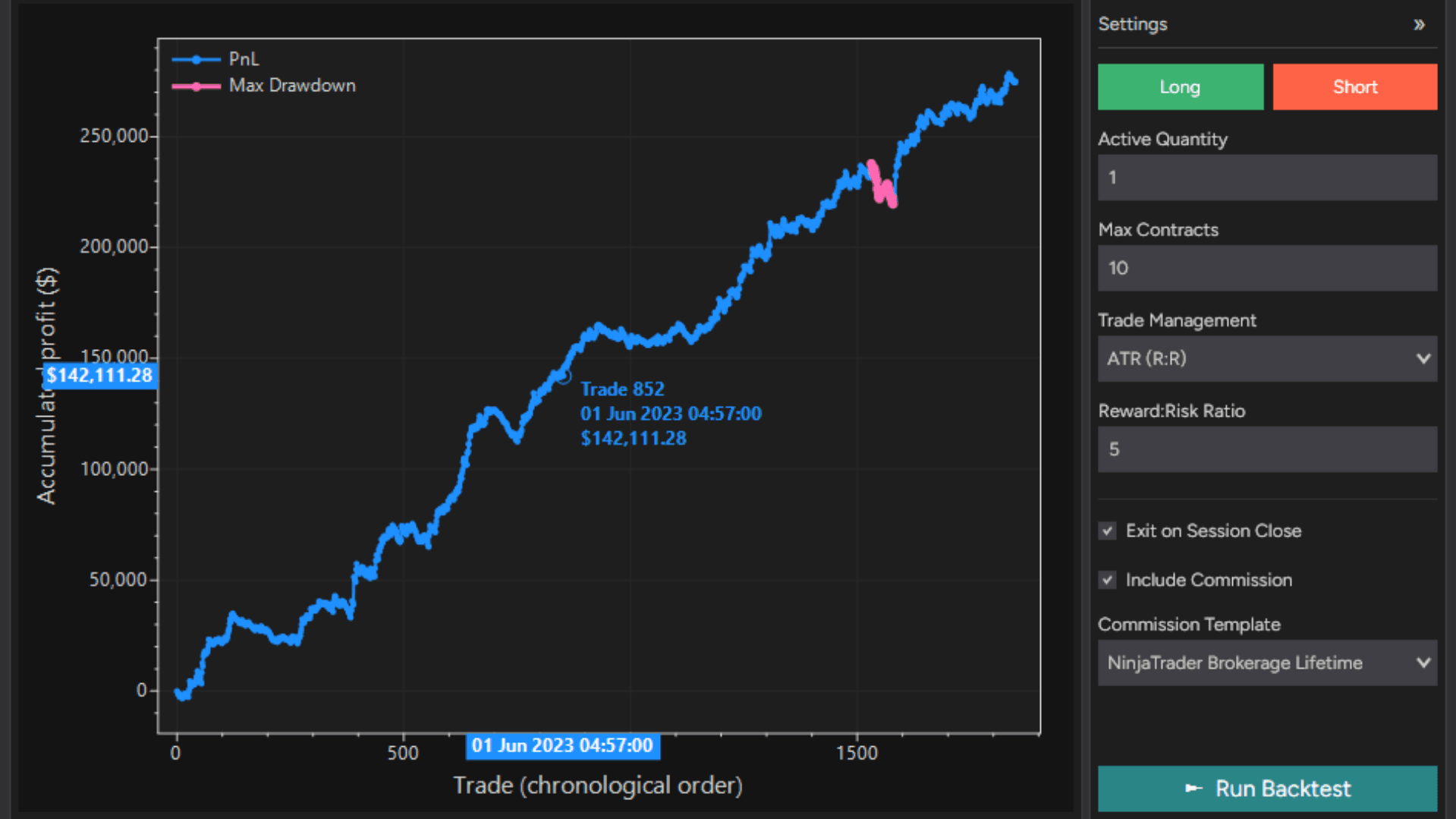
Oracle Matrix + Super JumpBoo$t, tested from 2021–2025 with a 5R target and commissions included.
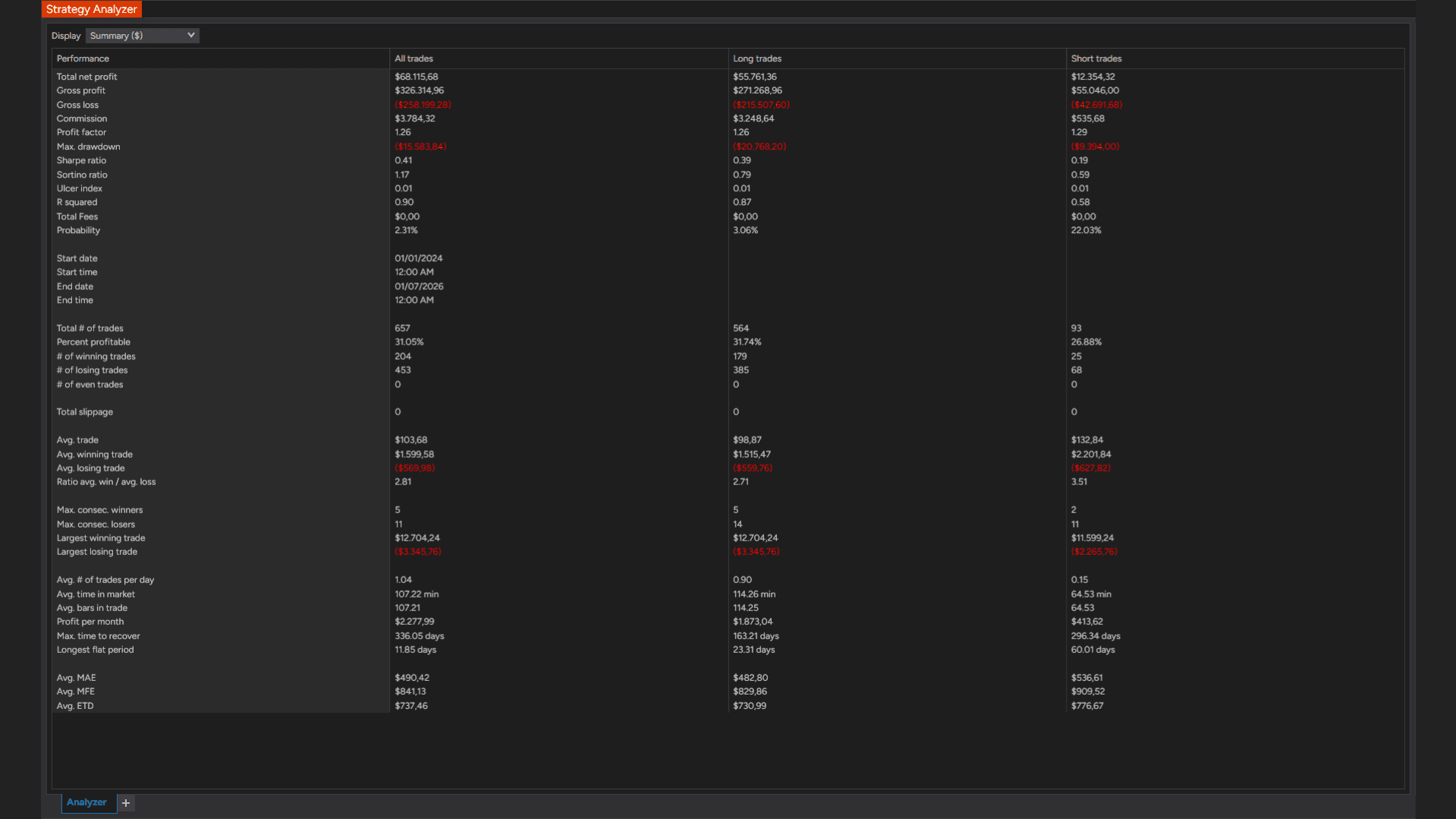
1,849 Trades · 1.48 Profit Factor · $272,925 Accumulated Profit · $18,395 Max Drawdown
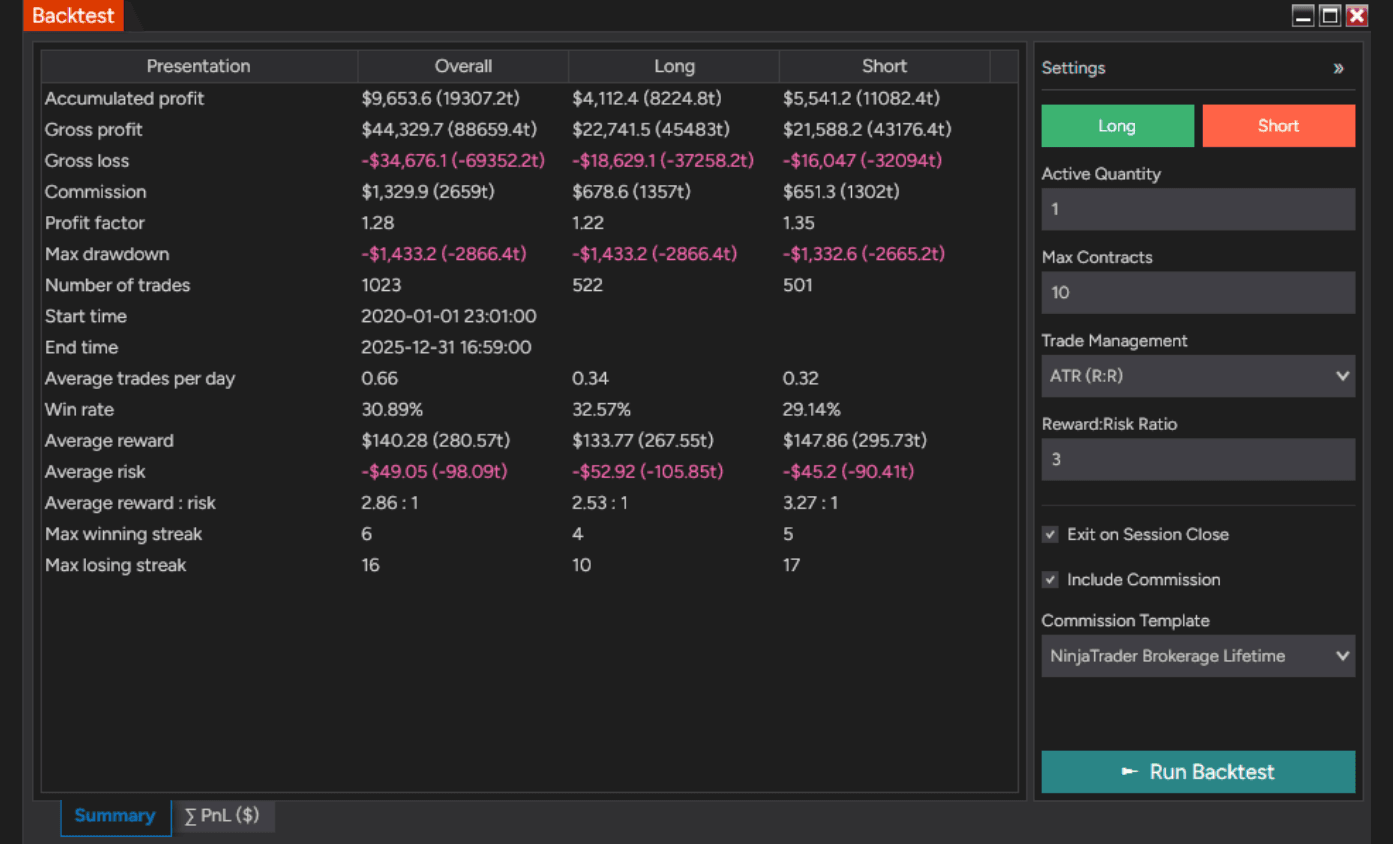
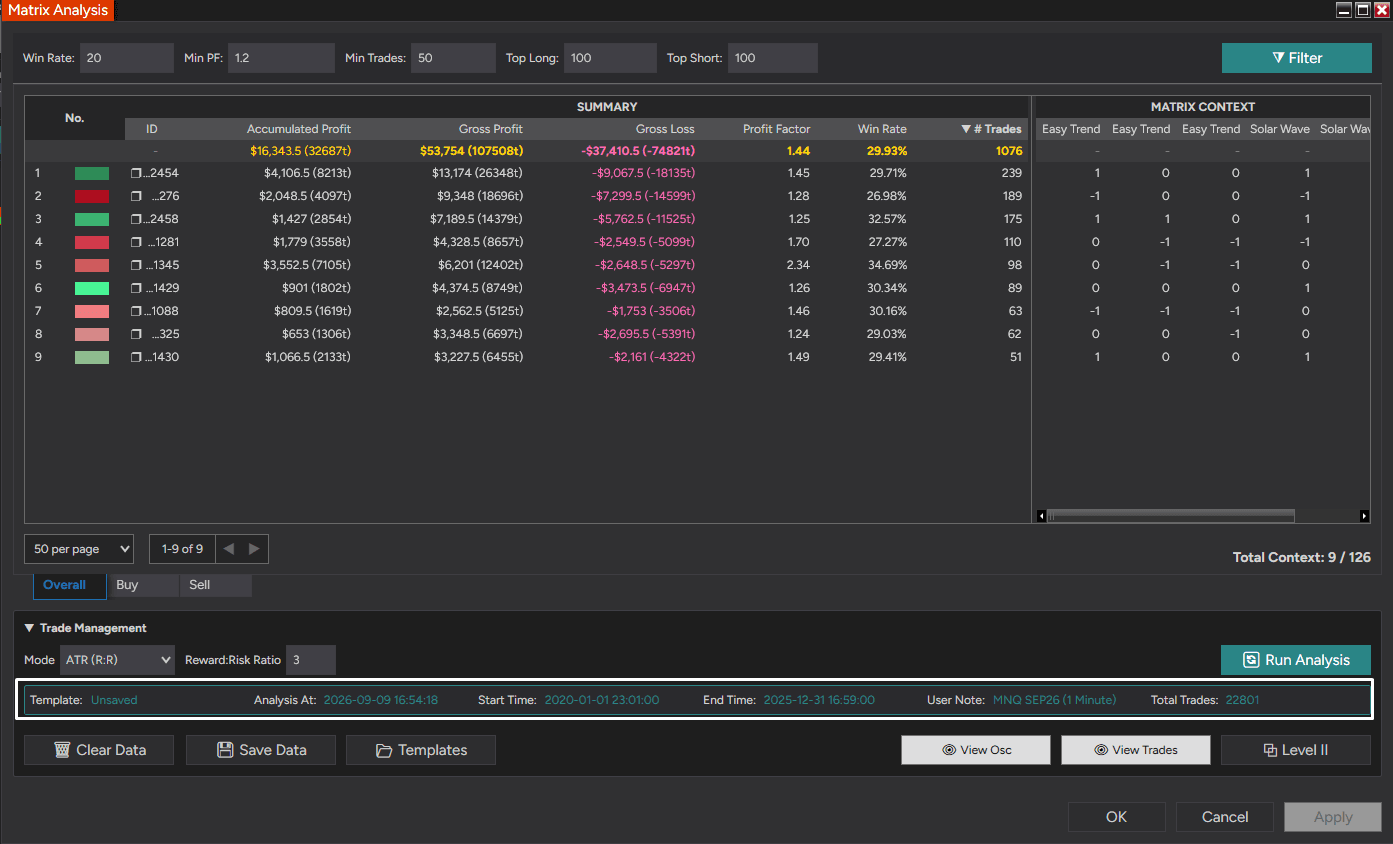
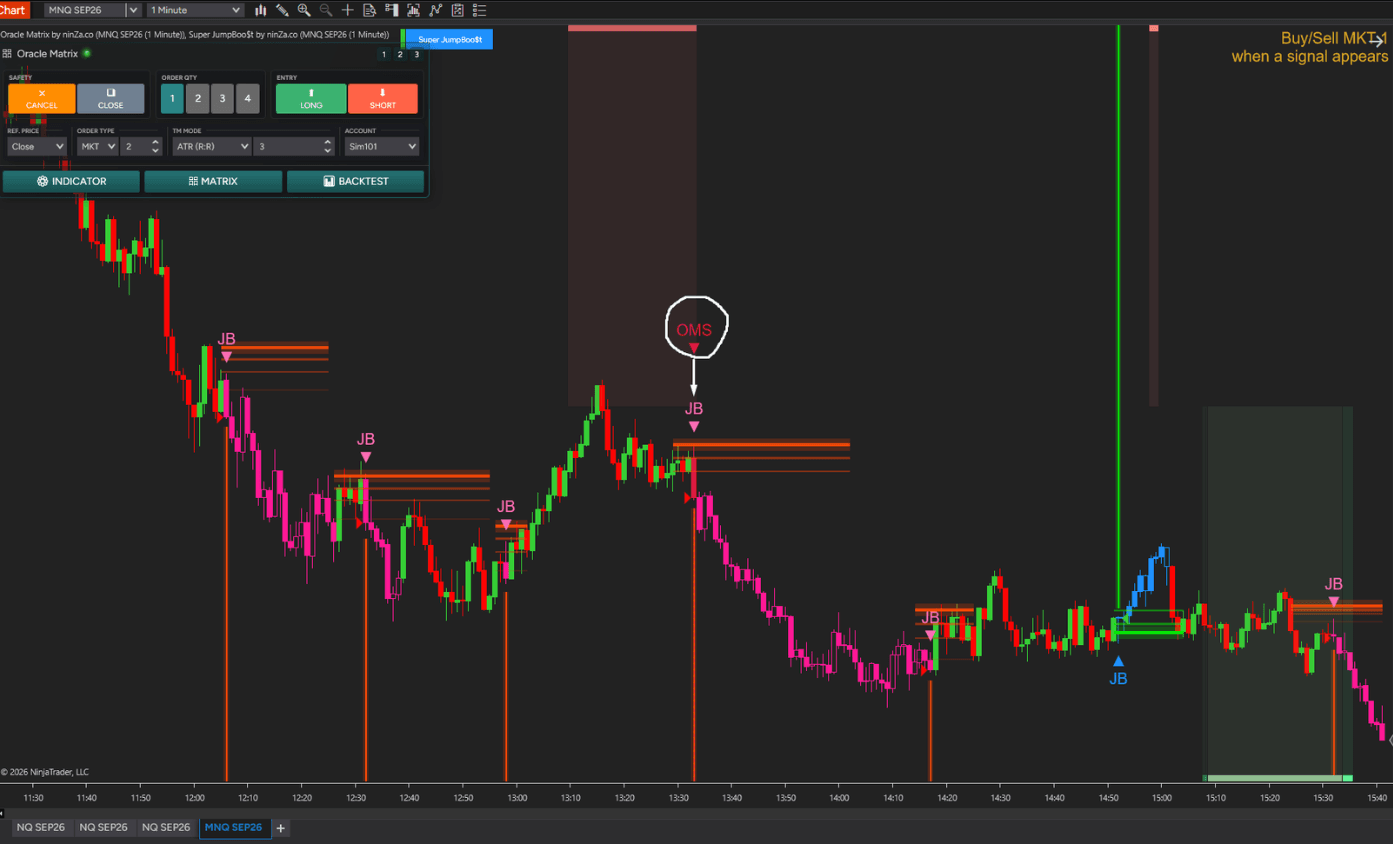
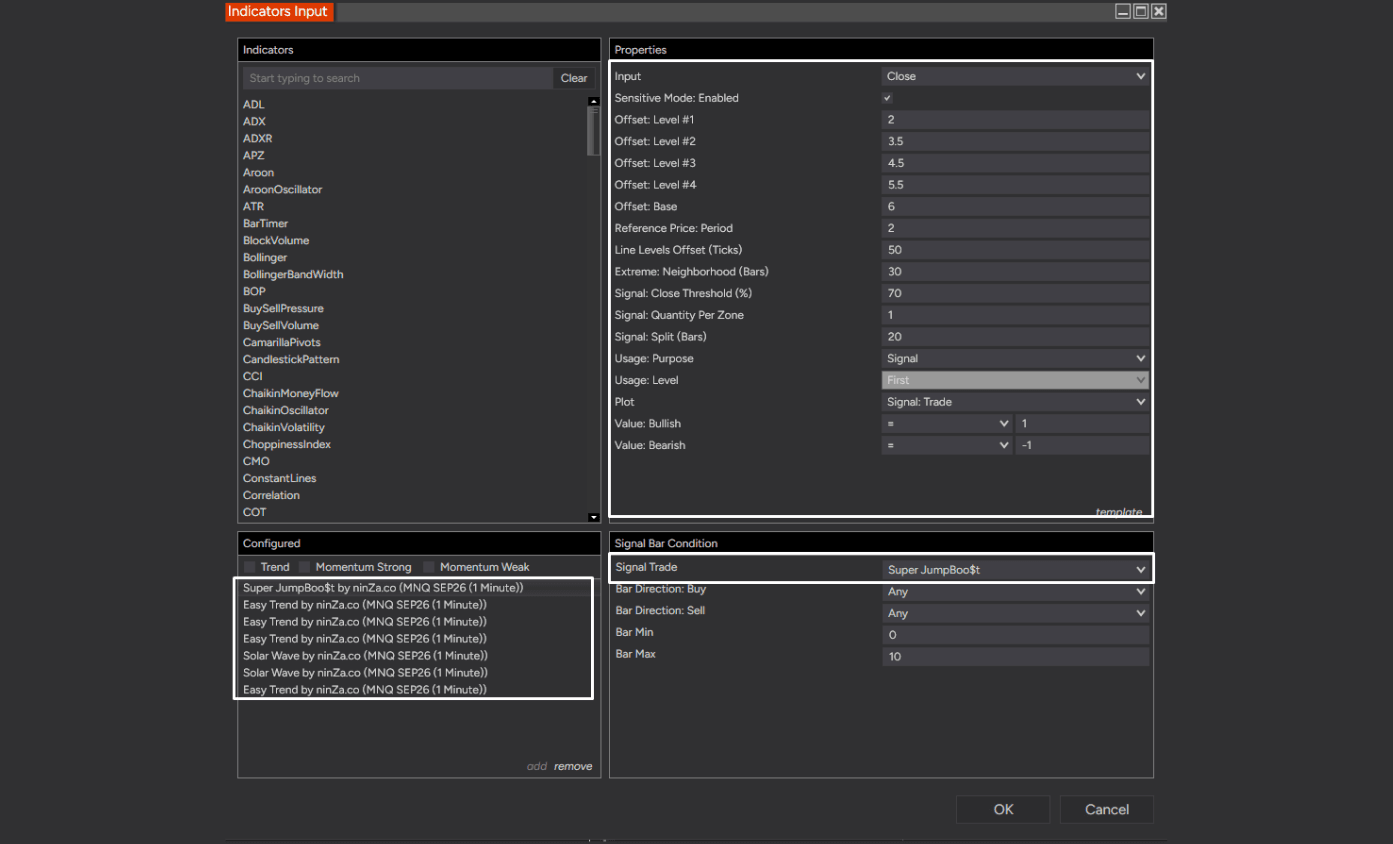
A trader's question: testing the setup on MNQ 1-minute
A trader recently sent us an interesting question:
What would the results look like if we ran Oracle Matrix on an MNQ 1-minute chart, using Solar Wave and Easy Trend for context and Super JumpBoo$t as the indicator—over the past month?
It's a specific combination built around a clear idea: review the setup across a full month of MNQ 1-minute data and observe how it responds under different market conditions.
Statistical Research Suite
Built from probability, trend, and breakout conditions
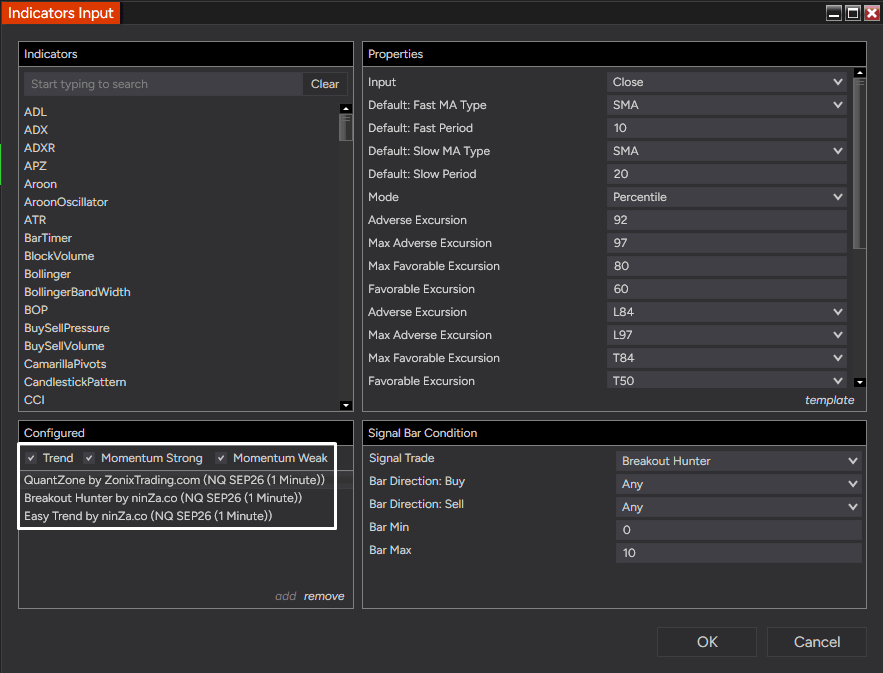
The Statistical Strategy combines QuantZone, Easy Trend, and Breakout Hunter within Oracle Matrix to evaluate setups through multiple layers of market Context.
QuantZone adds probability-based price and risk–reward context. Easy Trend defines directional structure. Breakout Hunter provides breakout conditions based on accumulation and distribution behavior.
Oracle Matrix then evaluates different combinations to identify where these conditions have historically worked together more effectively.
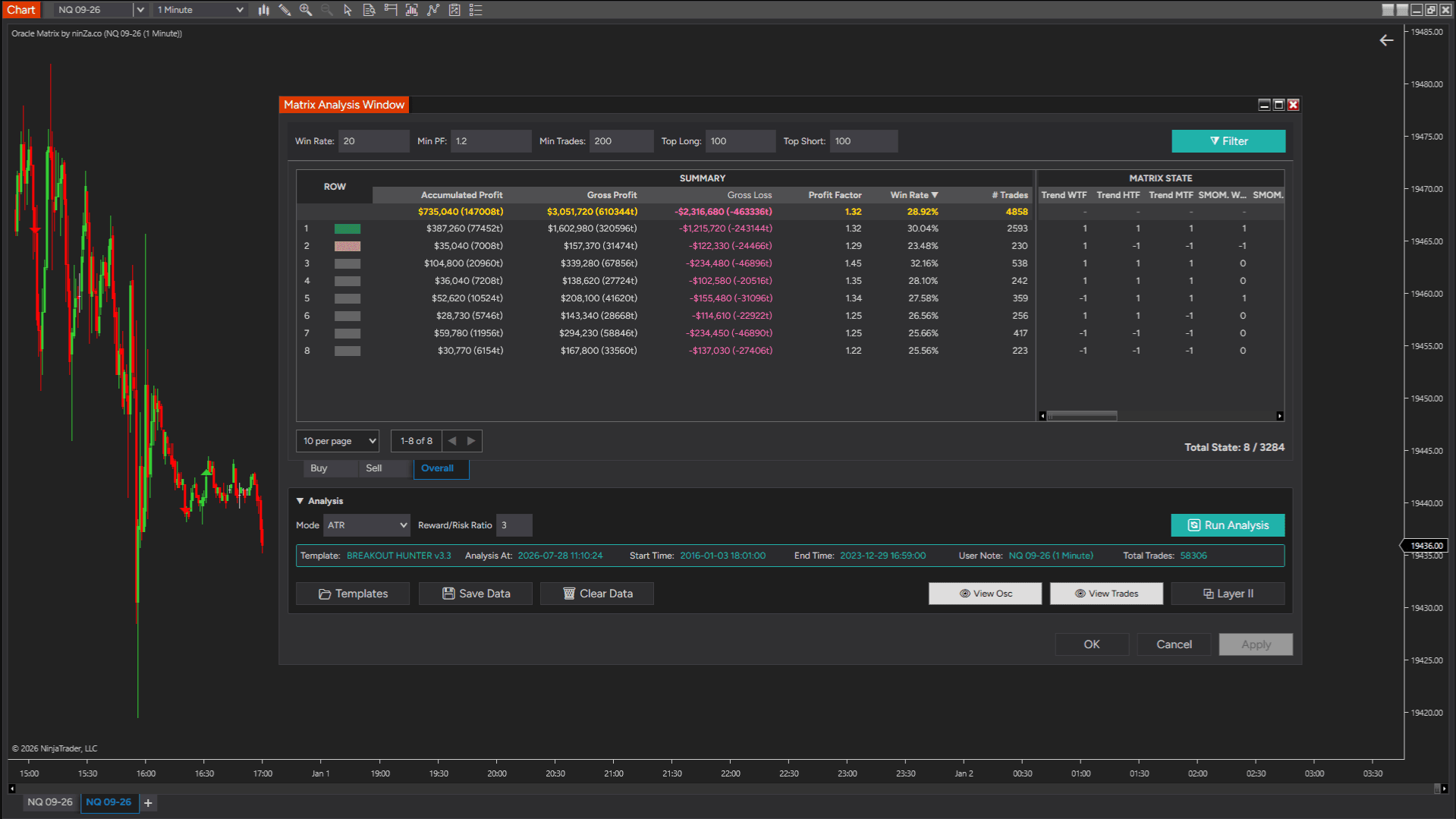
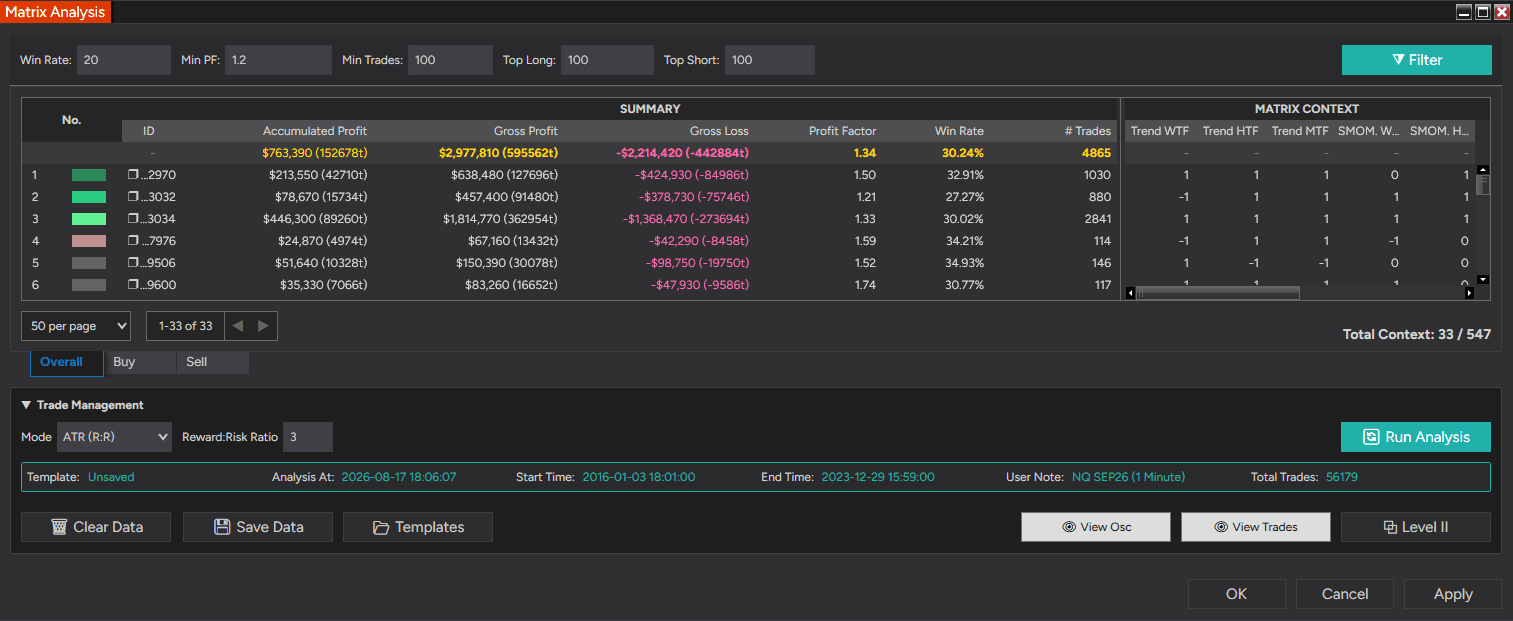
From 547 Contexts to a more selective strategy
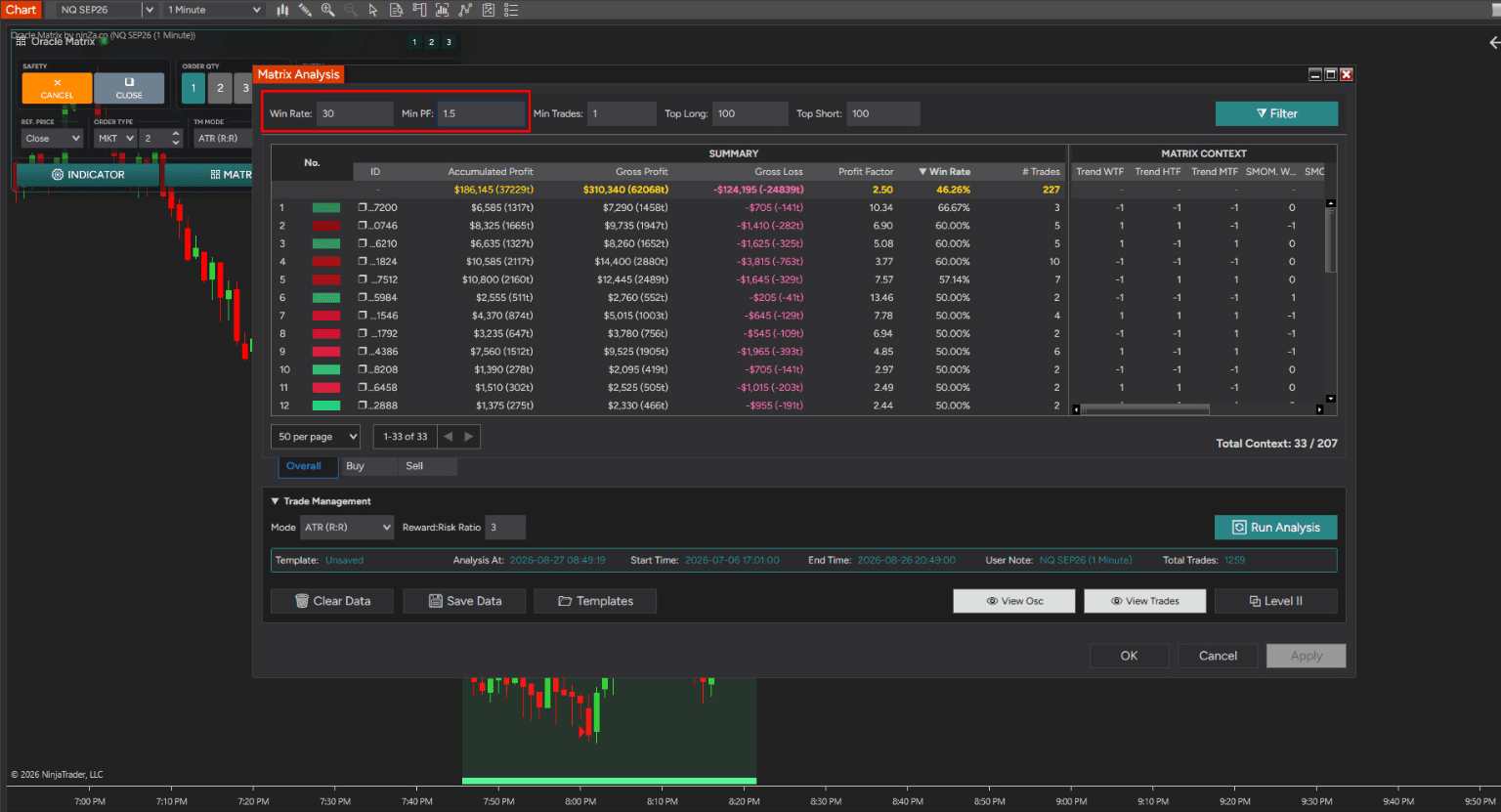
In the analysis shown, Oracle Matrix evaluated 547 Context combinations and narrowed them to 33 Contexts based on the selected performance criteria.
The resulting strategy was then backtested using an ATR-based 3:1 Reward framework with commissions included.
Forward test on a 200-tick chart
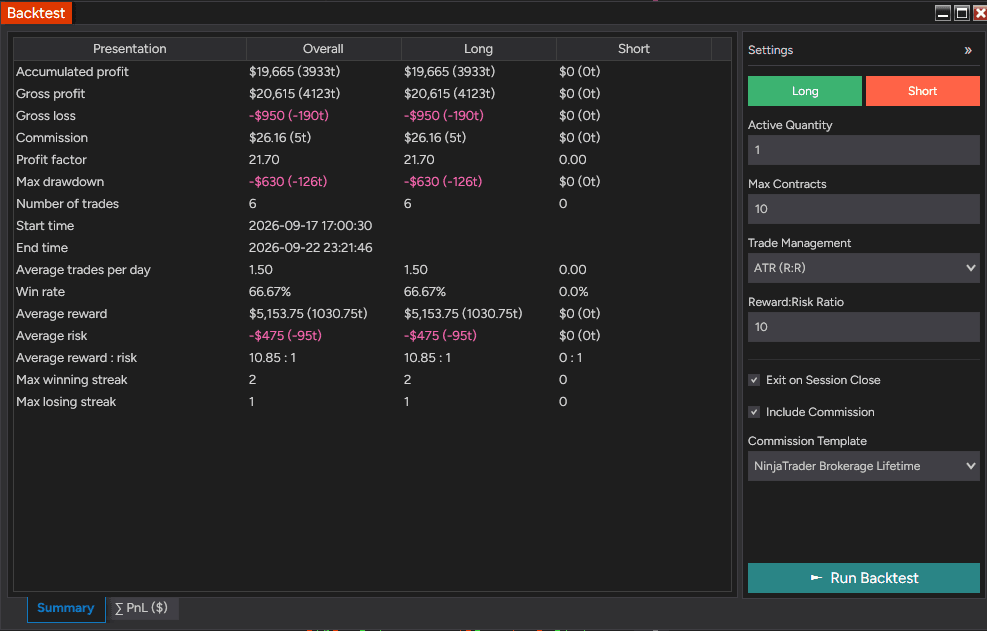
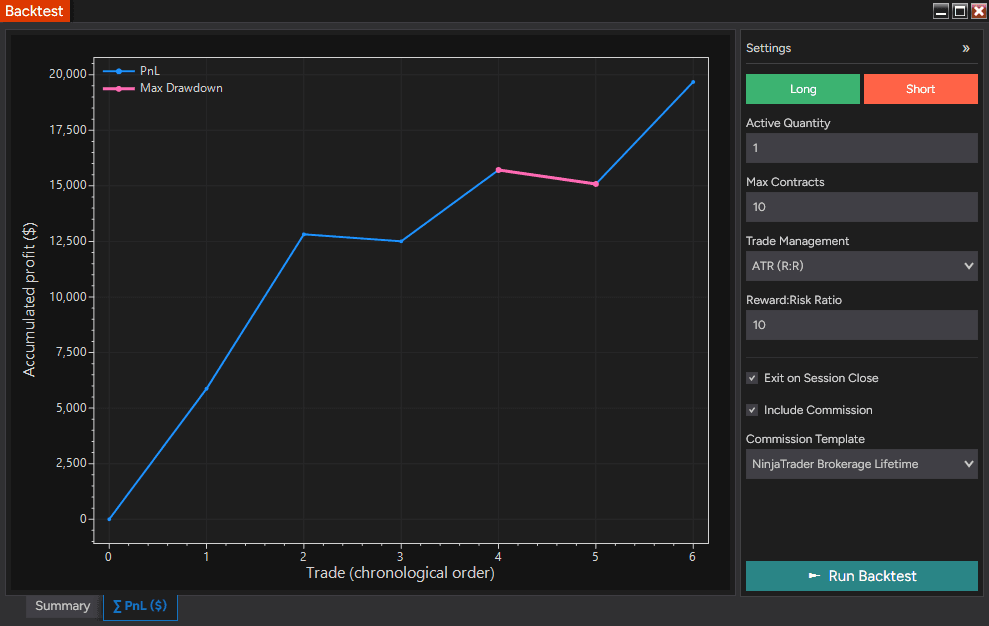
Building on the existing 1-minute template, we also developed a 200-tick chart template. In a 4-day forward test using an ATR-based 10:1 Reward framework with commissions included, it recorded $19,665 in profit across 6 trades, with a Profit Factor of 21.7.
See how Oracle Matrix captures Signals, identifies the market conditions surrounding each occurrence, and evaluates those conditions as measurable Contexts directly on the chart.
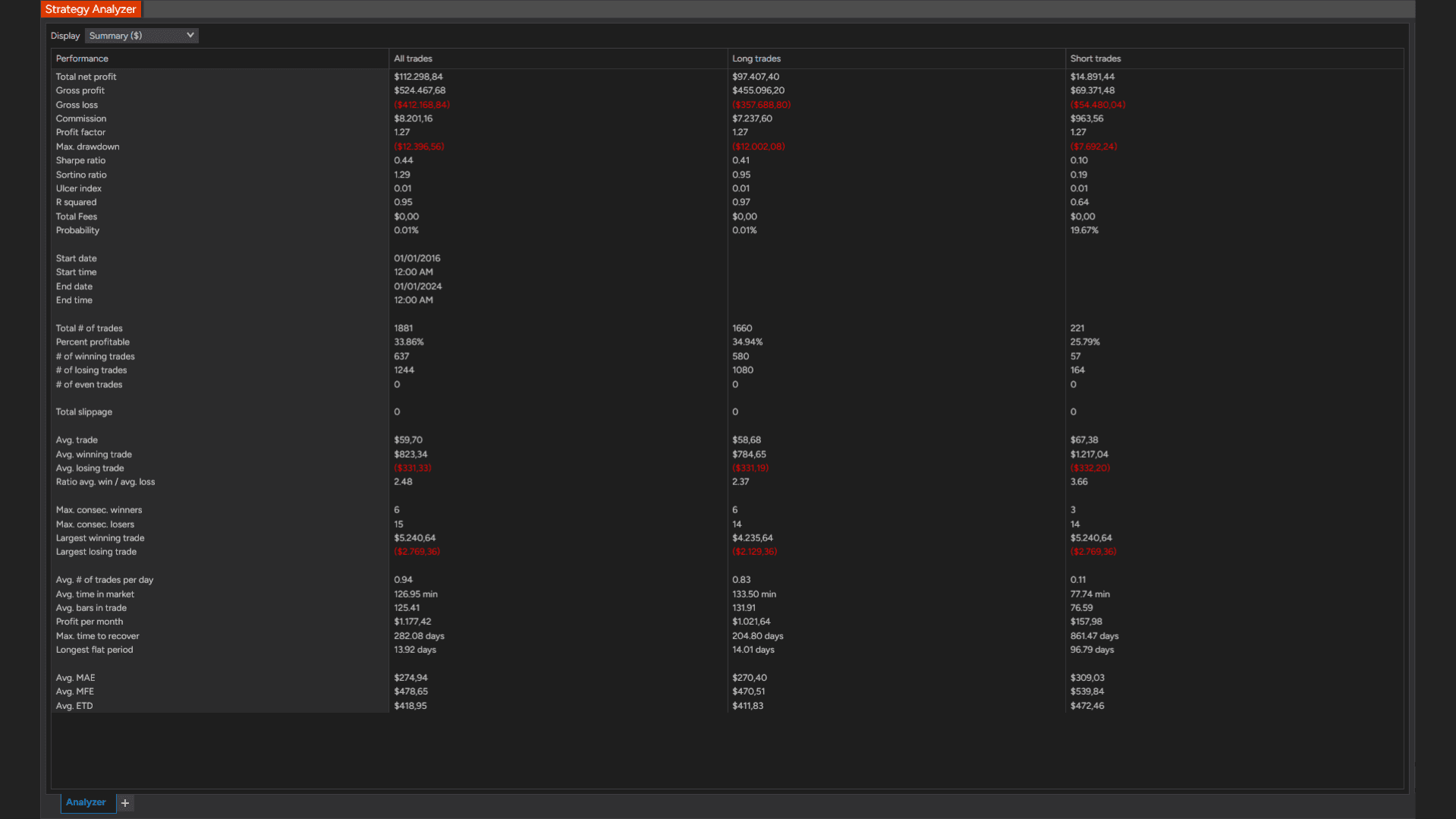
Backtest performance
Broad historical validation
Test period — Jan 2016 to Jan 2024
Evaluate how the strategy performed across a broad historical period containing different market environments.
View full trade statistics
Forward test performance
Out-of-sample validation
Test period — Jan 2024 to Jul 2026
Measure how the selected Contexts performed on data that was not used during the initial research and refinement process.
View full trade statistics
Proven in Real Trading Workflows
Hear directly from traders using Oracle Matrix and discover how it supports a more structured approach to market analysis and decision-making.
Learn the research process behind Oracle Matrix
A practical manual covering the concepts, workflows, and validation standards needed to use Oracle Matrix with confidence.
Core concepts behind Oracle Matrix
Interface, configuration and system operation
Building and analyzing Contexts
Research-validated workflows
From research to execution
Performance and reliability standards
Get personalized guidance for the way you trade
Through dedicated Oracle Matrix webinars and NINZA Direct sessions, work directly with our Trading and Support Teams to better understand the system, get your questions answered, and adapt Oracle Matrix to your own markets and trading style.
Live Oracle Matrix walkthroughs and practical use cases.
Direct Q&A with our Trading and Support Teams.
Personalized chart, template, and workflow guidance.
Support for applying Oracle Matrix to your own research and trading approach.

Still have questions?
Here are answers to the questions traders ask most before getting started.
1. I don't have a strategy yet. Is Oracle Matrix suitable for me?
We understand — at first glance, Oracle Matrix may seem like a system designed only for traders who already have a complete strategy.
In reality, Oracle Matrix helps traders build strategies from the ground up. Start with a Signal, a trading setup, or even an early trading idea, then systematically develop it into a validated strategy through Context analysis and research.
Every proven strategy begins with an idea. Instead of spending years piecing one together through manual testing and trial and error, Oracle Matrix provides a structured research workflow that helps traders develop and validate strategies more efficiently.
Not sure where to start? Tell us about your trading style and goals, and our team will help you build the right research approach with Oracle Matrix.
2. I already have a trading strategy. Why would I need Oracle Matrix?
Oracle Matrix isn't about replacing your strategy. It's about helping you challenge it, test new ideas with confidence, and continue improving it as markets evolve.
The system gives you a structured workflow to continuously improve existing Signals:
- Compare performance across different market conditions.
- Test new hypotheses by adding Context conditions.
- Refine signals with two-level Context Analysis.
- Validate results across different datasets.
- Deploy logic through semi-automated trading or fully automated strategies.
The goal isn't to create more Signals, but to improve the quality, reliability, and performance of the ones you already have.
If you don't feel Oracle Matrix adds meaningful value to your existing strategy, you're covered by our 30-day exchange policy.
3. Can I use Oracle Matrix without buying additional indicators?
Since Oracle Matrix is a research platform, it's easy to assume you'll need a large collection of indicators before you can start.
You don't. Oracle Matrix includes a built-in Signal and 8 built-in Market Conditions, giving you everything needed to begin researching, validating, and developing trading strategies right away.
As your research grows, you can expand the platform by connecting:
- 250+ compatible ninZa.co indicators and systems.
- Third-party trading tools that expose NinjaScript Signals.
Expansion is completely optional — you can start with the built-in models and add more only when your research requires it.
Whenever you need help, detailed documentation, email support, and remote sessions are available to help you use Oracle Matrix with confidence.
4. Can't I do all of this with my existing tools?
Oracle Matrix isn't another indicator or backtesting tool. It's a research engine that helps you discover and validate trading edge at a scale that's difficult to achieve through a manual workflow.
Instead of manually testing one idea at a time, Oracle Matrix helps you:
- Evaluate the same Signal across hundreds or thousands of market Contexts.
- Test new hypotheses systematically instead of relying on trial and error.
- Refine and validate strategy improvements before deploying them.
- Save and reuse research instead of starting from scratch each time.
If you don't feel Oracle Matrix adds meaningful value beyond your current workflow, you're covered by our 30-day exchange policy.
5. How to export strategies from Oracle Matrix as auto strategies?
For example: I built strategy for Oracle Matrix + Breakout Hunter
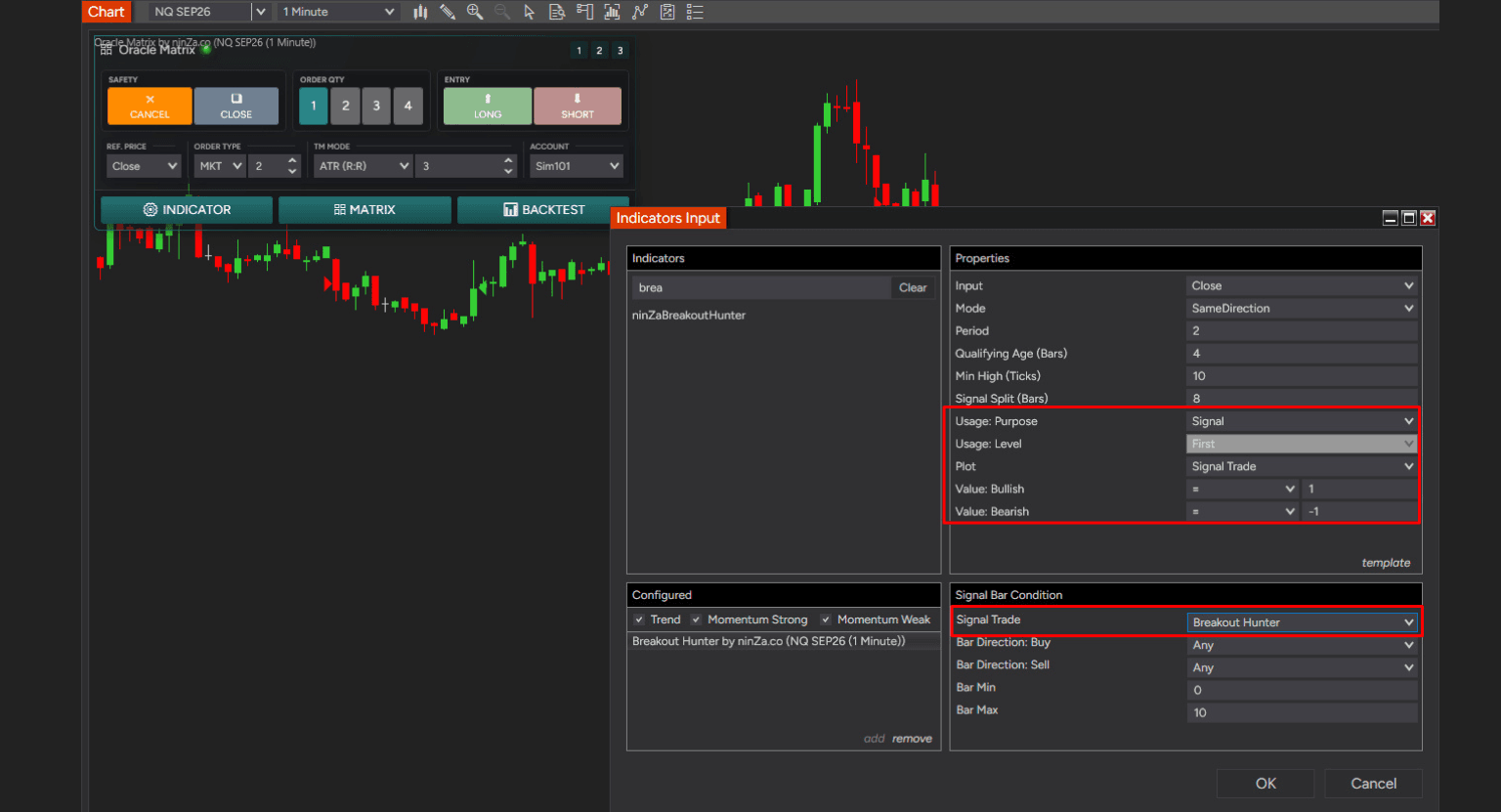
I filtered it with these conditions:
Now we will save this strategy template
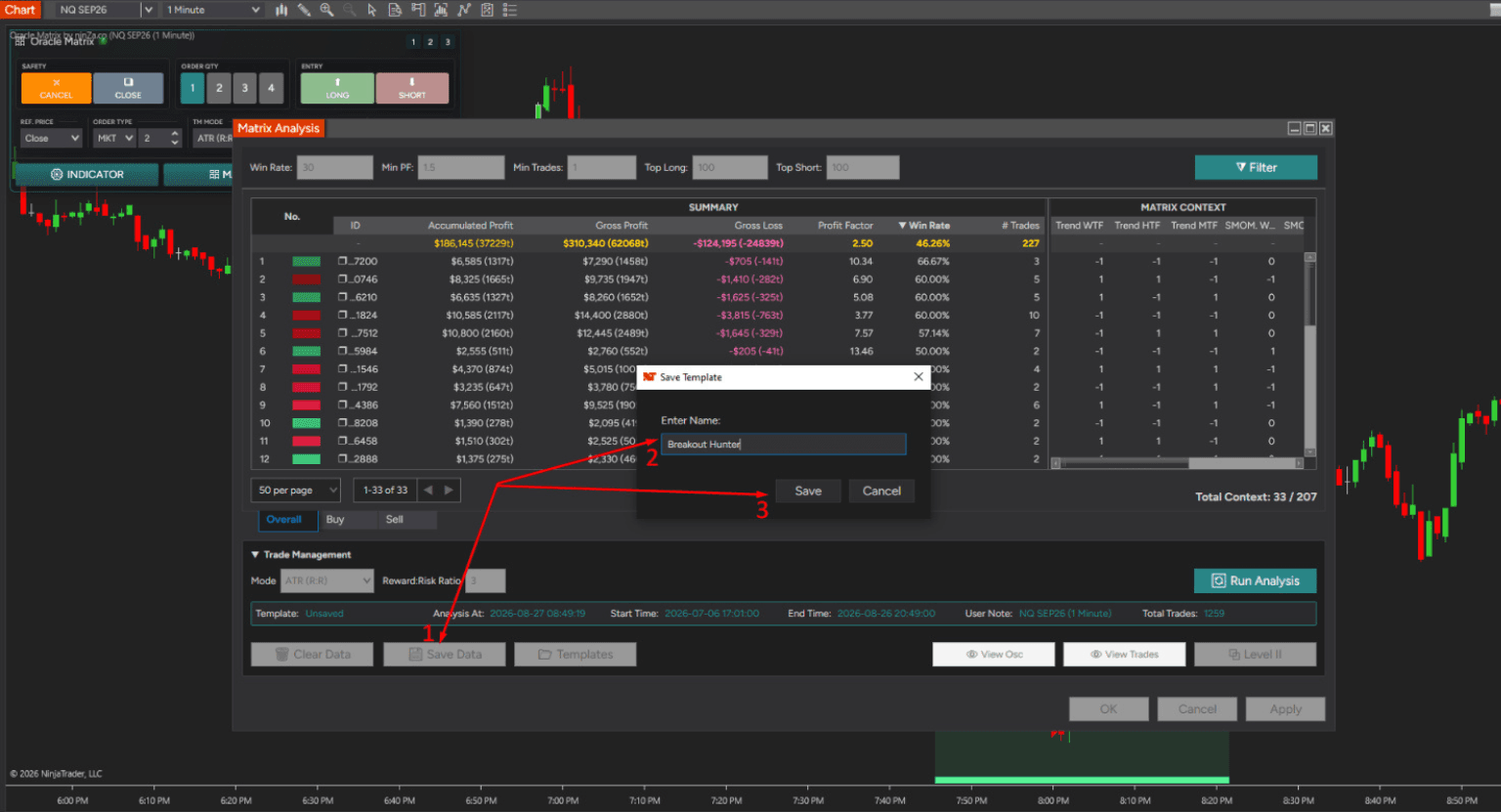
When you have it saved in the Template list, you can export it as a strategy:
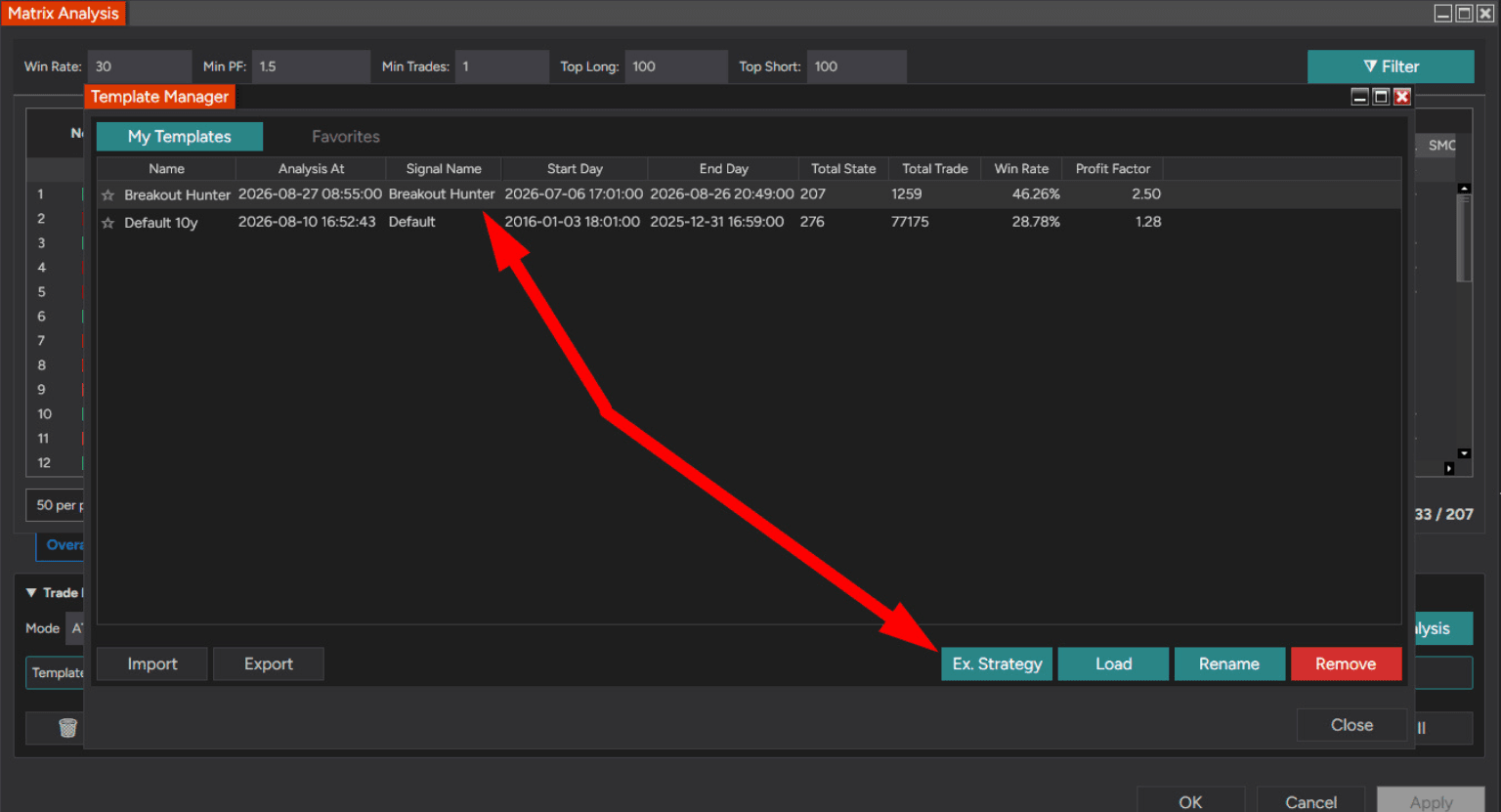
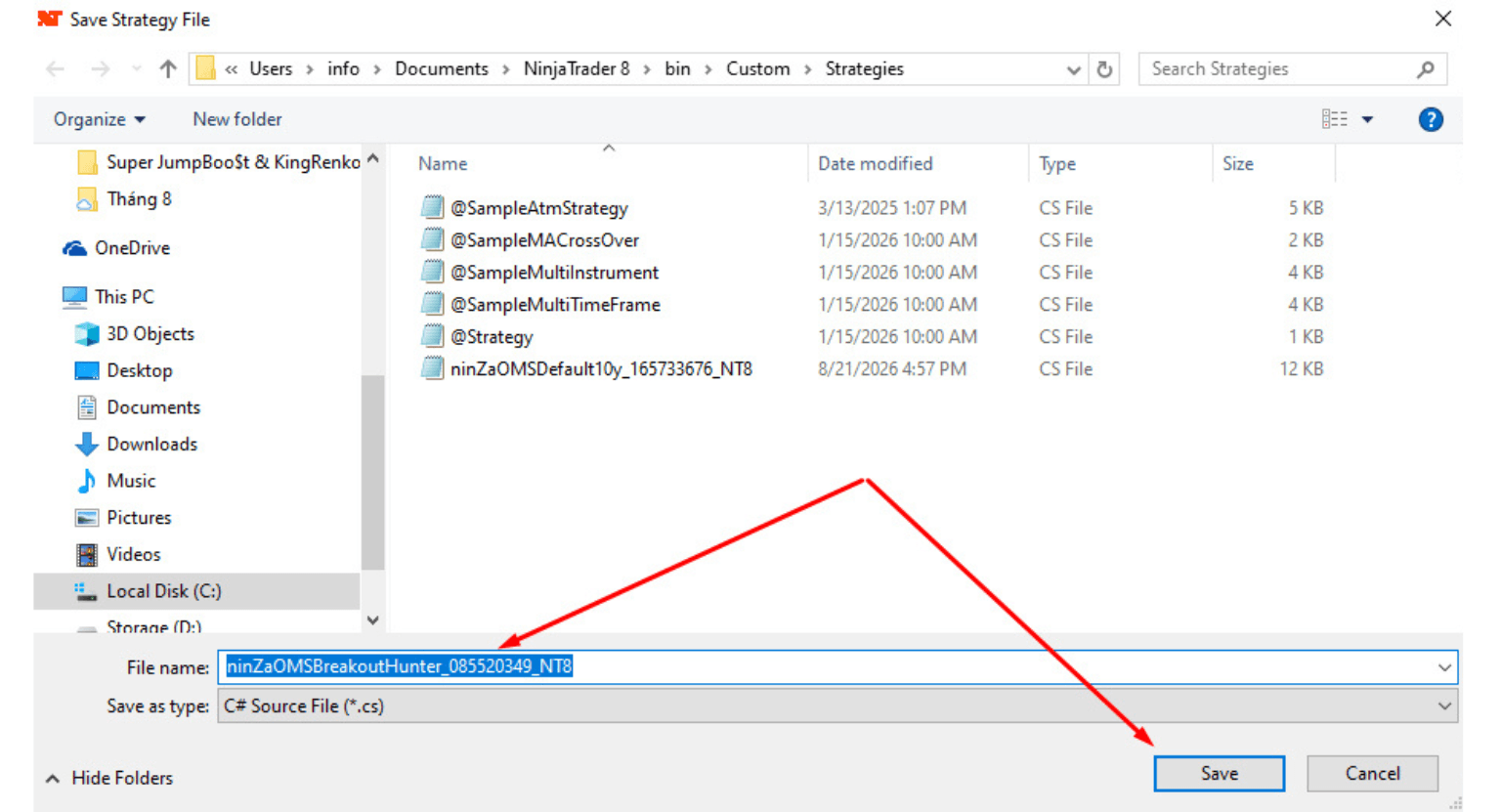
then you compile your NT8:
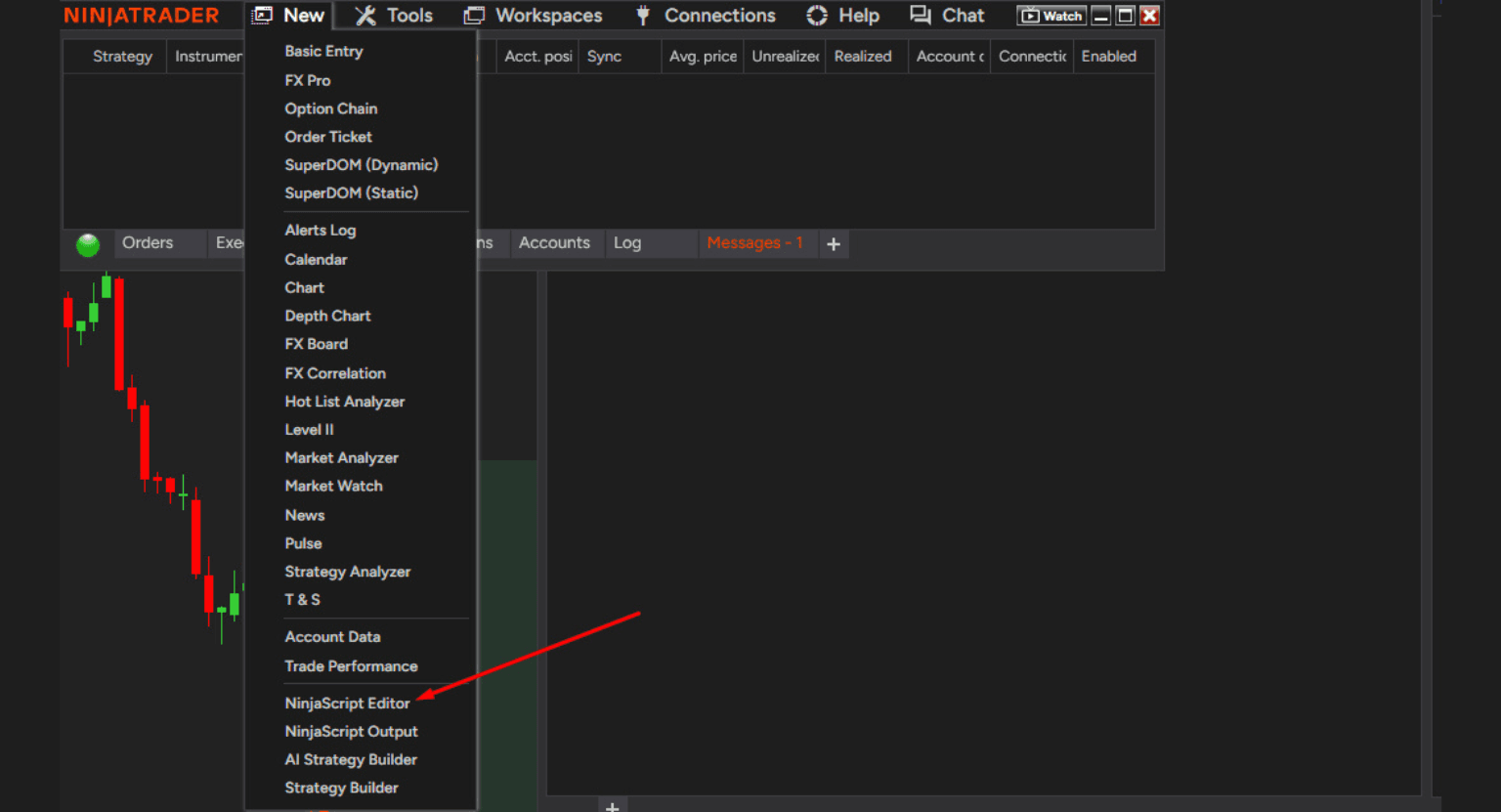
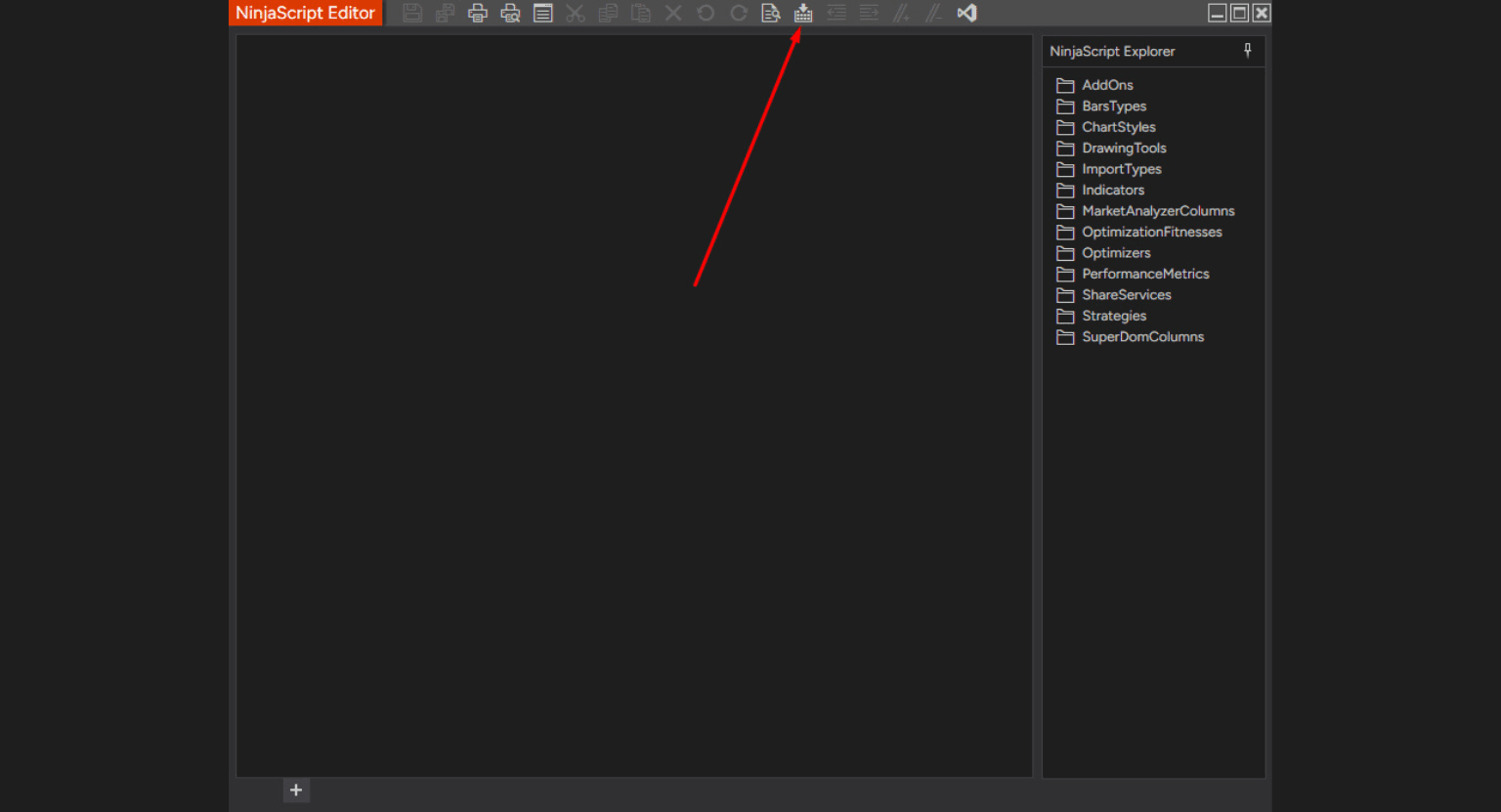
Now you can find it from Strategies
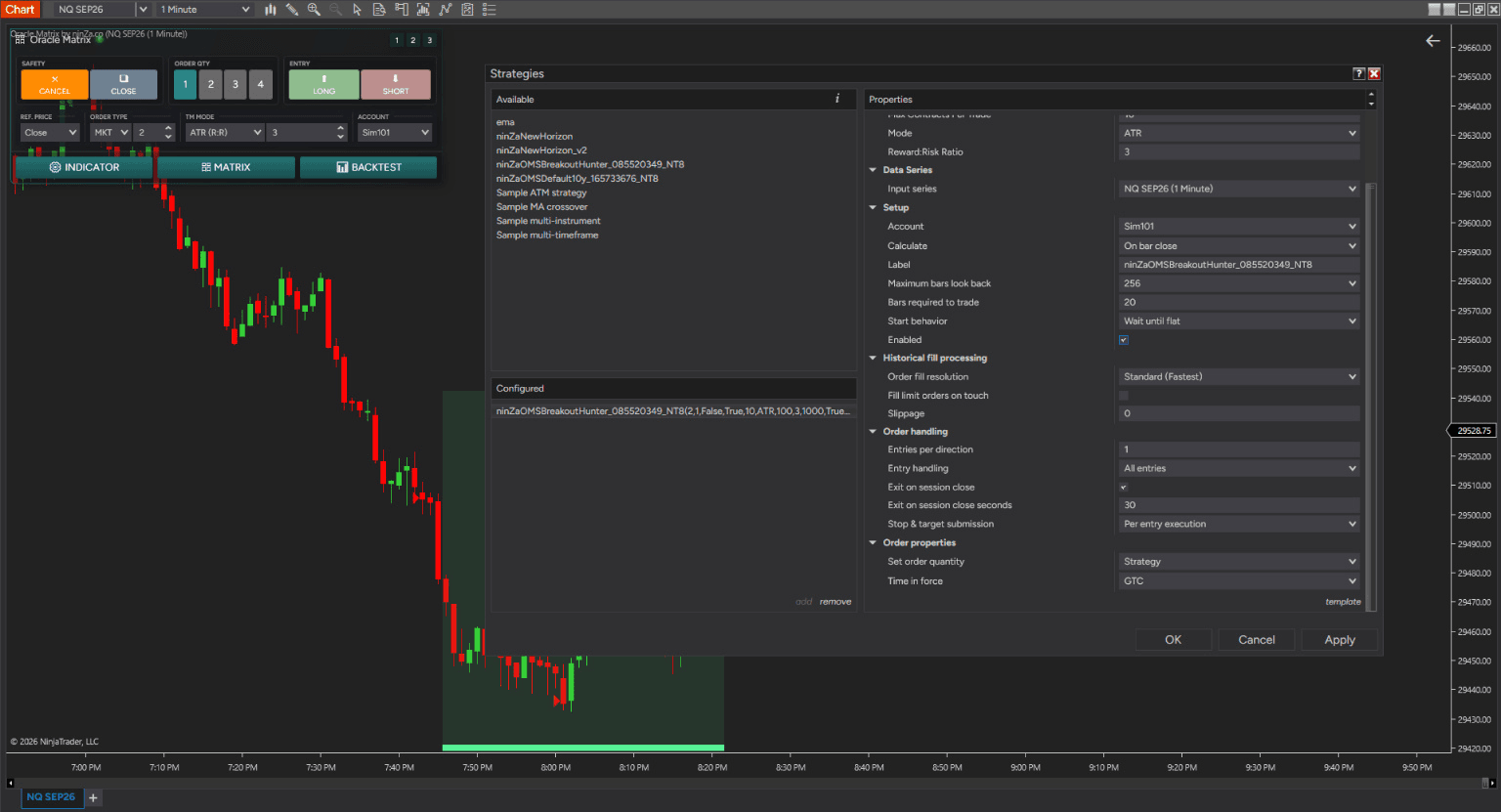
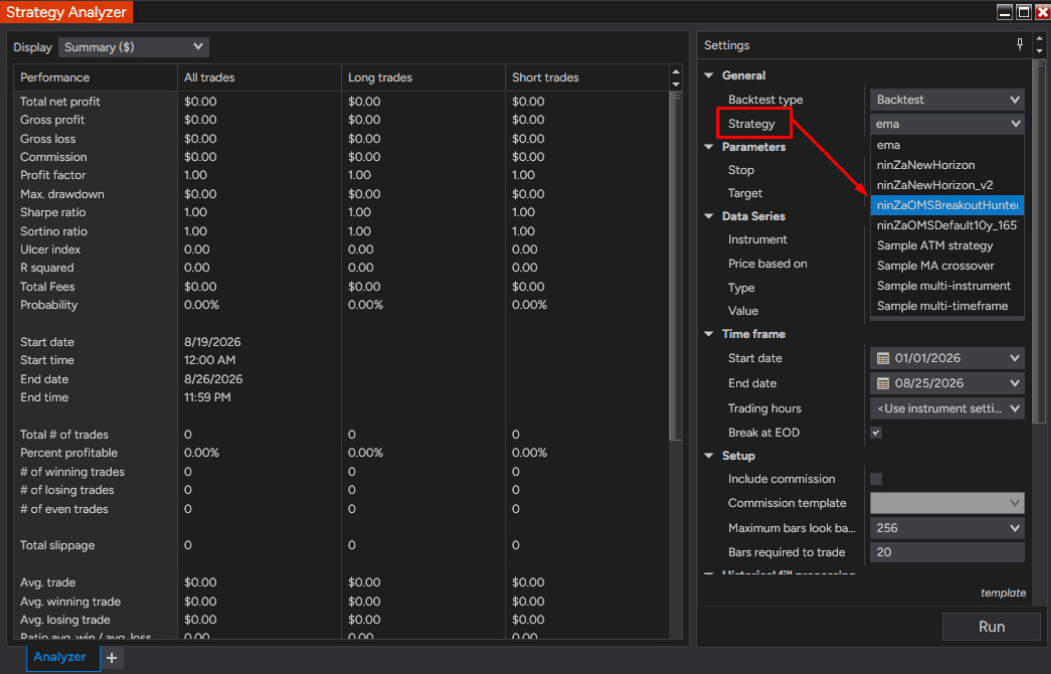
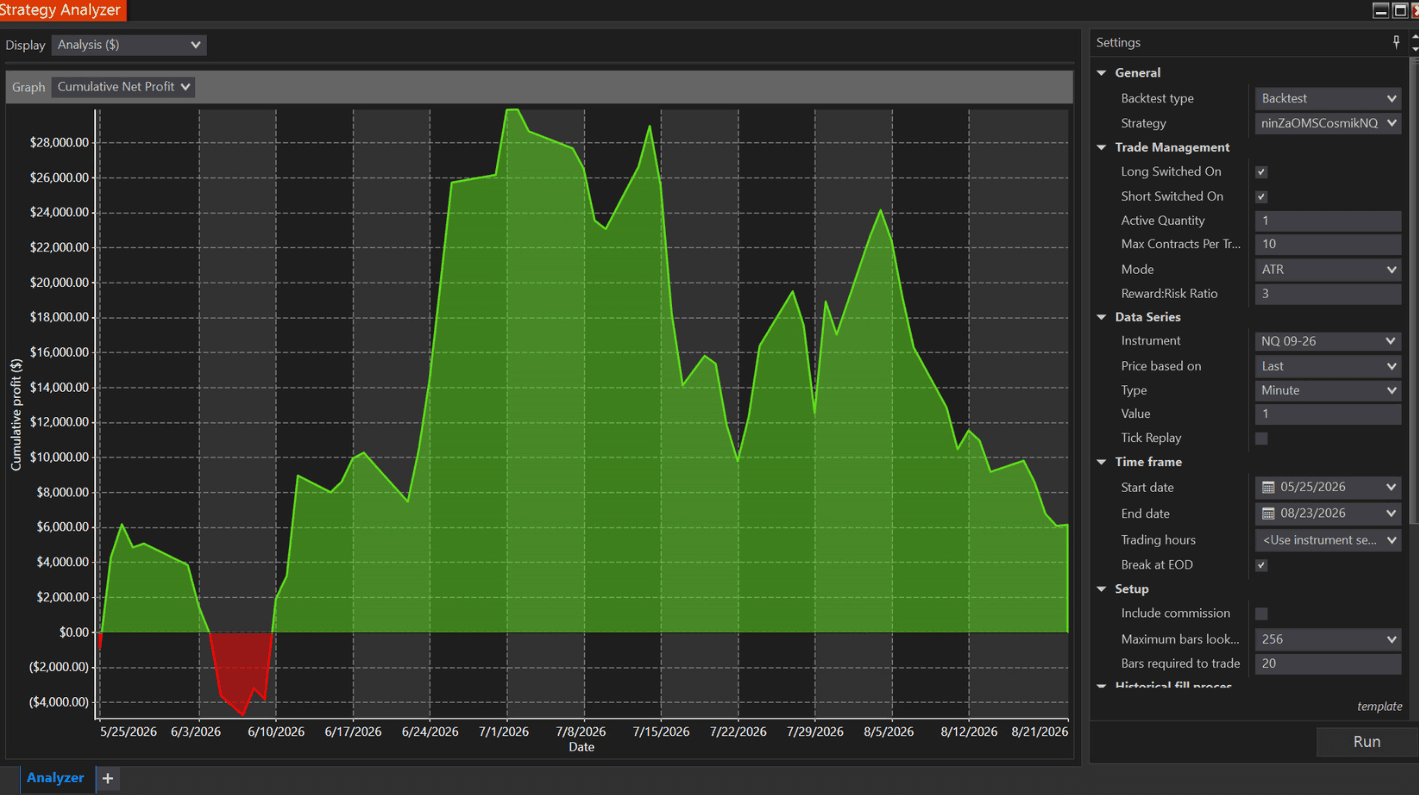
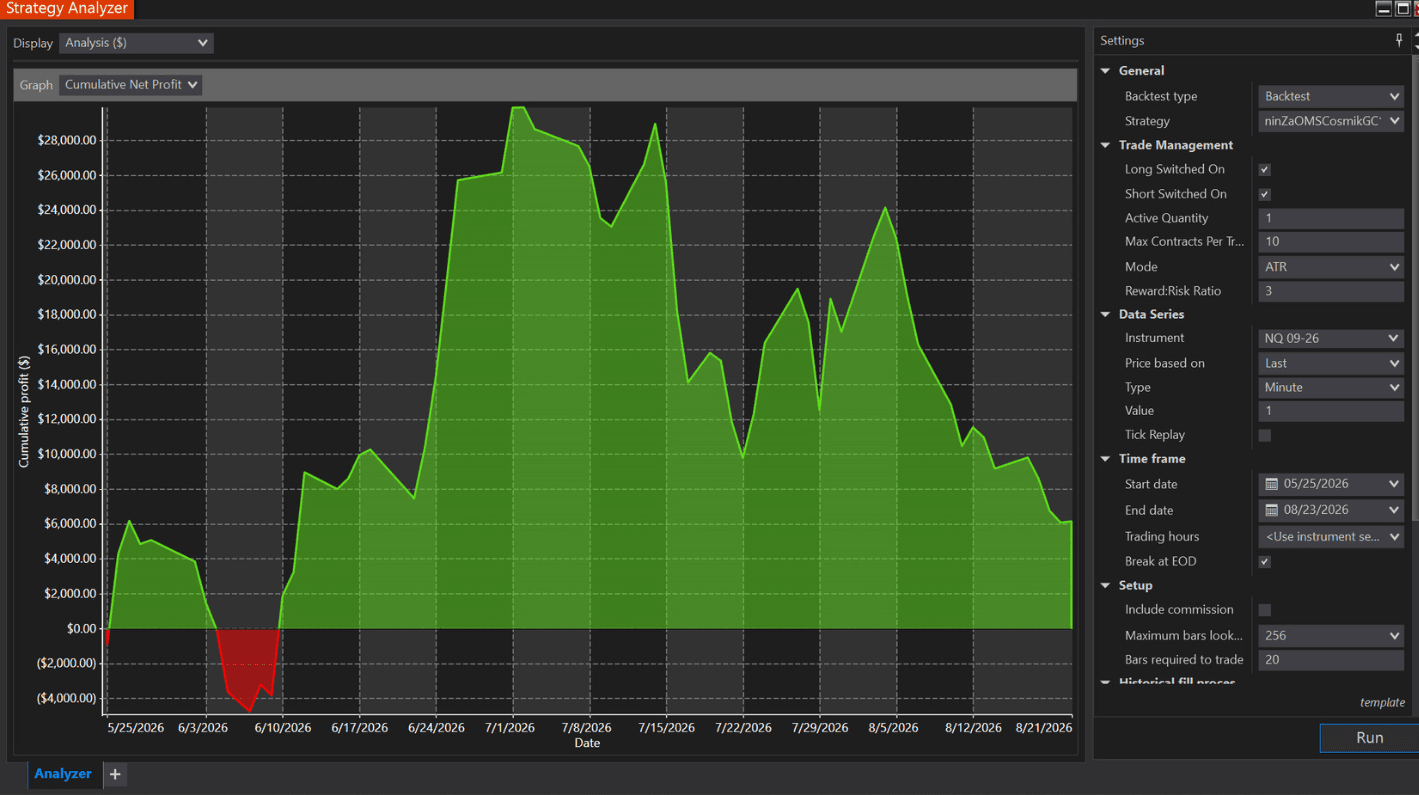
6. How to backtest strategy from Oracle Matrix within Strategy Analyzer?
After exporting strategies from Oracle Matrix, you canload it within Strategy Analyzer to backtest
7. Can I use New Horizon for signals and add other indicators for context? Does it also work with NT8 Strategies?
No, Oracle Matrix reads indicators from the Indicators list only. It doesn't read strategies or New Horizon (the auto strategy).
8. If I want to use renko, it has to be KingRenko$, correct?
You can use Oracle Matrix on any Renko chart for trading and strategy development.
However, for backtesting in Oracle Matrix, you should use KingRenko$ because it uses the real Open price, which allows the backtest to calculate entries and results accurately.
By comparison, ninZaRenko and many other Renko chart types use a synthetic/fake Open price. This can make historical backtest results inaccurate.
So the key point is:
- Trading / developing strategies → Any Renko chart
- Reliable backtesting → KingRenko$
9. How to know which indicators to pick, which possibly make up a good combination?
You can start with indicators that provide a clear entry signal, such as:
- OmniSpectrum Scan
- ApexFlow Zignal
- Romantick Pulse
- and other signal-based indicators
This is because Oracle Matrix already includes built-in filters for trend, momentum, and higher-timeframe confirmation.
So in most cases, you do not need to stack too many indicators that do the same job. A cleaner approach is to use one strong signal indicator, then let Oracle Matrix handle the additional filtering and validation.
The goal is not to use more indicators, but to find a combination where each component has a clear role and adds useful information.
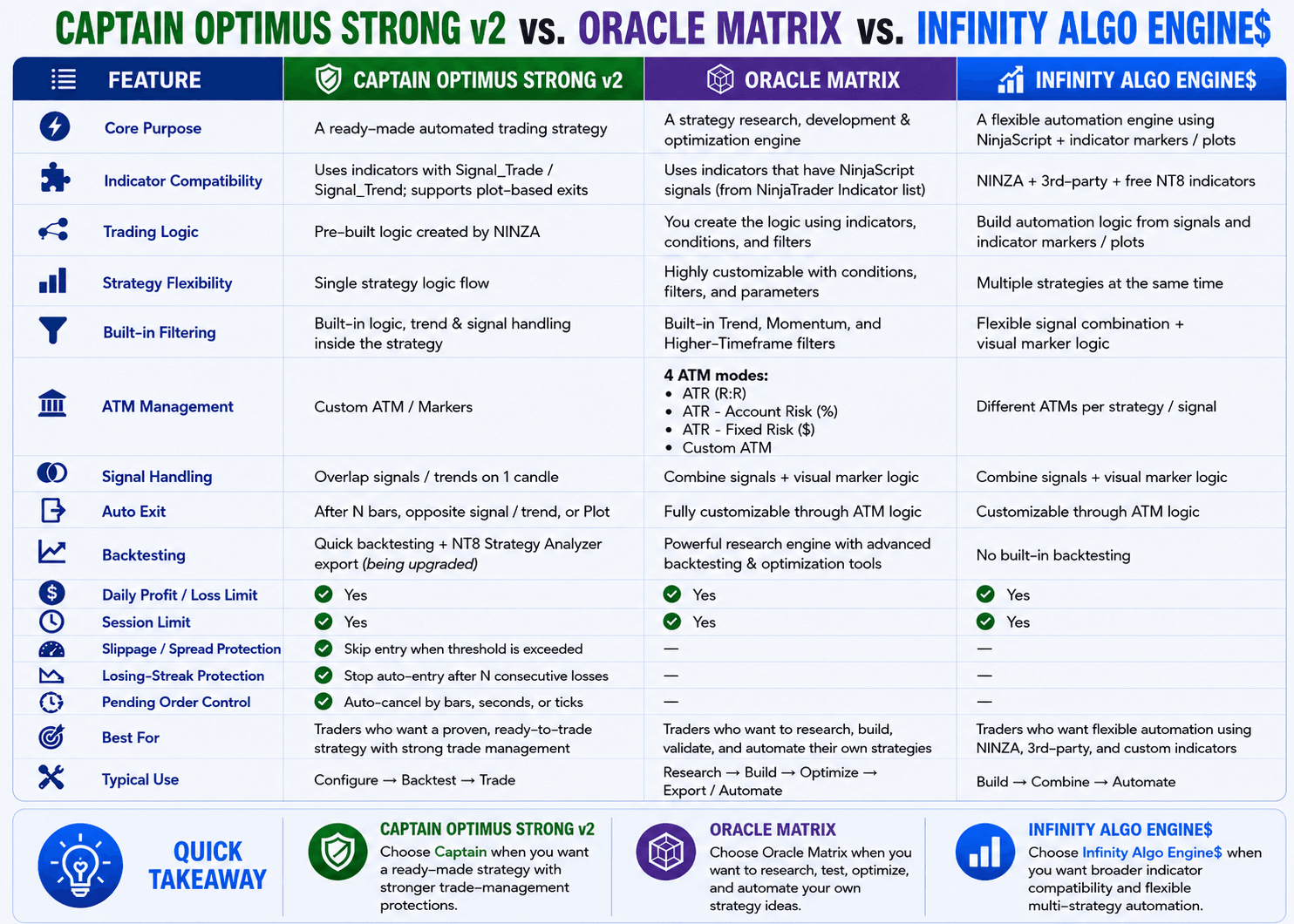
10. Can you run an auto strategy in Oracle Matrix? Instead of using Captain Optimus Strong v2?
Oracle Matrix can automate strategies as well, but it serves a different purpose from Captain Optimus Strong v2.
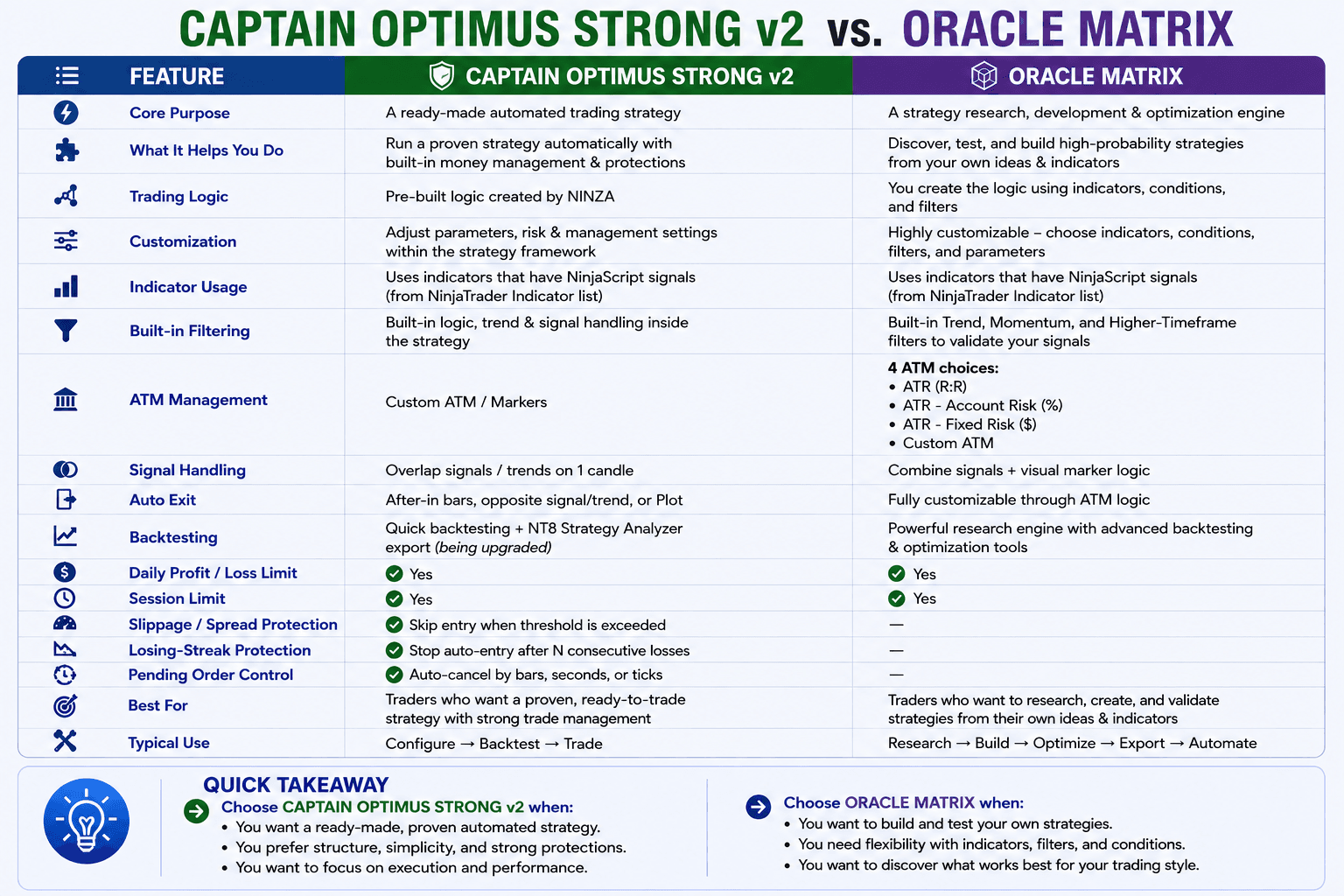
For a broader comparison that also includes Infinity Algo Engine$, see the full overview below:
Choose the level of research support that fits your workflow
Choose Oracle Matrix as a complete research platform, or expand your research capabilities with additional trend, volume, and breakout Signals.
Both options are a one-time payment and include lifetime updates and upgrades.
Option 01
Oracle Matrix Access
For traders who want the complete Oracle Matrix research infrastructure and prefer to build Contexts around their existing indicators, systems, and trading hypotheses.
Included
- Oracle Matrix — $1800 product value
- 1 ready-to-use strategy
- Built-in strategy
- Oracle Matrix research manual
- White-glove software setup and onboarding — $100 value
- Personalized trading setup and workflow optimization — $100 value
- New-order remote assistance
Option 02
Oracle Matrix Strategy Research Suite
For $150 more, expand Oracle Matrix with additional trend, volume, and breakout tools to unlock a fully automated trading system or deeper Signal and Context research.
Included
- Oracle Matrix — $1800 product value
- Easy Trend — $350 product value
- Klinger Volume Oscillator Pro — $300 product value
- Breakout Hunter — $500 product value
- $500 Voucher-F
- 2 ready-to-use strategies
- Built-in strategy
- Premium strategy
- Oracle Matrix research manual
- White-glove software setup and onboarding — $100 value
- Personalized trading setup and workflow optimization — $100 value
- New-order remote assistance
Option 03
Oracle Matrix Statistical Research Suite
For traders who want to evaluate where a setup has statistical edge by combining probability, trend, and breakout conditions within Oracle Matrix.
Included
- Oracle Matrix — $1800 product value
- Easy Trend — $350 product value
- QuantZone — $600 product value
- Breakout Hunter — $500 product value
- $500 Voucher-F
- 2 ready-to-use strategies
- Built-in strategy
- Premium strategy
- Oracle Matrix research manual
- White-glove software setup and onboarding — $100 value
- Personalized trading setup and workflow optimization — $100 value
- New-order remote assistance
Option 04
Oracle Matrix High R/R Trend Suite
For traders who want to research and automate high reward-to-risk setups with multiple layers of trend direction, strength, and momentum confirmation.
Included
- Oracle Matrix — $1800 product value
- Super JumpBoo$t — $750 product value
- Easy Trend — $350 product value
- SMMA Pro — $250 product value
- Solar Wave — $750 product value
- $400 Voucher-F
- 2 ready-to-use strategies
- Built-in strategy
- Premium strategy
- Oracle Matrix research manual
- White-glove software setup and onboarding — $100 value
- Personalized trading setup and workflow optimization — $100 value
- New-order remote assistance
Option 05
Oracle Matrix High R/R Research Suite
For traders who want to research high R/R opportunities using Super JumpBoo$t’s support/resistance and momentum signals within Oracle Matrix.
Included
- Oracle Matrix — $1800 product value
- Super JumpBoo$t — $750 product value
- 2 ready-to-use strategies
- Built-in strategy
- Premium strategy
- Oracle Matrix research manual
- White-glove software setup and onboarding — $100 value
- Personalized trading setup and workflow optimization — $100 value
- New-order remote assistance
Option 06
Oracle Matrix Order Flow Context Suite
For traders who want to research order-flow signals from ApexFlow Zignal alongside trend conditions from SMMA Pro and Easy Trend within Oracle Matrix.
Included
- Oracle Matrix — $1800 product value
- ApexFlow Zignal — $1400 product value
- SMMA Pro — $250 product value
- Easy Trend — $350 product value
- 2 ready-to-use strategies
- Built-in strategy
- Premium strategy
- Oracle Matrix research manual
- White-glove software setup and onboarding — $100 value
- Personalized trading setup and workflow optimization — $100 value
- New-order remote assistance
Option 07
Oracle Matrix Order Flow Context Suite
Research order-flow signals alongside trend conditions—all within Oracle Matrix.
Included
- Oracle Matrix — $1800 product value
- Entropy Voltex — $500 product value
- 2 ready-to-use strategies
- Built-in strategy
- Premium strategy
- Oracle Matrix research manual
- White-glove software setup and onboarding — $100 value
- Personalized trading setup and workflow optimization — $100 value
- New-order remote assistance
Evaluate with zero pressure, backed by Zuture Exchange
Test Oracle Matrix for up to 30 days using your own markets, chart configurations, and real-time trading workflow — before deciding it's the right fit for how you trade.
Trade in your real conditions. No sandbox data — evaluate against your own charts and live workflow.
Not a fit? Exchange it. Request a swap for another eligible product through Zuture Exchange.
Little to no added cost. Depending on the replacement selected, little or no additional investment may be required.
Build with evidence. Deploy with greater confidence.
Turn your Signals, trading hypotheses, and existing tools into a structured research workflow designed to discover stronger Contexts, validate their reliability, and move proven ideas toward execution.
Need help deciding if Oracle Matrix fits your workflow?
Talk directly with our Support Team for personalized guidance, product questions, and help choosing the right access option for the way you research and trade.
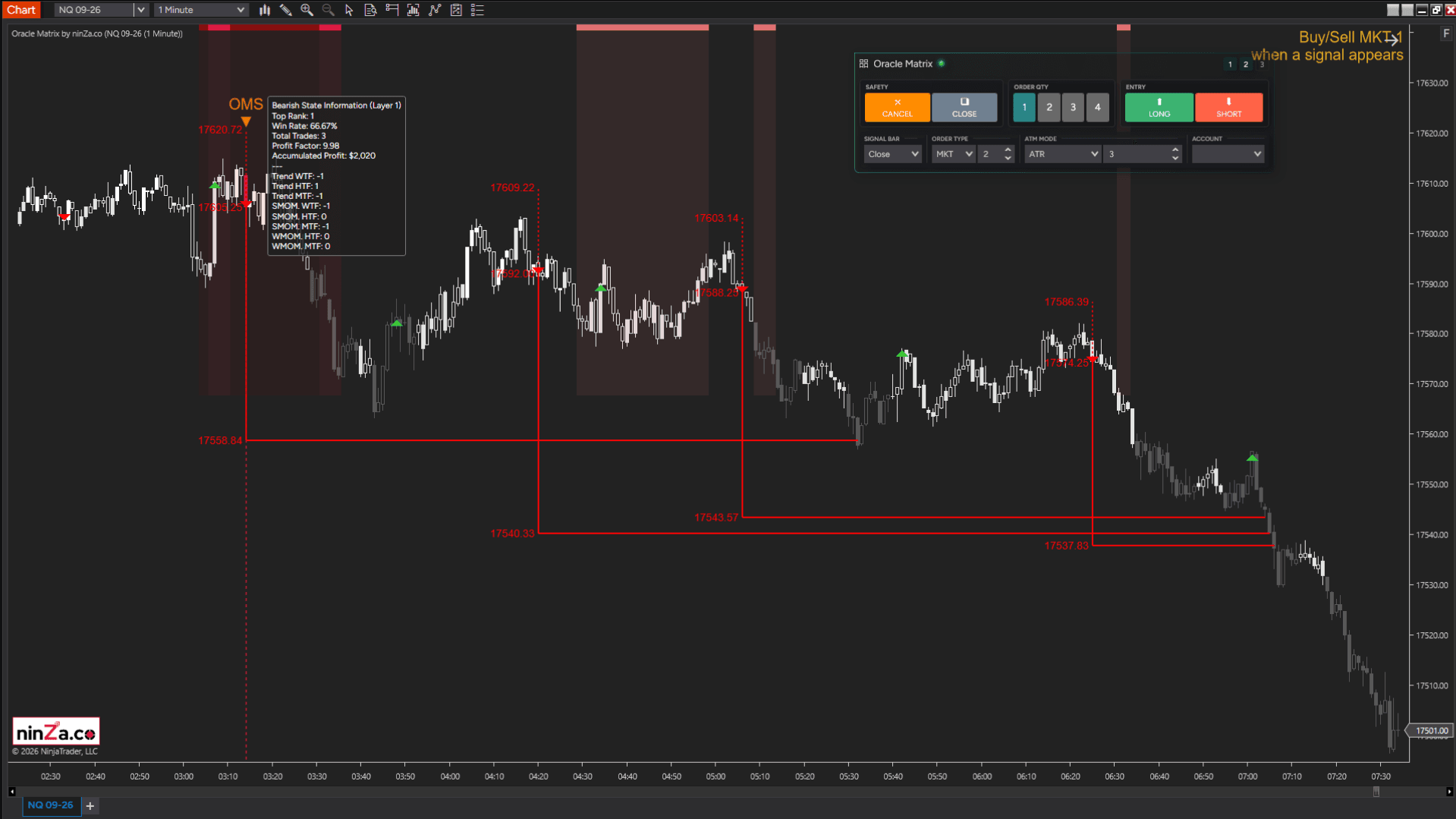
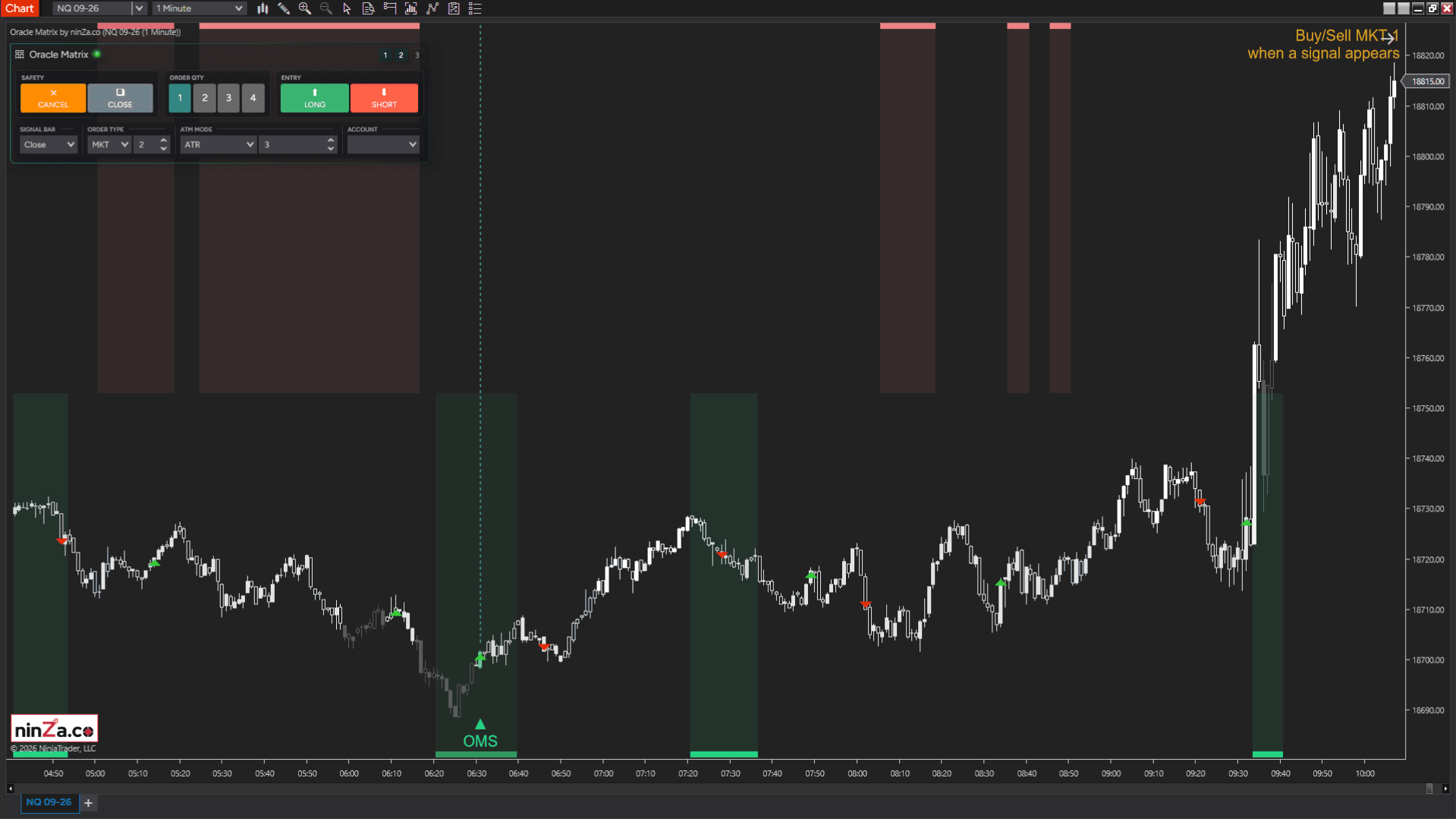
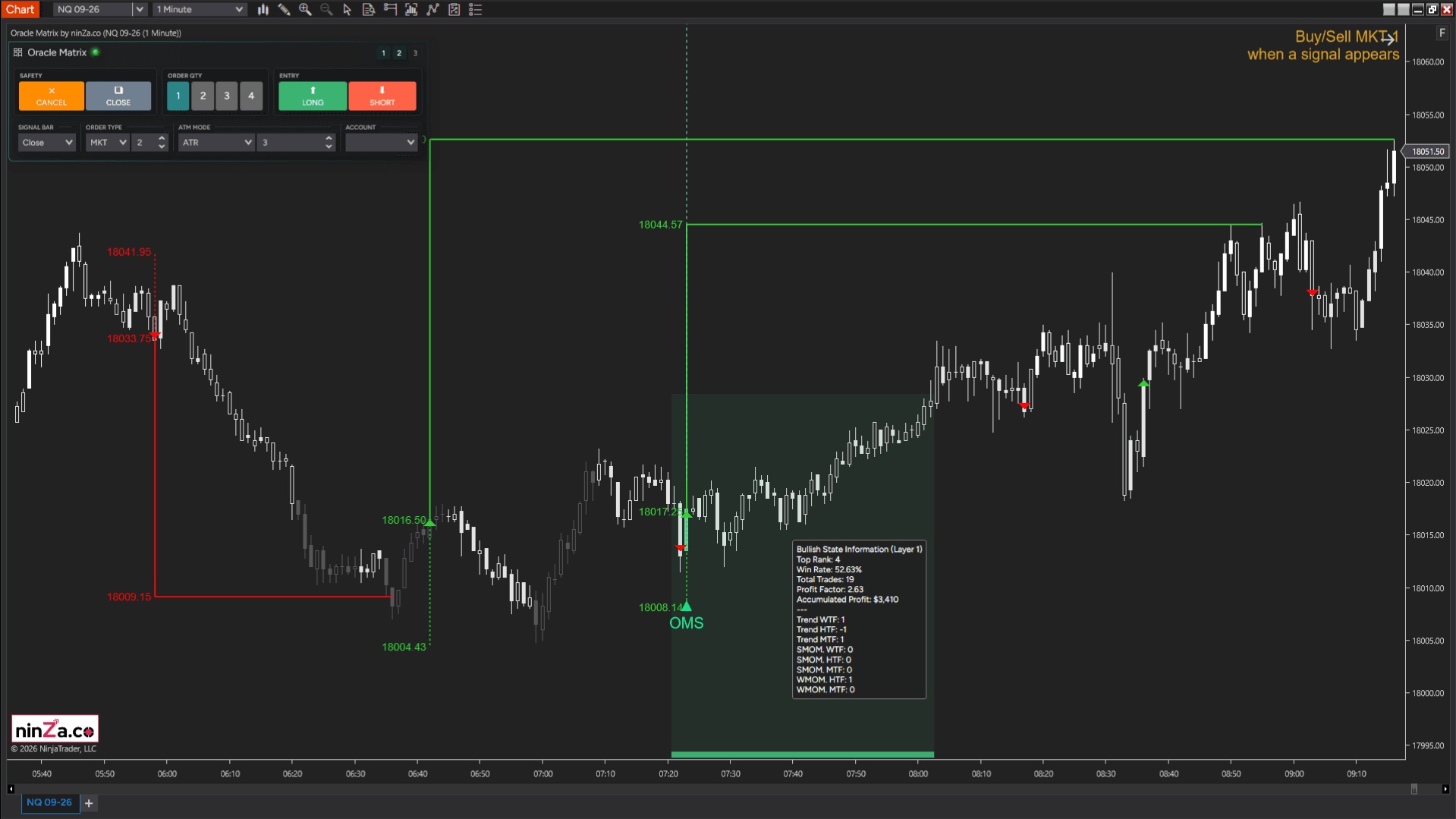
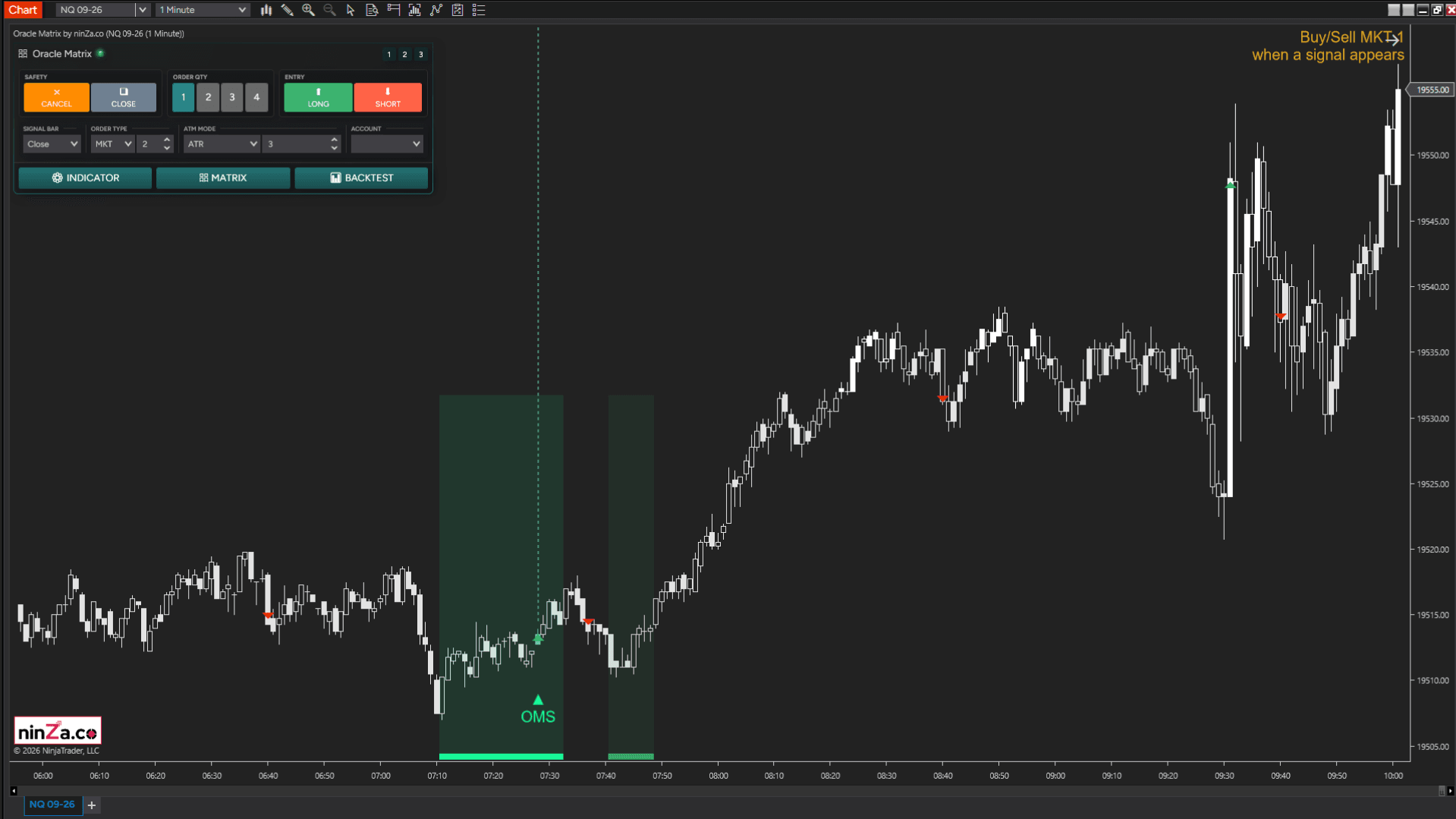
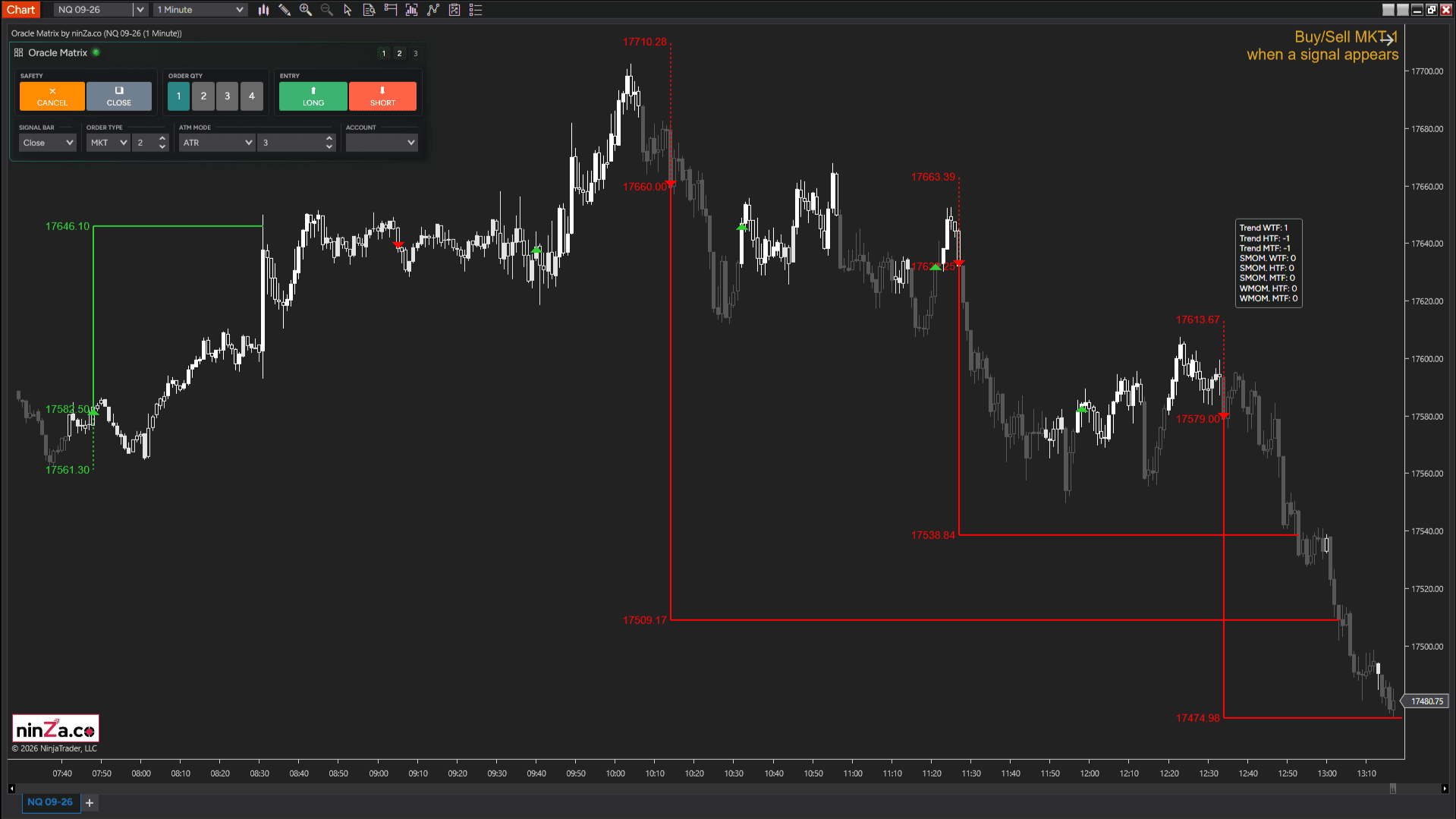
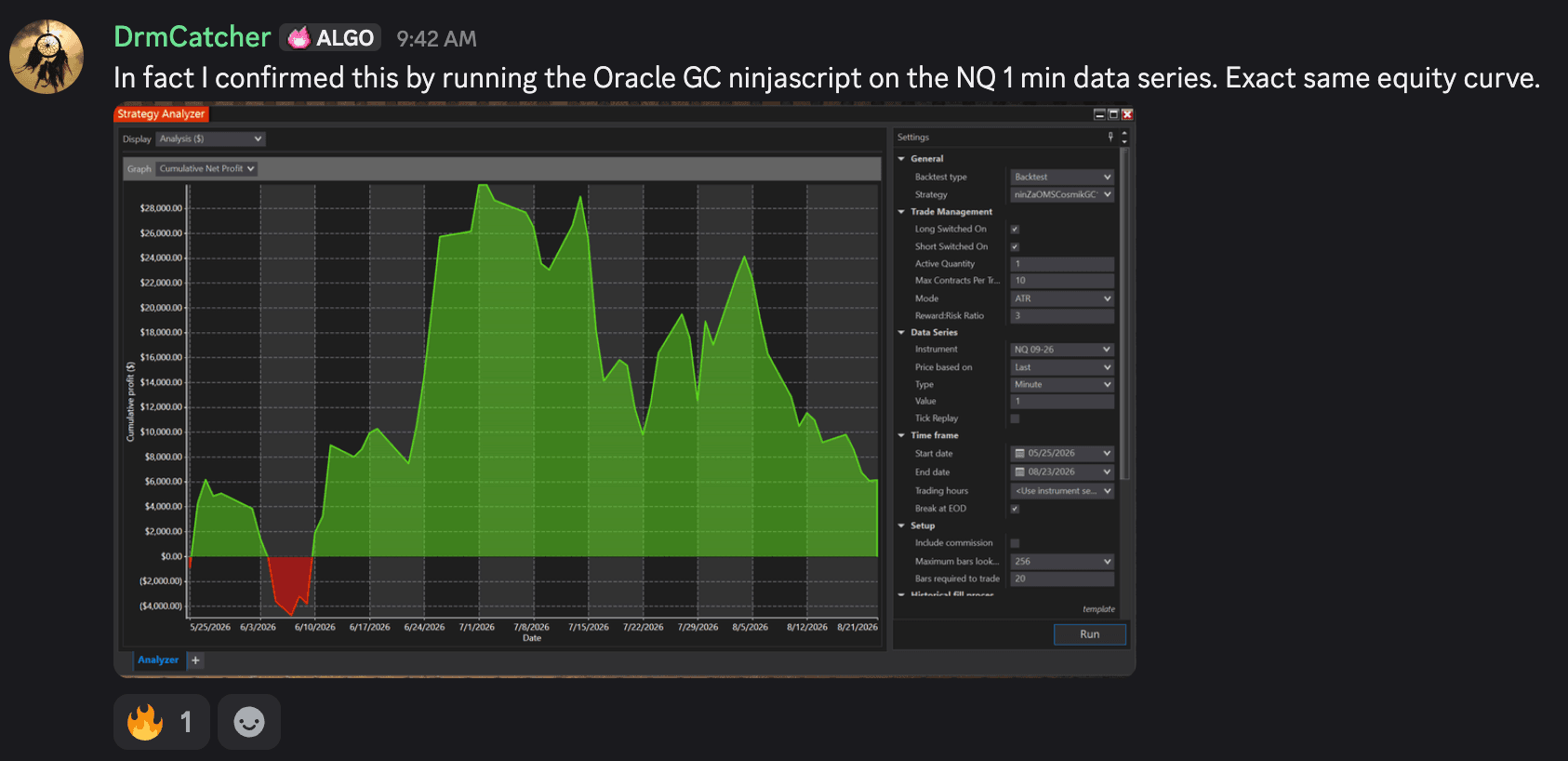
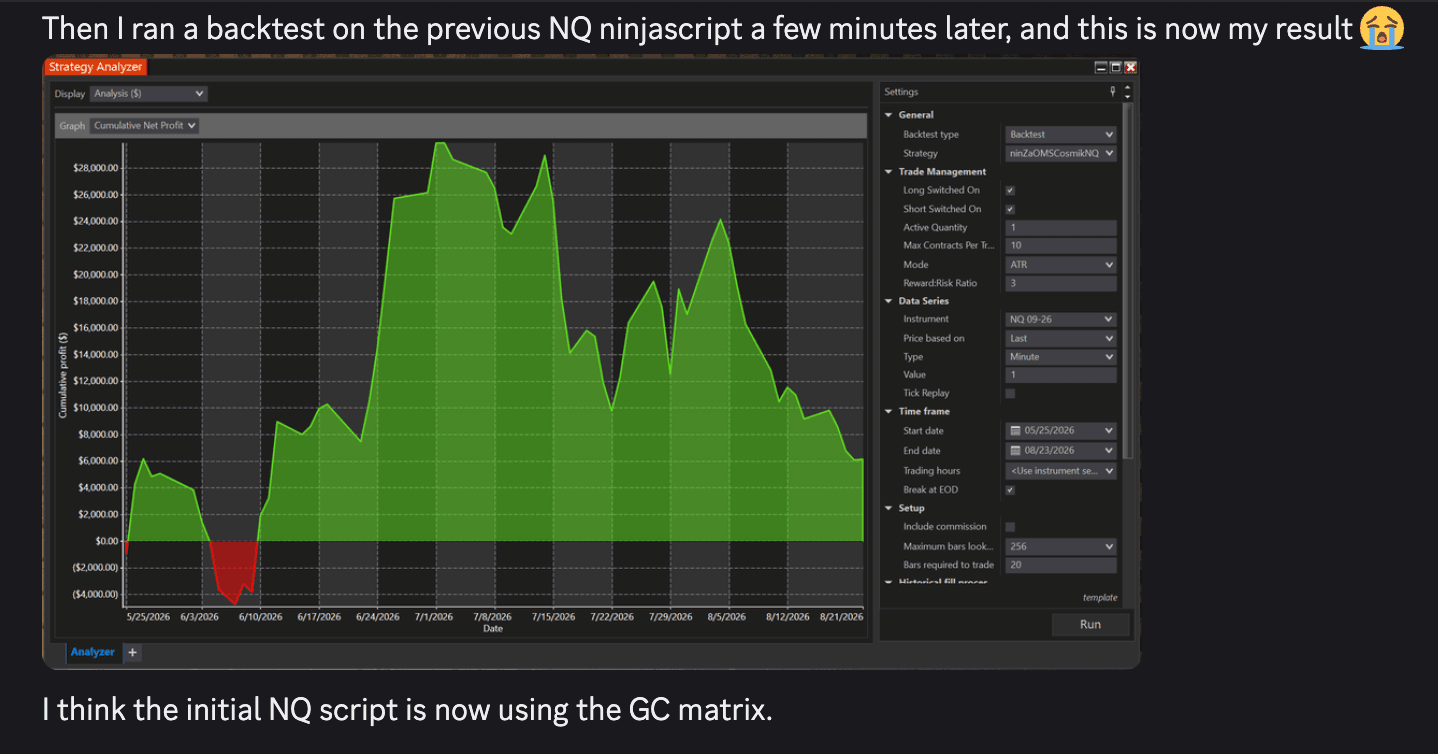
_1786091196636.png)
_1786091216667.png)
_1786091242885.png)
_1786091204460.png)
_1787026707358.svg)
NINZA is an official member of NinjaTrader Ecosystem together with 600+ industry-leading professionals that provide traders with quality trading products & services.




even more payment methods
Quick Links
Instructions
Support
Resources & Information
© Copyright 2026 All Rights Reserved



Because software products may be copied and stored easily, we will NOT issue refunds of any kind. ALL SALES ARE FINAL & NON-REFUNDABLE!
Futures, foreign currency, and options trading contains substantial risk and is not for every investor. An investor could potentially lose all or more than the initial investment. Risk capital is money that can be lost without jeopardizing one's financial security or lifestyle. Only risk capital should be used for trading and only those with sufficient risk capital should consider trading. Past performance is not necessarily indicative of future results.
Hypothetical performance results have many inherent limitations, some of which are described below. No representation is being made that any account will or is likely to achieve profits or losses similar to those shown; in fact, there are frequently sharp differences between hypothetical performance results and the actual results subsequently achieved by any particular trading program. One of the limitations of hypothetical performance results is that they are generally prepared with the benefit of hindsight. In addition, hypothetical trading does not involve financial risk, and no hypothetical trading record can completely account for the impact of financial risk of actual trading. For example, the ability to withstand losses or to adhere to a particular trading program in spite of trading losses are material points which can also adversely affect actual trading results. There are numerous other factors related to the markets in general or to the implementation of any specific trading program which cannot be fully accounted for in the preparation of hypothetical performance results and all which can adversely affect trading results.
NinjaTrader® is a registered trademark of NinjaTrader Group, LLC. No NinjaTrader company has any affiliation with the owner, developer, or provider of the products or services described herein, or any interest, ownership or otherwise, in any such product or service, or endorses, recommends or approves any such product or service.